LLM s make AI text harder to read because they optimize for info, not chat
A new study shows frontier GPT-6, Claude and similar models use complex grammar and rare words more than humans, making their output tougher to follow.

How it works
Programs that write text like emails and explanations, trained to pack lots of information into short replies instead of sounding natural.
What you could do with it
- A business could fine-tune its chatbot under a length penalty so emails and explanations read more smoothly 1.
- A researcher could compare any frontier LLM's output against human writing using psycholinguistic features like long dependencies and rare n-grams to spot readability gaps 1.
- A developer could add readability objectives during training so models optimize for communication rather than pure information density 1.
The finding
Researchers Thomas Hikaru Clark, Matias B. Martin and Kyle Mahowald examined nine frontier and near-frontier AI models, including top versions from OpenAI, Anthropic, Google DeepMind and Mistral, comparing the language they produce against human writing 1. They measured everyday psycholinguistic features known to slow human reading: long syntactic dependencies, low-frequency n-grams (rare word pairs or triplets), stacked nouns ("research methodology framework"), and reduced object relatives .
The models used all of these difficult features more often than human writers did, and more often than a "round-trip translation" baseline — a control in which human text is translated into another language and back, which tends to simplify grammar 1. The variation was substantial across model families, meaning some models were noticeably harder to read than others .
Guess
What do frontier AI models typically produce?
Models are optimized for info density, not smooth conversation, making their output tougher to read.
Why it happens
The researchers propose a single reason: AI models are increasingly trained and fine-tuned for tasks like math, code and formal reasoning, where the goal is information density, not smooth communication 1. In those domains, packing more information into fewer tokens is useful; in conversation, it makes text feel strained .
As proof-of-concept, the team fine-tuned a language model under a length penalty — encouraging it to produce shorter output — and observed a measurable divergence from human-like linguistic behavior, supporting the idea that optimization pressure shifts grammar toward harder-to-read patterns 1.
What could change
The paper does not yet offer a finished remedy, but it highlights the misalignment between how humans process language and how current LLMs are optimized 1. Possible fixes include adding readability objectives during training, adjusting length penalties, or designing evaluation metrics that track human processing difficulty alongside task performance . For users now, the takeaway is that AI text that feels dense or awkward is not a bug in your understanding — it is a feature of how the models are currently optimized .
How good is it
According to the arXiv study by Clark, Martin and Mahowald, all nine frontier and near-frontier models tested used more low-frequency n-grams, more inanimate subjects with animate verbs, and most also used longer syntactic dependencies and stacked nouns than human writers 1. The variation across model families was substantial, meaning some models were noticeably harder to read than others . A proof-of-concept length-penalty fine-tune shifted a model measurably away from human-like linguistic behavior, supporting the hypothesis that optimization pressure drives the effect . No fixed benchmark score is reported; the finding is a comparative divergence rather than a single number .
Key facts
- Frontier AI models use more low-frequency n-grams and longer syntactic dependencies than human writers 1
- The effect is strongest in math, code and reasoning-optimized models 1
- Fine-tuning with a length penalty shifts models away from human-like grammar 1
- Variation across model families is substantial 1
Sources
Keep reading
 The weekThis Week in AI Vulnerability, Tools, and BubblesHerald of AIThe week
This Week in AI Vulnerability, Tools, and Bubbles
Chatbots cracked under kindness, stock fears grew, and open-source alternatives kept popping up.



Related stories
 How it worksUber, DoorDash, and Airbnb say barely anyone uses AI agents yetHerald of AI
Uber, DoorDash, and Airbnb say barely anyone uses AI agents yet
Popular apps say personal AI helpers have placed only hundreds of orders among millions, showing the AI assistant hype still has a long way to go before reaching ordinary users.
Google launches Gemini Decision 1 — an AI that scores answers without writing them out
It lets apps and developers get fast yes-or-no answers across text, images, audio, video and PDFs, priced like a utility bill instead of per word.
 New modelsMicrosoft turns on Claude by default for UK Copilot usersHerald of AI
Microsoft turns on Claude by default for UK Copilot users
UK companies get access to Anthropic's AI model automatically on 9 December unless admins block it.
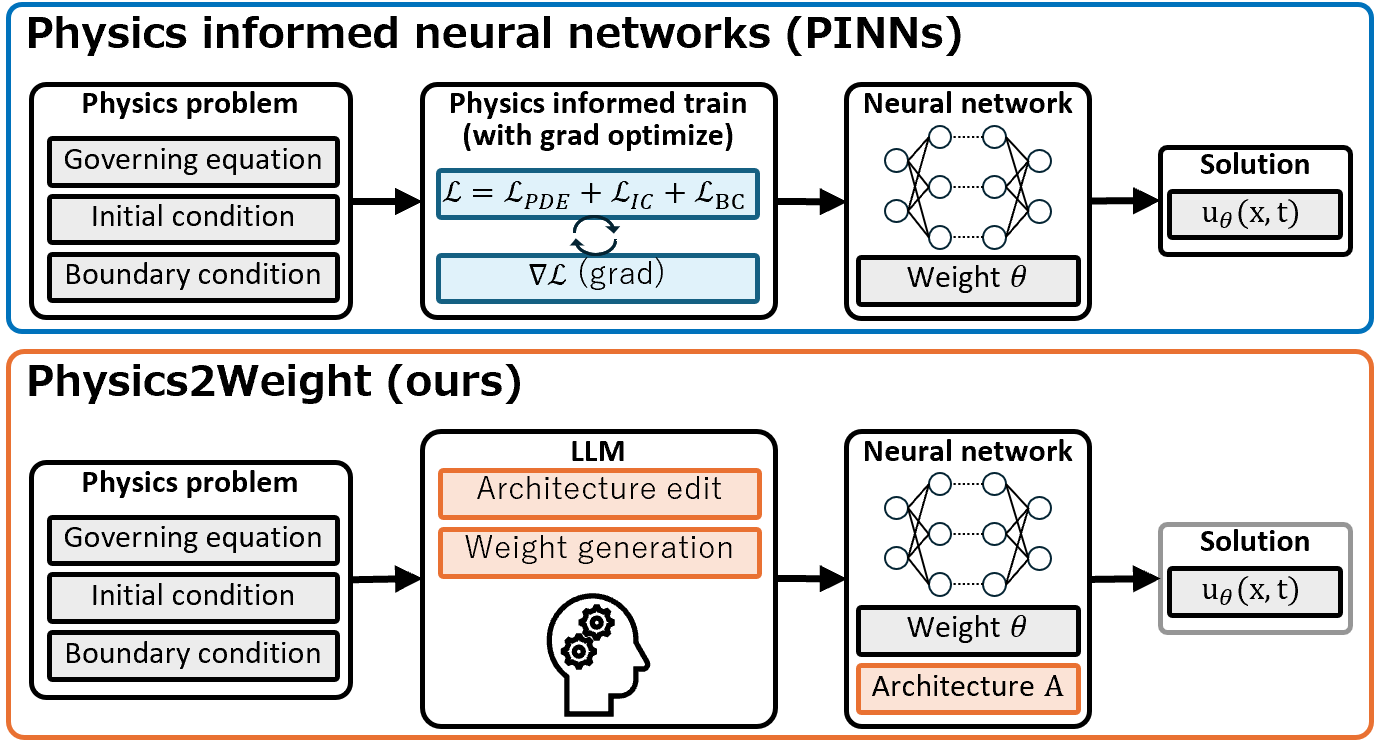 How it worksPhysicists now use AI to build neural networks directly from the laws of physicsHerald of AIFigure: Sato et al., arXiv:2611.12954, CC BY 4.0
Physicists now use AI to build neural networks directly from the laws of physics
A new method lets Physics2Weight create neural networks that solve real-world physics problems without the slow trial-and-error training most AIs need today.