London startup Fractile raises $720M to make AI chips focused on memory, not raw power
A new type of chip could make AI responses much faster — if Fractile can deliver on its promises.
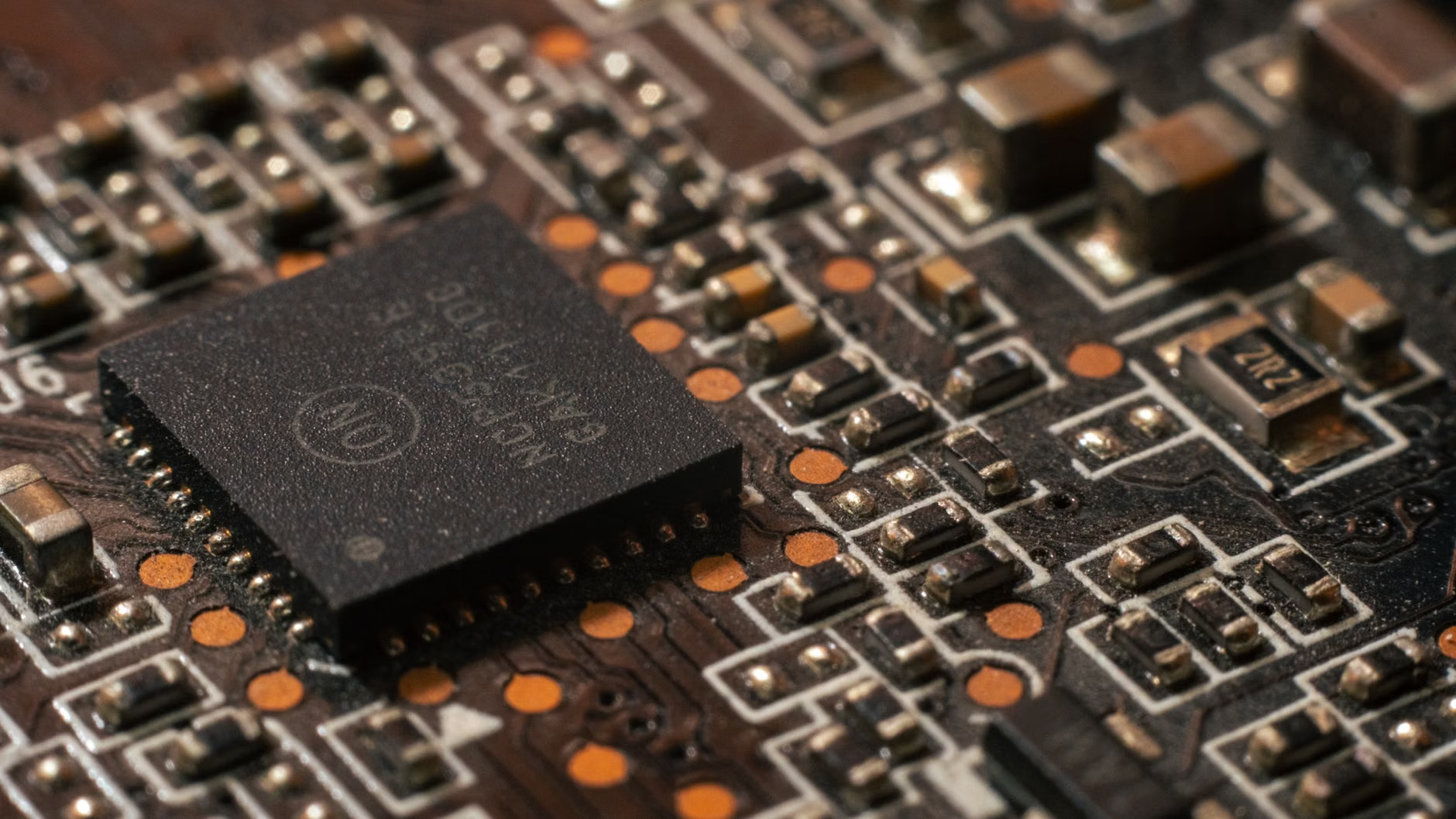
How it works
A London company making a chip that moves data faster so AI answers questions up to 10 times quicker.
- AI chips have grown powerful, but data movement has lagged far behind
- Fractile stacks custom memory and processor together in one 3D chip
- This design lets AI generate replies much faster than before
Memory, not speed, is the problem
Walter Goodwin founded Fractile four years ago with a simple argument: the industry has been focusing on the wrong thing. Over the past 25 years, the computing power of chips has grown roughly one millionfold. But the ability of those chips to pull data in and out — known as memory bandwidth — has only grown about 40 times 1. That leaves a gap of roughly 25,000 times between how fast processors can compute and how fast they can get the data they need to compute on 1.
"Today's frontier models are drinking through a straw," Goodwin told the Financial Times 1.
The idea is easy to picture with an everyday comparison: imagine a fire station that can put out a hundred fires at once but only has one tiny hose feeding water to each firefighter. More powerful engines don't help if the water can't keep up.
Guess
How much faster could Fractile's chip make AI responses?
Fractile claims its chip could make inference up to 10 times faster.
A different kind of chip stack
Fractile's answer is to rebuild the chip from the inside out. According to Fractile, instead of stacking separate pieces of memory and processor like conventional designs, the company combines custom DRAM (the short-term memory inside every chip) and logic circuits into a single three-dimensional stack 1. This architecture aims to deliver substantially higher bandwidth than high-bandwidth memory, or HBM — the premium memory currently used by the likes of NVIDIA's best GPUs — while still holding enough capacity to run very large language models that process long conversations without forgetting what came before 1.
Goodwin claims this approach could make inference — the process of generating an AI response after you type a question — up to 10 times faster than existing solutions, he says 1.
There is a catch, however. No production chip exists yet. Fractile's first chip is planned for next year, and the company has not released any commercial product 1. A valuation of $7 billion rests entirely on prototypes and the promise of what could be built, according to the Financial Times 1.
Why investors are excited
The money poured in at impressive terms. The round was led by Thrive Capital, Founders Fund, Lightspeed, and Redpoint, with other participants including Alphabet's venture arm CapitalG, DST Global, BlackRock, Bain Capital Ventures, T. The list features [[Rowe Price, Shopify Ventures, Balderton, Britain's Sovereign AI fund, and the British Business Bank 1. This values the company at seven times what it was worth just months earlier — in May, Fractile had raised about $220 million at roughly a $1 billion valuation 1.
Philip Clark of Thrive Capital says the opportunity lies in AI agent systems that must run continuously for hours or days rather than answering a single prompt — a use case that places extreme demands on both speed and memory throughput, he says 1. He told investors the inference market could soon become "at least as large as the market NVIDIA is addressing today" 1.
A crowded and expensive race
The company is stepping into a fiercely contested field. It has been reported that last year, Nvidia bought out Groq and launched its own inference chip in March, and that other emerging companies like Etched, MatX, and fellow British company Olix are developing competing options 1. Many rivals rely on HBM supplied by companies like SK Hynix and Micron, but that memory technology is expensive and demand is straining suppliers, according to reports 1. Fractile hopes its proprietary 3D stack sidesteps that bottleneck entirely 1.
Fractile operates offices in the US and Taiwan alongside its London base and describes itself as building for a global market. The investment is described as "a significant moment for the UK's effort to build domestic AI infrastructure" by the source, with Goodwin calling the Sovereign AI fund "a driving force behind developing frontier AI technology from London" 1.
The coming year will reveal whether Fractile can turn its blueprints and early silicon into chips that actually deliver the performance it has promised.
This story reports on a trend for information only. It is not advice or encouragement to do any of it.
How good is it
Fractile claims its three-dimensional chip design could make inference — generating AI responses after a user types a question — up to 10 times faster than existing solutions 1. These performance gains are based on prototypes rather than a commercial product, and no production chip has shipped yet .
Corrections and updates
- Corrected on 12 November 2026. An earlier version attributed the domestic AI infrastructure significance claim to the UK government; the source actually describes it as a significant moment reported by the outlet and quotes founder Walter Goodwin calling the Sovereign AI fund a driving force. An earlier version stated NVIDIA released its inference chip in March; the source indicates the acquisition happened last year and the inference chip was launched in March separately.
Key facts
- Fractile raised $720M at a $7B valuation, up from ~$1B in May.
- Founder Walter Goodwin argues memory bandwidth is the real AI bottleneck, not raw compute.
- First chip planned for next year; no commercial product exists yet.
- Potential 10x faster inference on large models with 3D stacked DRAM-and-logic design.
- Anthropic reportedly interested as an early customer.
Sources
Keep reading
 New modelsSamaya Sterling a tiny AI finance agent beats a bigger one at a fraction of the costHerald of AINew models
Samaya Sterling a tiny AI finance agent beats a bigger one at a fraction of the cost
A small post-trained model does financial research better than a large frontier model, for 11 times less money.

Related stories
 How it worksAlphabet stock drops as investors fear the AI bubble could pop and hurt the whole economyHerald of AI
Alphabet stock drops as investors fear the AI bubble could pop and hurt the whole economy
Big worries are building about whether huge AI spending is real or just money circulating between the same companies — and if it collapses, it could affect everyone's economy.
 How it worksSK Hynix warns memory chip shortage will last until 2030 as AI gobbles up supplyHerald of AI
SK Hynix warns memory chip shortage will last until 2030 as AI gobbles up supply
If you're buying a new PC or laptop soon, expect to keep paying higher prices — computer memory shortages are unlikely to ease for years.
 New modelsBlock unveils Dessa, a voice AI that learns only by listening to humans talkHerald of AI
Block unveils Dessa, a voice AI that learns only by listening to humans talk
A new AI from Block talks and listens at the same time — and it was trained only on human speech, not on text.
 How it worksA new engine makes small AI models respond in under 50 millisecondsHerald of AI
A new engine makes small AI models respond in under 50 milliseconds
Liquid AI says its tool lets generative AI replace old models for fraud checks, payments and search — without slowing things down.