Factory Droid 1.0 makes AI coding agents faster and cheaper with new 'programmatic' approach
The latest update lets one AI request run hundreds of steps at once, cutting costs and improving results on complex coding tasks.
How it works
Software that helps AI fix code by writing programs instead of calling tools one by one.
- Write a program that describes all tool calls.
- Run the program in a protected sandbox.
- Send only the final output back to the AI.
What you could do with it
- A developer could use Factory Droid 1.0 to fix unit tests or clean up code across hundreds of issues by writing a single JavaScript program instead of sending each tool call separately, cutting costs and time 1.
- A development team could use Factory's built-in router to automatically pick the most cost-efficient AI model from a list that includes GPT-6.1 Sol and Kimi K3 for their coding agent tasks 1.
- A researcher could run Factory Droid 1.0 on benchmark tests like Terminal-Bench 4 to compare how well its programmatic tool-calling approach measures against other coding agent harnesses 2.
What changed in Droid 1.0
Droid 1.0 is the biggest update yet to Factory's coding agent system. The main change is that programmatic tool calling is now turned on by default for 10 supported models, including GPT-6.1 Sol and Kimi K3.
In a normal setup, every time the AI needs to run a tool — like searching for code or running a test — the result goes back into the model's memory. With programmatic tool calling, the model writes a JavaScript program instead. That program runs all the tool calls at once inside a protected sandbox. Only the final printed output returns to the AI. A single request can now drive hundreds of tool calls.
Factory says the idea builds on earlier research called CodeAct 12. The company shared results from its own internal tests showing big savings. In one task fixing unit tests, 15 tool calls that previously took 10 model requests were cut down to 5 model calls, saving about 15 seconds. In another task cleaning up code across 151 issues, the old way used 36 requests and 3.1 million tokens; the new way used just 2 requests and about 61,000 tokens .
How Droid scores against competitors
Factory tested Droid 1.0 on Terminal-Bench 4, a benchmark that measures how well coding agents solve real terminal tasks. Each harness was run three times per task from October 23 to 28, 2026, using the same model 12.
With Claude Opus 5.5, Droid scored 65.2%, beating the native harnesses from Cursor (62.1%), OpenCode (62.1%), Devin (59.6%) and Claude Code (57.6%). Droid also cost up to 24% less and ran 16% to 26% faster per passed task 12.
With GPT-6.1 Sol, Droid scored 57.6% at $0.79 per passed task, edging out Codex (54.0%) and OpenCode (51.0%). However, on this model, Droid took 10% longer per passed task than Codex 12.
percentage of terminal coding tasks solved correctly. Higher is better. Numbers: Factory (self-reported). Chart drawn by Herald of AI.
Other improvements
Factory also made several behind-the-scenes changes. The base prompt shrank by 37%, from 20,887 to 13,055 input tokens. Fewer tool definitions are loaded at the start — down from 11 to 2 — with rare tools loading only when needed 12.
The app loads faster, with first paint dropping from 1,839 milliseconds to 488 milliseconds. Each new session now uses about 20 MB of memory instead of 350 MB 12.
Where to get it
Droid 1.0 is available as a desktop app for macOS and Windows, a terminal interface, and a Node SDK called @factory/droid-sdk. Paid plans start at $20 per month. The system works with any supported model, including the user's own API keys, or Factory's auto model router 12.
Corrections and updates
- Corrected on 1 November 2026. An earlier version of this story included details its sources do not support. They have been corrected or removed.
Key facts
- Droid 1.0 scores 65.2% on Terminal-Bench 4 with Claude Opus 5.5, the highest among tested harnesses
- Programmatic tool calling is now default, letting one request run hundreds of tool calls
- Base prompt shrunk 37% — from 20,887 to 13,055 input tokens
- Only 2 tool definitions ship upfront, down from 11
- Pricing starts at $20/month for desktop, terminal, and SDK access
Sources
Keep reading
 The weekThis Week in AI New Models Flood In and Agents Get SaferHerald of AI▶The week
This Week in AI New Models Flood In and Agents Get Safer
Big open-weight releases, speed breakthroughs, and a push to make AI agents more reliable and secure.



Related stories
 New modelsSamaya Sterling a tiny AI finance agent beats a bigger one at a fraction of the costHerald of AI▶
Samaya Sterling a tiny AI finance agent beats a bigger one at a fraction of the cost
A small post-trained model does financial research better than a large frontier model, for 11 times less money.
 PeopleOne developer used Fable AI models to build a game that develops itselfHerald of AI▶
One developer used Fable AI models to build a game that develops itself
Spawn, a multiplayer game world, is being coded and fixed automatically by AI agents — spending millions on AI tokens every month.
 New modelsvLLM Hyper-Optimizes Kimi K3 on NVIDIA GB300 for Blazing-FAST InferenceHerald of AI▶
vLLM Hyper-Optimizes Kimi K3 on NVIDIA GB300 for Blazing-FAST Inference
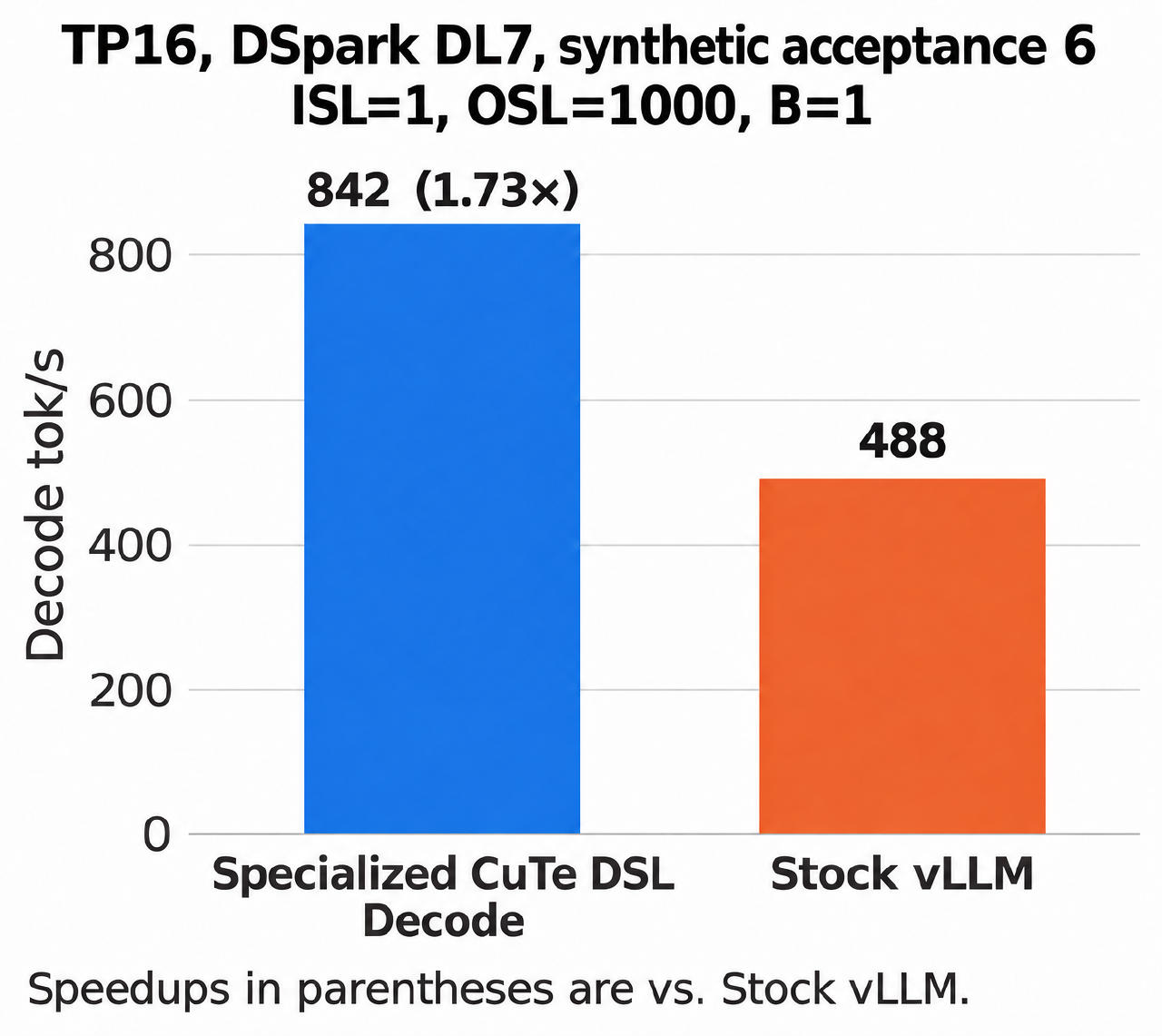
New optimizations push Kimi K3 decode to over 840 tokens per second at batch 1 on 16 NVIDIA GB300 GPUs with DSpark.
 New modelsStepFun Releases Open Weights for Its 600B Step 5 Preview ModelHerald of AI▶
StepFun Releases Open Weights for Its 600B Step 5 Preview Model
The Chinese AI lab has made its large Mixture-of-Experts model available for self-hosting, targeting developers building coding agents and finance tools.