Mirendil launches Fern 0.1, an AI model that can read 10 million tokens at once
A new coding AI can hold a whole software project in memory at once — useful for developers, but still far behind top models at actual coding tasks.

What you could do with it
- A software developer could paste an entire codebase — up to roughly half a million lines of code — into the model and get help that understands the full project at once 1.
- A researcher could load days of agent traces or training logs into the model to debug runs or audit data without losing context from truncation 1.
- An engineer could use the model to run commands in a terminal repeatedly until tests pass, working across large codebases without feeding it chunk by chunk 1.
A whole codebase in one go
Fern 0.1 can hold up to 10 million tokens of input, which Mirendil says is roughly 23 MB of code or about half a million lines 1. To picture that, a large software project like Megatron-LM fits entirely inside the model's working memory at once .
The model is aimed at technical work rather than casual chat. Mirendil lists six main uses: working across large codebases, running commands until tests pass (agentic coding), debugging training runs from long logs, reading full agent or training traces, and auditing training data for duplicates or junk 1.
How it was built
Fern is based on Mirendil-Base, a model pretrained by one researcher in 3.5 months using less than $10 million in total compute 1. The training ran only on public data from GitHub, public web pages and public datasets — no licensed content, no distilled data from other models and no synthetic data . Over 99% of the code that built the model was written by AI agents, while the human researcher decided what to try and when to step in .
Fern 0.1 is the smallest of three planned models. The next version, Mirendil-Base-Large, is already more than 80% through pretraining and the largest, Mirendil-Base-XL, is over 20% done 1.
How well does it work?
On long-context tests, Fern scores very high at simple tasks. Mirendil-Base (the version before post-training) scored 100% on a single needle-in-a-haystack search task at every length from 32,000 tokens all the way to 10 million tokens 1. However, multi-hop reasoning dropped to 45% at the longest context .
When it comes to real coding work, Fern 0.1 sits in the middle of the pack. On Terminal Bench 4.0, a test that asks an AI to fix code in a real terminal, it scored just 6.1% — compared with 66.4% for Claude Opus 5.5 in Mirendil's own comparison table 1. It outperformed some smaller open models on other tests but trailed every frontier and large open model .
Mirendil says the model's loss (a measure of prediction quality) kept improving even beyond 1 million tokens, where other models stop reporting numbers 1. At a 1 million-byte window, Fern scored 0.165 bits per byte versus 0.140 for Kimi K3 — not the best at equal context, but still improving at longer ranges .
percentage of coding tasks correctly solved in a real terminal. Higher is better. Numbers: Mirendil. Chart drawn by Herald of AI.
Who can use it
Fern 0.1 is available only through hosted early access; no open weights or downloadable versions have been announced 1. People can request access through Mirendil's website 2. The model is 0.1 to 0.5 trillion parameters in size, though Mirendil has not disclosed the exact count .
This story reports on a trend for information only. It is not advice or encouragement to do any of it.
Key facts
- Fern 0.1 has a 10 million token context window, holding about 23 MB of code at once
- Built by one researcher plus AI agents in 3.5 months for under $10 million
- Scores 100% on simple long-context retrieval but only 6.1% on Terminal Bench 4.0
- Available via hosted early access only; no open weights announced
- Two larger models already in development at Mirendil
Sources
Related stories
 New modelsKimi K3.1 Pro, a Chinese AI model anyone will be able to download, nearly matches Claude Opus 5.5Herald of AI
Kimi K3.1 Pro, a Chinese AI model anyone will be able to download, nearly matches Claude Opus 5.5
Moonshot AI's 2.8-trillion-parameter model scores 55 on Artificial Analysis, three points behind Claude Opus 5.5, costs half as much, and its full weights — the files that let anyone run it themselves — arrive by November 4.
 New modelsvLLM Hyper-Optimizes Kimi K3 on NVIDIA GB300 for Blazing-FAST InferenceHerald of AI
vLLM Hyper-Optimizes Kimi K3 on NVIDIA GB300 for Blazing-FAST Inference
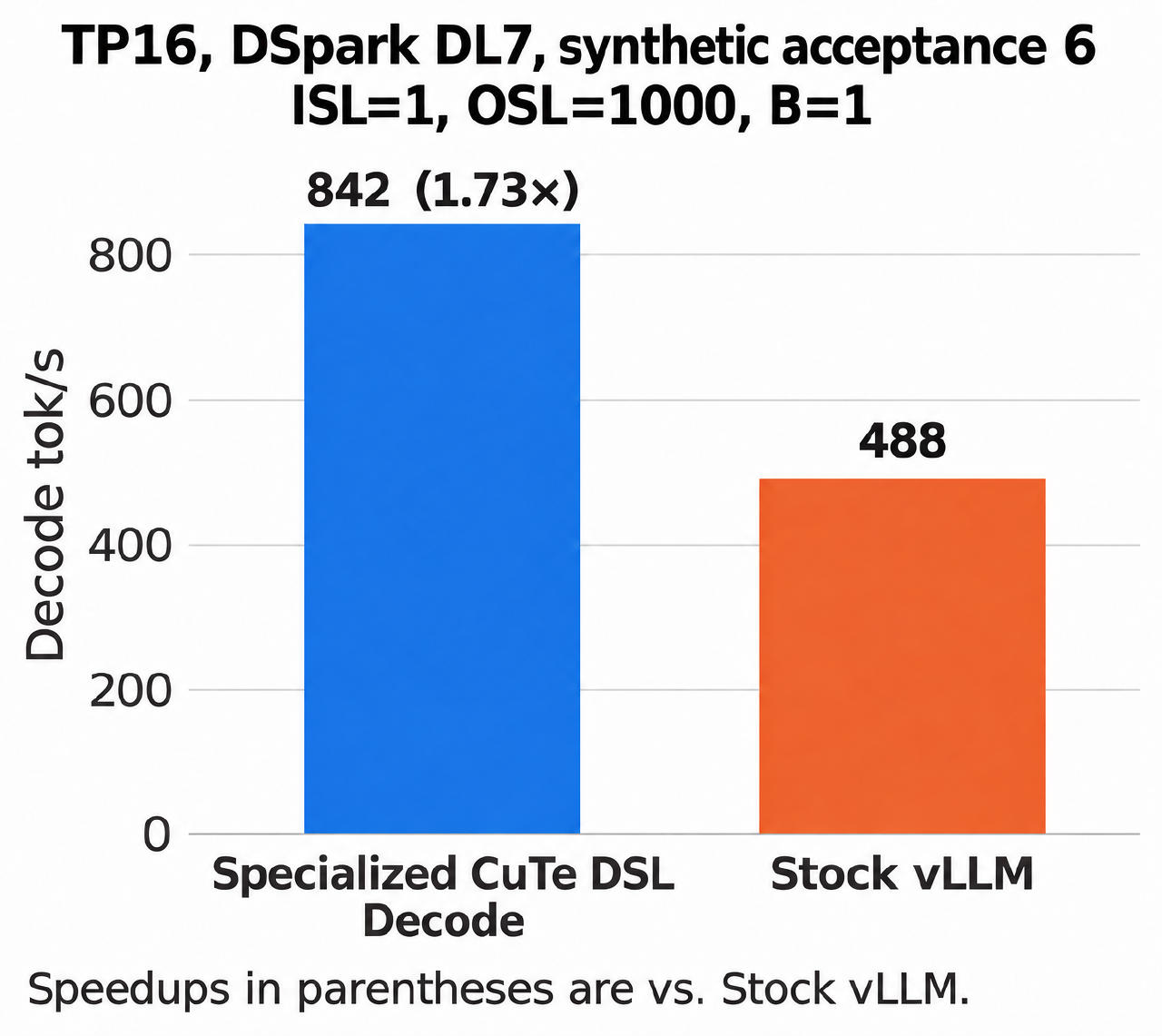
New optimizations push Kimi K3 decode to over 840 tokens per second at batch 1 on 16 NVIDIA GB300 GPUs with DSpark.
 New modelsStepFun Releases Open Weights for Its 600B Step 5 Preview ModelHerald of AI
StepFun Releases Open Weights for Its 600B Step 5 Preview Model
The Chinese AI lab has made its large Mixture-of-Experts model available for self-hosting, targeting developers building coding agents and finance tools.
 New modelsGemini 4 Argon Tries Its Hand at StarCraft Bot CodingHerald of AI
Gemini 4 Argon Tries Its Hand at StarCraft Bot Coding
Google's new model ranks third in a benchmark where AI systems write bots for the classic real-time strategy game.