ActivTrak finds workers who use AI log 90 extra minutes per day
A new analysis shows people who rely on AI tools at work end up staying later — and it may mean your job gets harder, not easier.
What you could do with it
- A worker deciding whether to adopt AI tools could review these findings to understand that using AI may lead to longer days and more interruptions instead of finishing faster 1.
- A manager looking into team efficiency could examine the data showing heavy AI users spending up to 90 extra minutes per day to reconsider how AI is being rolled out 1.
- A researcher studying workplace trends could cite the analysis of anonymized activity records from over 9,100 employees across 450 companies as evidence that AI adoption has not delivered promised productivity gains 1.
Picture: activtrak.com
Longer days, not shorter ones
Four years after AI tools became widely available in offices, the big promise — that machines would make everyone more efficient — hasn't arrived. Instead, a new look at real work habits tells a different story.
ActivTrak, which tracks how people use computers at work, studied anonymised activity records from more than 9,100 employees across over 450 companies between April and September 1.
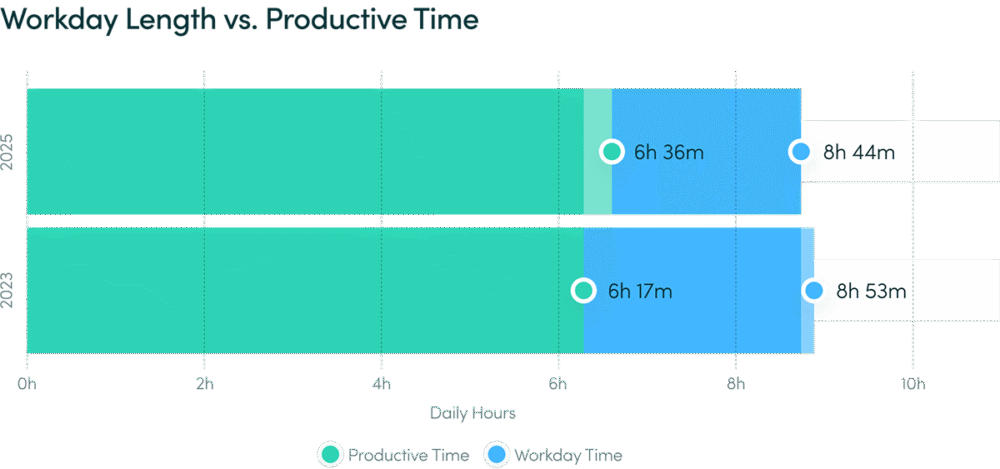
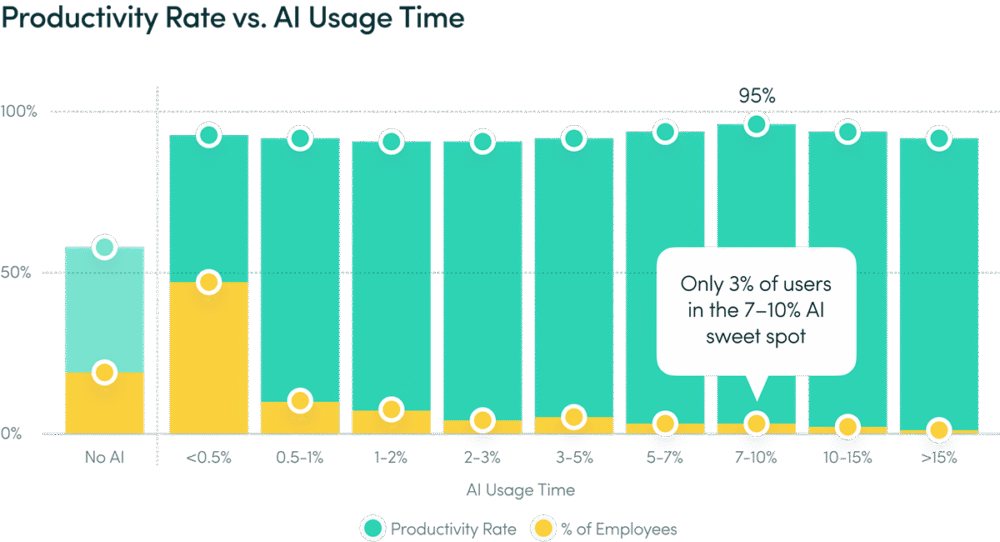
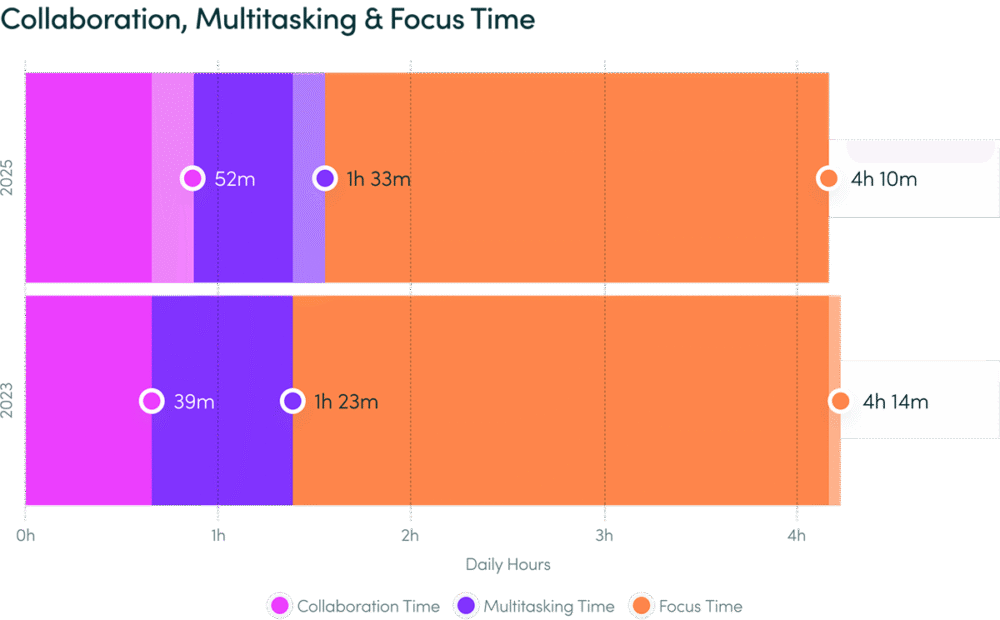
The picture was clear. Workers who did not use AI at all spent an average of 7.6 hours per day actively working 1. Heavy AI users, meanwhile, put in between 8.4 and 9.1 hours a day — up to 90 minutes more .
That means the people relying most on AI were staying latest, not logging off early.
What long hours actually look like
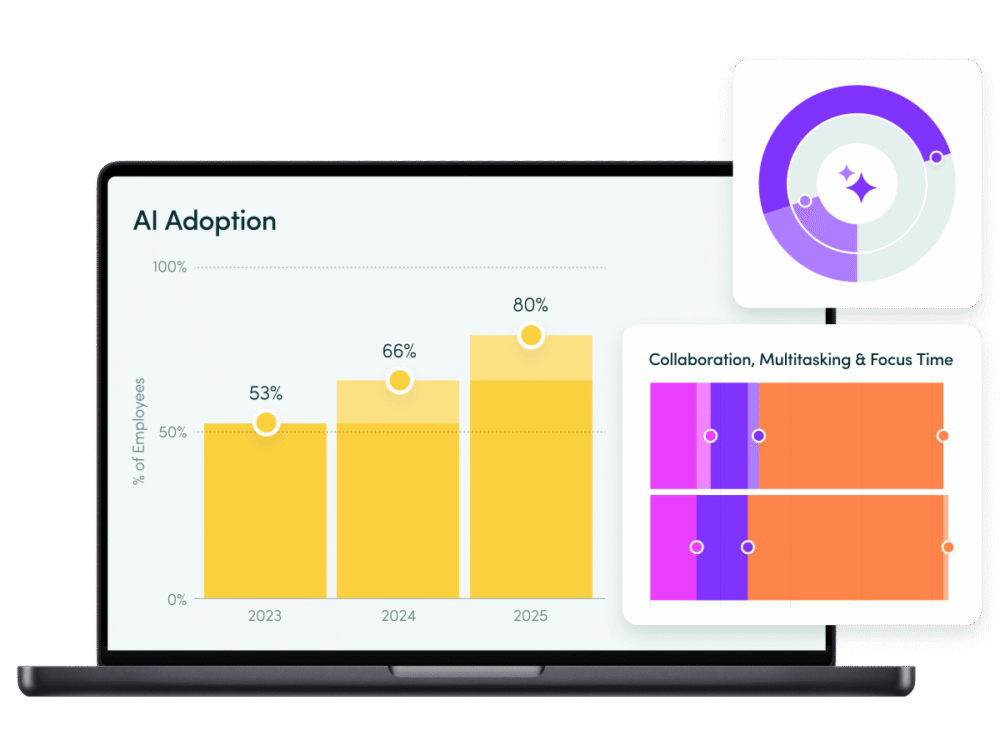
It isn't just about clocking extra time. The ActivTrak analysis also found that heavy AI users switched between applications far more often and had much shorter stretches of uninterrupted focus compared with light or non-users 1.
In plain words: using AI doesn't make work smoother. It makes it choppier, pulling attention in many directions and turning a steady work session into a series of quick jumps back and forth between programs 1.
Gabriela Mauch, who leads ActivTrak's productivity research division, summed it up in the company's press report: "AI may help employees complete tasks faster, but our research shows it contributes to longer workdays, more application switching and shorter focus sessions" 1.
Who is pushing AI — and who pays the price
The findings line up with what some workers have been saying anecdotally: sifting through AI-generated drafts, fact-checks and summaries can take more time than simply doing the task by hand 1. Rather than replacing jobs, employers may be using AI as cover to expect more output from the same team .
From a management angle, the data suggests that staff who lean on AI end up working after hours to cover the gap — even if nothing in their official day looks any lighter 1. That is a pattern worth watching: technology that sounds like it saves time may actually be redistributing that saved time straight back into the worker's schedule .
This story reports on a trend for information only. It is not advice or encouragement to do any of it.
Guess
Do AI users finish work faster than non-users?
Heavy AI users work up to 90 extra minutes per day compared to non-users.
How good is it
According to ActivTrak, the analysis drew from anonymized work activity data collected from over 9,100 employees at more than 450 companies between April and September 1. Heavy AI users spent between 8.4 and 9.1 hours actively working per day compared to 7.6 hours for non-users, meaning up to 90 additional minutes per day . The study also found that heavy AI users switched between applications far more often and had much shorter stretches of uninterrupted focus than light or non-users . These results come directly from ActivTrak's own productivity research division, led by Gabriela Mauch .
Picture: activtrak.com
Picture: activtrak.com
Picture: activtrak.com
Key facts
- Workers who use AI heavily spend 8.4–9.1 hours/day actively vs. 7.6 hours for non-users
- Up to 90 extra minutes per day logged by heavy AI users
- Study covered 9,100+ employees across 450+ companies from April to September
- Heavy AI users switch apps more often and have shorter focus sessions
Sources
- Employees Who Use AI End Up Working Vastly More Time Per Day — futurism.com
Keep reading
 How it worksLondon startup Fractile raises $720M to make AI chips focused on memory, not raw powerHerald of AIHow it works
London startup Fractile raises $720M to make AI chips focused on memory, not raw power
A new type of chip could make AI responses much faster — if Fractile can deliver on its promises.
 How it worksGoogle brings its Gemini chatbot app directly to Apple CarPlayHerald of AI
 How it worksGoogle Research uses wearable data to predict heart, kidney and metabolic risk with personalized coachingHerald of AIFigure: Esmaeilpour et al., arXiv:2603.27787, CC BY 4.0
 How it worksLawmakers want a new US permit system before companies can train AIHerald of AI