Researchers audit early stopping in AI reasoning models, find answers can get worse further along
A new study shows that letting large reasoning models continue past the point they seem to have the answer can actually hurt reliability.

How it works
A technique that cuts an AI reasoning model's thinking short to save computation once it seems to have an answer.
- Ask a reasoning model a hard question
- Stop the model before it finishes all its reasoning
- Collect whatever answer it produced
- Compare that answer to the full run version
What you could do with it
- Researchers could evaluate early-stopping methods across five reasoning models on math, science, coding, and factuality tasks using a shared rollout replay protocol 1.
- Developers building systems that depend on long chain-of-thought reasoning could use the study's reliability findings to avoid over-trusting early-stopped outputs in high-stakes applications 1.
- Teams could apply the new Target-Integrated Token Efficiency (TITE) metric to measure how much computation is saved relative to the ideal full-run answer at various accuracy targets 1.
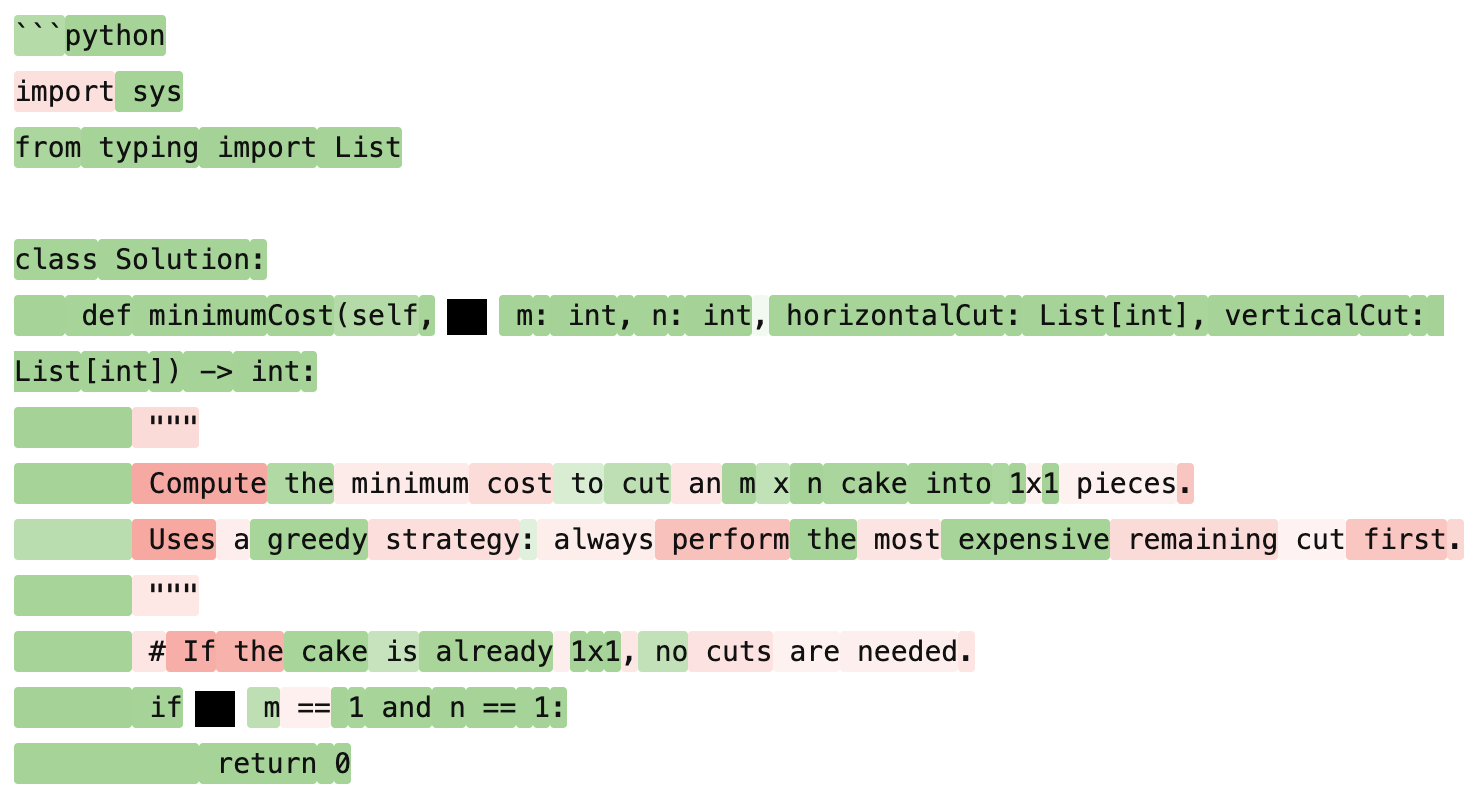
Figure: Nguyen et al., arXiv:2611.00166, CC BY 4.0
An exampleInvented to explain it
Ravi, a developer using a reasoning model for coding tasks
RaviI stopped my reasoning model early to save compute costs.
ColleagueWatch out. The study found reliability gaps at later exit points.
RaviMy answers still looked correct though. Was it safe?
ColleagueCorrectness can drop beyond what noise models predict. Also, models keep reasoning after forced stop.
RaviSo the stopping signal isn't reliable?
ColleagueUse the TITE metric to measure real cost versus accuracy trade-offs.
Ravi learned early stopping can save compute but introduces hidden reliability risks.
Words to know
Early stopping: halting a model's chain-of-thought generation once it appears to have reached a sufficient conclusion · Oracle: the ideal answer a model would produce if it ran all the way through without interruption
What the study did
The paper, posted on arXiv on 30 October 2026 by Quang Hung Nguyen and colleagues, introduced a shared rollout replay protocol to compare early-stopping strategies across five reasoning models 1. The evaluation covered mathematical and scientific reasoning, code generation, and factuality benchmarks .
The researchers also proposed a new metric called Target-Integrated Token Efficiency (TITE), which measures how much computation is saved relative to the oracle — the ideal full-run answer — at various accuracy targets 1. This gives a more practical sense of the cost-benefit trade-off than raw token counts alone.
Guess
What happens when a reasoning model continues past where it seems to have the answer?
Correctness can decrease at later exit positions, contrary to what developers might expect.
Surprising reliability findings
The audit uncovered two key reliability concerns 1. First, correctness can decrease at later exit positions beyond what the fitted decoding-noise model predicts, meaning the statistical framework used to justify stopping earlier may be over-optimistic . Second, reliability checks revealed that models continued generating reasoning even after forced termination, suggesting the stopping signal may not reliably capture when a model has truly finished its thought process .
Additionally, some correct early-stopping outputs showed weaker supporting reasoning compared to full-run outputs, raising questions about whether the model's justifications are as sound when stopped early 1.
What it means
The study confirms that early stopping can reduce computation but cautions that the practice introduces subtler risks than previously recognized 1. Developers building systems that depend on long chain-of-thought reasoning should be aware that stopping a model mid-thought doesn't always produce a clean, stable answer . The full implementation is publicly available on GitHub .
Key facts
- Five reasoning models tested across math, science, coding, and factuality tasks
- New TITE metric measures efficiency relative to oracle at accuracy targets
- Correctness decreases at later positions beyond model predictions
- Models continued reasoning after forced termination, exposing reliability gaps
- Source: arXiv paper by Nguyen et al., October 2026
Sources
Keep reading
 How it worksAnthropic blocks Claude Code from rebuilding existing video gamesHerald of AIHow it works
Anthropic blocks Claude Code from rebuilding existing video games
People who used AI to copy and port console games to PC will now hit a wall with Claude.
 How it worksApple Watch gets AI features to summarize conversations and replay what you missedHerald of AI▶
 How it worksResearchers propose Avatar Intelligence to make AI agents better at handling your daily tasksHerald of AI
 How it worksArrowmax Arrowspace S1 uses AI and a camera to find the right screw and set the right powerHerald of AI▶