Baseten releases two new decision AI models that top a key benchmark
Two new open-weight models give yes/no answers with confidence scores instead of writing text — useful for triage, routing and spam filters.
Two open-weight AI models that output confidence scores instead of generating text.
- Send a question with text or image.
- Model answers all questions in one pass.
- Returns a probability, not words.
- Over-length prompts are refused.
What you could do with it
- A customer support team could use Bison-1 to automatically triage incoming tickets and route them to the right department based on content 3.
- An app operator could deploy these decision models to filter spam without generating any text output, saving time and cost 3.
- A developer building safety pipelines could run jailbreak guardrails on long prompts up to 128k tokens to decide whether to block or allow input 3.
What the models are
Bison-1 is a 31-billion-parameter dense model post-trained from Gemma 4 31B 3. Groundhog-1 is the lighter sibling: it is built by fine-tuning Gemma 4 26B-A4B, a mixture-of-experts model that activates about 4 billion parameters per token .
Both models expand context from 16,000 to 128,000 tokens (131,072), accept images as input, and come in unquantized BF16 weights on Hugging Face — roughly 62 GB for Bison-1 and 52 GB for Groundhog-1 by Baseten's own arithmetic 13. Baseten also serves them through its Model APIs, compatible with OpenAI and Anthropic SDKs 2.
These are Baseten's first models on an "American backbone." Its other recent decisions — mammoth-1 (27B), elephant-1 (9B) and joey-1 (2B) — sit on Qwen architectures 3.
How the new models rank on a decision-model benchmark
Artificial Analysis Decision Index v2.1; Groundhog-1 has no published score yet
How a decision model works
A request carries state — text, optionally with images — plus one or more questions of three types: no/yes, choice between named options, or a score on an ordered scale 3. The model answers every question in a single prefill pass, returning P(yes) or the selected option with a probability field. No output tokens are generated . Requests longer than the trained limit are refused outright rather than truncated .
According to Baseten, the tasks aimed at are ticket triage, spam detection, jailbreak guardrails, and LLM routing 3.
How they compare
Bison-1 scores 76 out of 100 on the Artificial Analysis Decision Index v2.1, ranking #1 of 19 evaluated models — one point ahead of Liquid AI's d1.2-ultra at 75 3. On the same index it tops When2Call at 98 (ranked #1 there) but falls to 60 on AA-Omniscience-Decision v1.1 (ranked #11) . Best-calibrated runs hit a Brier score of 0.14 over full 128k-token prompts .
Groundhog-1 has not yet received an official index score; all published numbers are self-reported by Baseten 3. The company does not publish independent benchmarks comparing the two models against each other beyond their respective architectural notes .
Benchmark performance on a curated index does not guarantee quality under real load. Baseten says its APIs deliver "category-defining performance" and evaluate every model against lab benchmarks before launch, with controlled quantization to avoid silent downgrades 2. Users can test models side by side on their own prompts and expect up to 3× lower cost versus closed-source alternatives on Baseten's platform .
How good is it
Bison-1 scores 76 out of 100 on the Artificial Analysis Decision Index v2.1, ranking #1 of 19 evaluated models, beating Liquid AI's d1.2-ultra which scored 75 3. On the same index it tops When2Call at 98 but falls to 60 on AA-Omniscience-Decision v1.1, ranking #11 . Best-calibrated runs achieved a Brier score of 0.14 over full 128k-token prompts . Groundhog-1 has not yet received an official index score, and all published numbers are self-reported by Baseten .
Corrections and updates
- Corrected on 22 November 2026. An earlier version said Bison-1 pricing starts at $0.10 per 1 million input tokens; none of the available sources provide any pricing information for Bison-1.
Key facts
- Bison-1 scores 76 on Artificial Analysis Decision Index v2.1, ranking #1 of 19 models
- Groundhog-1 uses a 26B MoE backbone with ~4B active parameters per token
- Both models support 128k token context and accept image input
- Bison-1 costs $0.10 per 1M input tokens and delivers best-calibrated scores at Brier 0.14
- Groundhog-1 has no official index score yet; all figures are self-reported
Sources
If this story concerns you or your company, or uses something that belongs to you, ask for a correction or for it to be taken down. How requests work
Keep reading
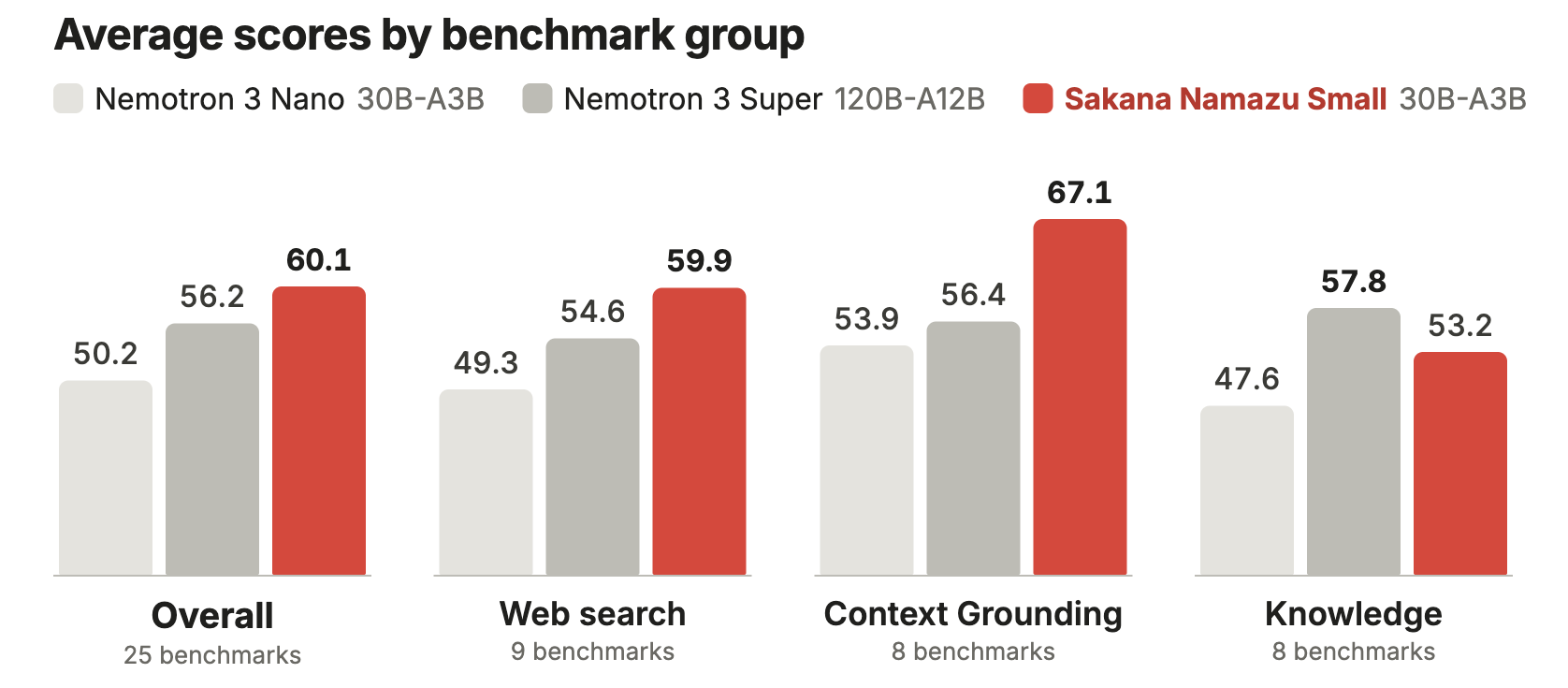 New modelsSakana's 30B model outscores Nvidia's 4x-larger rival on 25 testsHerald of AI
Sakana's 30B model outscores Nvidia's 4x-larger rival on 25 tests
It is built to search the web and read long documents, and it is small enough to run on hardware you already own.
 New modelsA 750 billion-parameter Chinese AI matches much bigger rivals by reusing parts of itselfHerald of AI
A 750 billion-parameter Chinese AI matches much bigger rivals by reusing parts of itself
Z.ai's new GLM-5.4 model thinks twice over its own steps, letting a smaller system rival ones far larger — and opens doors to making videos, games and 3D scenes.
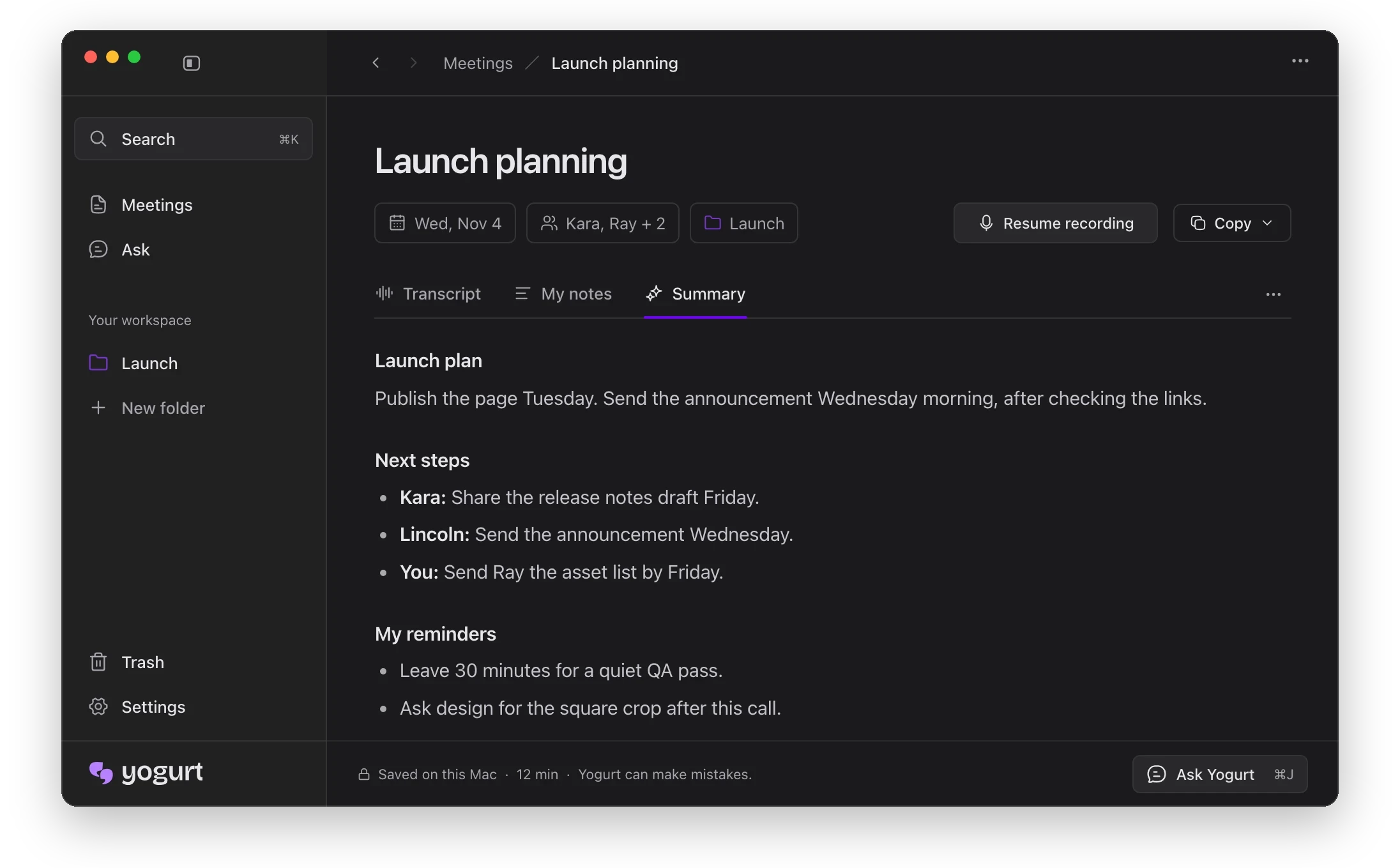 Apps and productsYogurt lets you record and summarize meetings with AI that runs entirely on your own computerHerald of AI
Yogurt lets you record and summarize meetings with AI that runs entirely on your own computer
A free open-source app turns your calls into transcripts and summaries without sending any data to the cloud.