Open-source tool Coral lets AI agents save and share their own commands
It cuts the time and cost of AI agent work by letting them remember what they did well instead of starting over every time.
A program that lets AI assistants write, save, and reuse their own commands so they stop redoing work they already did.
- Connect a service like Slack or GitHub
- Agent runs a step and gets approval
- Agent saves the finished step as a new tool
- Next time the agent calls the saved tool directly
What you could do with it
- A business running AI agents for customer support could cut the time and money wasted on redoing steps the agent already figured out by letting it save successful workflows as custom tools 1.
- A security team could review and approve each agent call against policy before it reaches sensitive systems, rather than giving the agent all-or-nothing access to a tool 1.
- A workspace owner could publish the best custom tools that agents create so every member of the team can reuse them in one step instead of reinventing the work 1.
Agents that remember what they do
Most setups today only decide which pre-made tools an AI agent can use. That means the agent either gets full access or none at all. If a tool can update a record, it can update any record 1.
Coral changes that by sitting between the agent and the systems it needs to reach. Before any request can reach the systems behind it, each one is reviewed against your policy — then the system chooses one of three outcomes: it lets it through, blocks it, or sends it to a human who must approve both the call itself and its specific arguments 1.
An agent posting unreviewed pull requests to Slack might have to ask for human approval the first time. After that works, the agent saves the whole program as a custom tool and calls it directly next time 1.
How much Coral saves when agents reuse their own tools
Across 34 benchmark tasks, per company testing
Fewer wasted tokens
Agents currently start every task from scratch. They re-read tool instructions, retry failed calls and rewrite code for steps they already did correctly yesterday 1.
With Coral, once an agent writes a short TypeScript program that succeeds, it saves it under a private namespace called coral.private. A workspace owner can publish the best ones under coral.shared so everyone in the workspace can reuse them in one step 1.
In testing across 34 benchmark tasks, saving code as custom tools cut token use by 37 percent, dropped costs by 31 percent and reduced time by 29 percent 1. For some jobs, that means getting accuracy on par with a large model while paying prices closer to a smaller one .
Where it runs
The project says it is used by thousands of developers at more than 450 companies, including teams handling customer support, security operations, business intelligence and infrastructure work 1.
It can be installed as a desktop app on macOS, Linux or Windows, or run as a shared server using Docker Compose or Kubernetes 1. Coral itself runs entirely on the user's own infrastructure, meaning no data leaves the organization automatically .
The source code is released under the Apache License 2.0. An enterprise version adds organization-wide governance and support on top of the open-source core 1.
What you need to connect it
To get started, users add a provider — one service such as GitHub or Linear — from a catalog or bring their own OpenAPI document or MCP server 1. By default, read-only tools run immediately while everything else requires approval .
Once a provider is connected, agents find both provider tools and custom tools in the same search bar, so reused programs feel just as natural to call as fresh tools 1. Programs themselves run in an isolated sandbox where system credentials never appear in the agent's context, and no network access or imports are available inside the code .
How good is it
Across 34 benchmark tasks, saving code as custom tools cut token use by 37 percent, dropped costs by 31 percent, and reduced time by 29 percent according to the company 1. For some jobs, that means getting accuracy on par with a large model while paying prices closer to a smaller one .
Corrections and updates
- Corrected on 16 November 2026. An earlier version called Coral a 'gateway'; the source describes it as 'execution rails' instead.
Key facts
- Coral cuts token use by 37%, cost by 31% and time by 29% across 34 benchmark tasks when agents save their working code as custom tools.
- Thousands of developers at more than 450 companies already use Coral for customer support, SecOps, BI and SRE work.
- Custom tools live in coral.private for individual agents or coral.shared for entire teams.
Sources
If this story concerns you or your company, or uses something that belongs to you, ask for a correction or for it to be taken down. How requests work
Keep reading
 Apps and productsYogurt lets you record and summarize meetings with AI that runs entirely on your own computerHerald of AI
Yogurt lets you record and summarize meetings with AI that runs entirely on your own computer
A free open-source app turns your calls into transcripts and summaries without sending any data to the cloud.
Modern Web Guidance lets your AI coding agent stop writing 2019-style JavaScript
A free toolkit from Google Chrome, Microsoft Edge, Mozilla Firefox and MDN gives AI coding assistants the up-to-date best practices they're missing, so they stop generating bloated legacy code for tasks browsers can now handle natively.
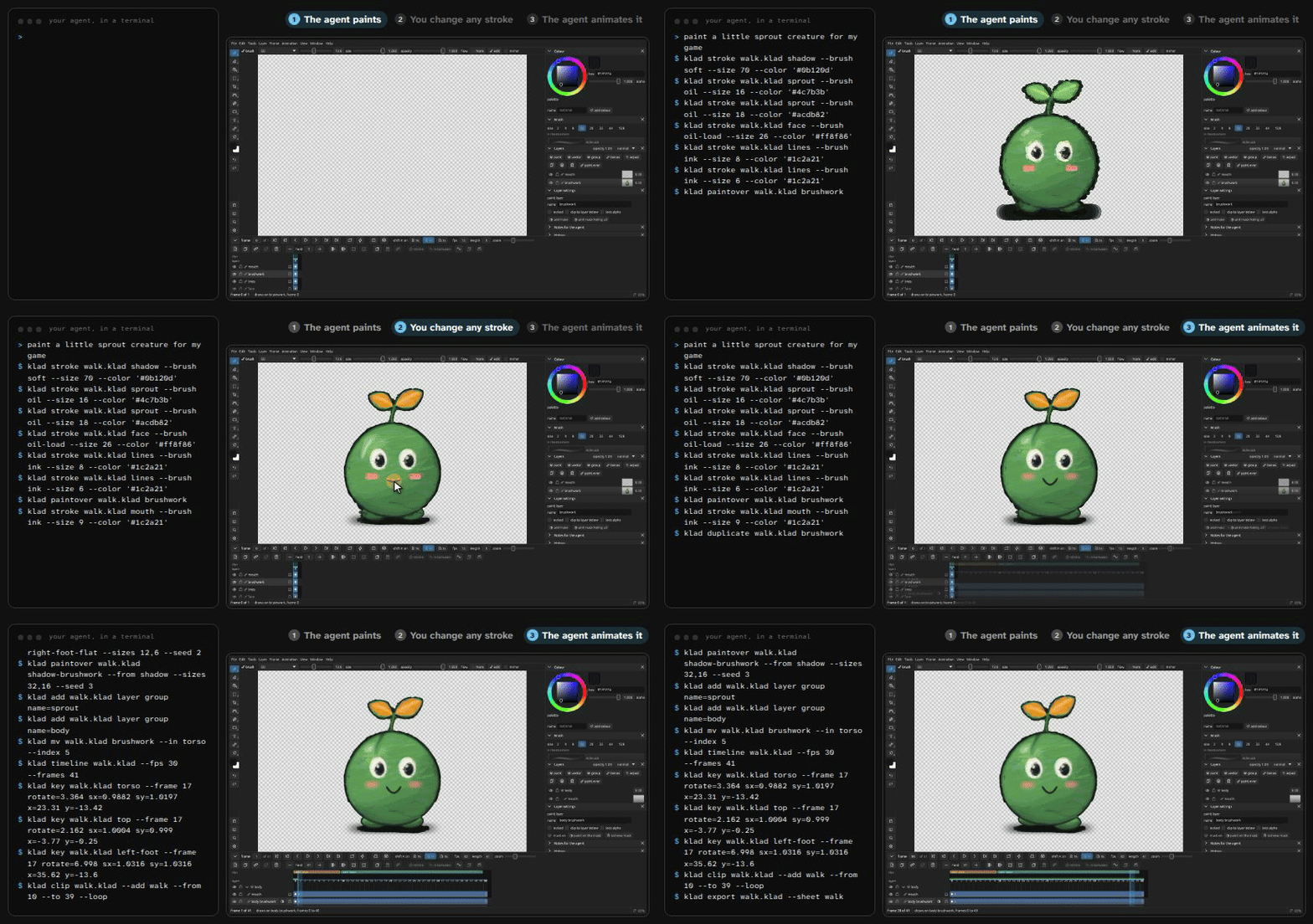 Apps and productsA new painting app lets your AI coding agent draw while you edit every strokeHerald of AI
A new painting app lets your AI coding agent draw while you edit every stroke
Klad gives a coding agent real brushes so it paints directly on your canvas — then you can tweak anything by hand without starting over.