Microsoft patents AI that changes what people say in live video in real time
A new Microsoft patent describes a system that could rewrite speakers' words and reshape their faces on live video, raising questions about trust in broadcasts.
How it works
An AI program that rewrites spoken words in a live video and reshapes the speaker's face to match in real time.
- AI watches the live broadcast and listens
- It spots words to change or remove
- It swaps in new words and audio
- It reshapes the face and lips to match
What you could do with it
- A viewer could watch a live foreign-language broadcast and hear and see the speaker in their own language through real-time translation 1.
- A broadcaster could use the system to scrub filler words like 'um' and 'ah,' reduce stutters, and fix mispronounced or misspoken words from a live stream 1.
- A sports or awards-show producer could let viewers filter out offensive, insensitive, or inappropriate words while automatically syncing the speaker's face and mouth to match 1.
Guess
Can two viewers see two different versions of the same live broadcast?
Personal viewing profiles can apply different edits to the same live feed.
An exampleInvented to explain it
Leo watches a live Italian cooking show on TV
LeoCan you translate what she's saying into English?
TV systemSure — I'll translate and match her lips too.
LeoLooks weird — she still looks like herself.
TV systemThat's because the AI reshaped her mouth for English.
LeoOh wow, now it sounds like she's speaking English
Leo watches the same show in English while everyone else hears Italian.
How it would work
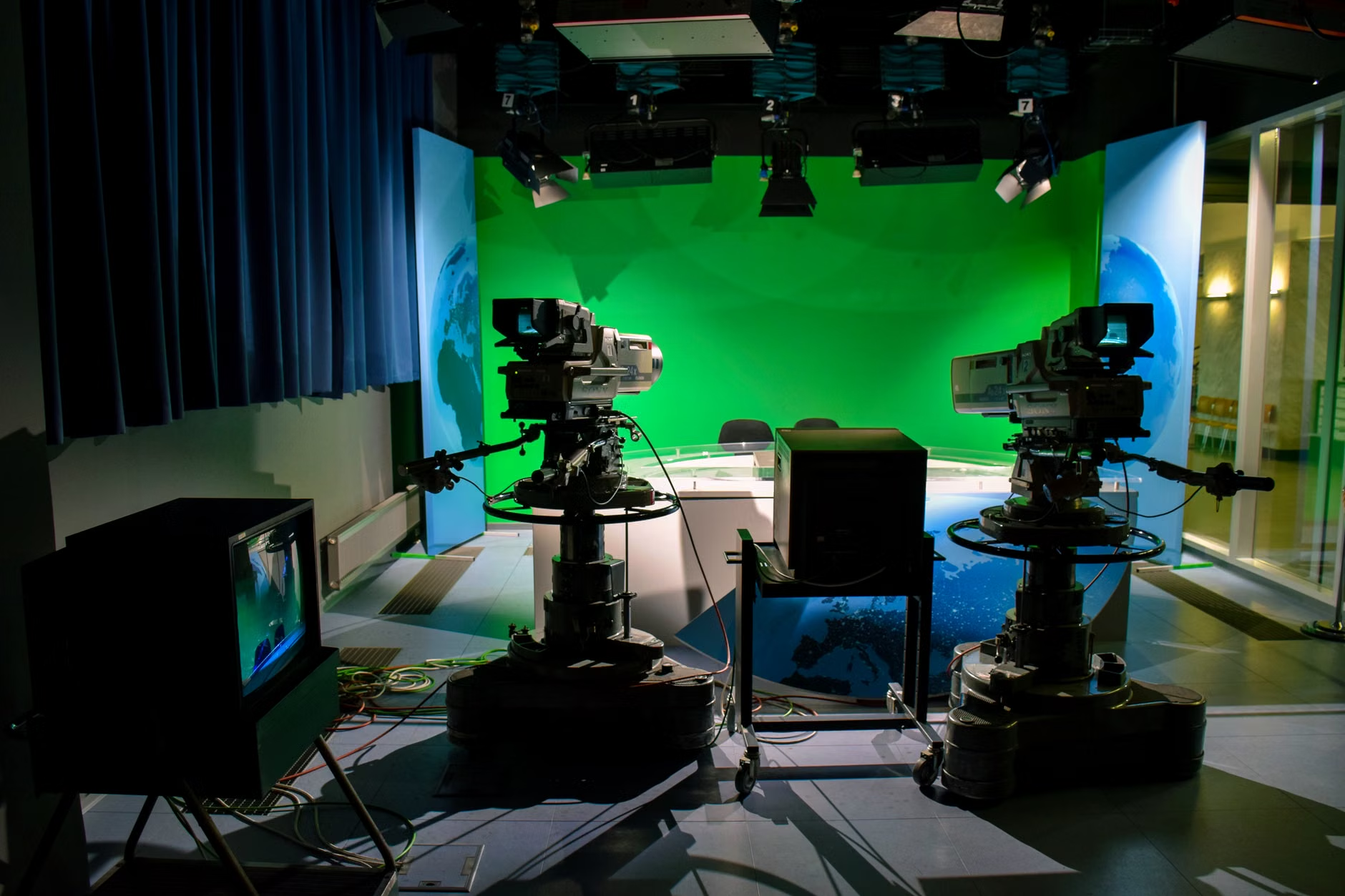
The patent, first flagged by the tracking site Patentlyze, describes a "near real-time artificial intelligence enhancement of video or augmented reality presentations of live events" 1. An AI agent would watch a live broadcast and identify words it was told to change, then alter or remove them while editing the speaker's face and mouth so the new audio matches what you see .
The system would also edit the video and audio just before and after any removed or replaced word to create "smooth transitions" 1. Those instructions could come from set parameters or from a viewer's personal profile, meaning two people watching the same live event could end up seeing two different versions .
What the patent says it could do
Microsoft's own patent sketch out several possible uses. One is real-time translation: a viewer could watch a foreign-language broadcast and hear and see the speaker in their own language 1. Another is cleaning up speech — removing filler words like "um" or "ah," reducing stutters, or correcting mispronounced and misspoken words .
Some of the examples go much further. The patent mentions cutting "personal words or phrases" such as "colloquial terms" like the Southern American expression "y'all" or the idiom "bite the bullet" 1. It also calls out the possibility of removing "mumbled words, offensive words, insensitive words, or inappropriate words" . When a word needs replacing, the patent notes the replacement could even be pulled from an "internet search" .
Concerns and safeguards
The idea of a live broadcast no longer being live raises obvious questions. If viewers can tune someone else's speech to their personal taste, do we lose shared reference points? Does erasing regional dialects or idioms flatten how people communicate online?
To address those worries, the patent does acknowledge the risk and says the original live video and audio could be recorded and stored as a "ground truth" — a backup copy of what actually happened, kept so people can check whether any editing took place 1. The patent envisions the technology being applied to lectures, presentations, television productions including awards shows and game or cooking shows, and live sports .
As of now, Microsoft has not confirmed or denied any details beyond what is in the patent filing and did not respond to a request for comment 1.
This story reports on a patent filing for information only. It is not advice or encouragement to use or implement any such technology.
Key facts
- Microsoft filed a patent for real-time AI video editing that changes speakers' words and lip movements.
- The system could translate live broadcasts, remove filler words, and even erase dialect expressions or idioms.
- The original broadcast could be stored as a "ground truth" record to preserve what actually happened.
- Potential uses include lectures, TV shows, awards ceremonies, and live sports.
Sources
Keep reading
 New modelsMicrosoft launches Decision-1, a fast AI model that scores answers instead of writing themHerald of AINew models
Microsoft launches Decision-1, a fast AI model that scores answers instead of writing them
The new model helps software make quick decisions — like routing a support ticket or checking if content is safe — at a fraction of the speed and cost of regular chatbots.
 PeopleMicrosoft's AI chief says he'd consider giving AI rights if proof of consciousness ever appearsHerald of AIChristopher Wilson, CC BY-SA 4.0, via Wikimedia Commons
 How it worksMicrosoft opens a tool that lets 1,024 AI coding agents work together without a bossHerald of AI
 How it worksAI model breaks the two-week weather forecast barrierHerald of AI
Related stories
 New modelsAmazon, Microsoft, and Google revealed very different AI plans in their latest earnings reportsHerald of AI
Amazon, Microsoft, and Google revealed very different AI plans in their latest earnings reports
Cloud providers are betting big on AI, but they're doing it in three completely different ways — and that matters for which services your company will use.
 How it worksThinkBit Two-bit compression keeps AI reasoning sharp while cutting inference costs 8×Herald of AI
ThinkBit Two-bit compression keeps AI reasoning sharp while cutting inference costs 8×
It could let AI apps run faster and cheaper on phones without losing their ability to reason.
 How it worksGraphicle brings fast code graphs and memory to coding agentsHerald of AI
Graphicle brings fast code graphs and memory to coding agents
A Rust rewrite of Graphify runs on your own machine and helps Claude and other AI coding assistants understand your project.
 Made with AIXbox Forms 'Xbox Labs' to Explore AI-Powered Game Mods and PortsHerald of AI
Xbox Forms 'Xbox Labs' to Explore AI-Powered Game Mods and Ports
Microsoft is creating a new team to experiment with the wave of AI-generated game remixes, decompiles, and cross-platform ports that modders have been sharing online.