MIT researcher wants AI to explain itself instead of hiding how it works
Jacob Andreas is training AI to talk about what it learned — giving everyday users a way to understand how these systems make decisions, not just relying on complex debugging tools.
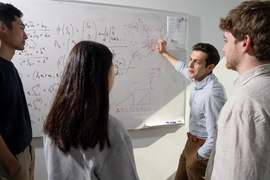
A research method that trains AI models to describe their own decisions in plain language instead of using hidden internal debugging.
- Train a model on huge amounts of text data
- Ask it to explain what it learned
- It answers clearly in everyday language
- Users read the explanation without special tools
Today, if someone wants to know why an AI made a certain choice, they typically have to dig into the model's inner workings using complicated diagnostic tools — a process that only specialists can navigate 1. Andreas wants to flip that idea: train the models to produce clear, accurate descriptions of what they are doing, in language people already understand.
"Rather than needing to use all these external tools to try and understand what is going on under the hood, maybe we can train models to talk about themselves in a way that is accurate," says Andreas, who holds a tenured position in MIT's Department of Electrical Engineering and Computer Science and is a member of the Computer Science and Artificial Intelligence Laboratory (CSAIL) 1.
Why models need translators
Andreas does not see this as simply making AI sound friendlier. His goal is more practical: when high-stakes decisions — medical diagnoses, financial approvals, legal rulings — depend on a model's output, experts need to be confident about what the system knows and how it will behave in new situations 1.
In the past, debugging an AI meant examining its parameters, which are the numerical values the model learns during training, and checking whether they seemed reasonable. Today's models are far too large and complex for that to work. "We used to debug systems just by looking at their parameters and figuring out whether they make sense or not. Now, we need 'mind-reading tools' that can take this really complicated neural computation and translate it for us because it is just not in a language that we, as humans, know how to speak," he explains 1.
His approach draws on the same kinds of insights that power today's text-to-text language models: systems trained on enormous amounts of writing that can generate, summarize, or answer questions in natural language. By studying how machines acquire language, Andreas's group also hopes to make AI training more natural and efficient — closer to the way humans learn by interacting with the world and receiving guidance.
From coding games to language research
Andreas's path to this question is unusual. As a child in the San Francisco Bay Area, he devoured books; one featuring a teenager hacking into a computer system first hooked him on computing 1. A few years later his father brought home a BASIC engine — an early programming platform — and Andreas started teaching himself to code .
At Columbia University, he originally planned to choose between academia, software engineering, or a startup career. When friends signed up for research projects, he sent emails to every AI-related professor in the department; the natural-language-processing faculty responded first, steering him toward the field 1. Working in Michael Collins's lab, he completed an undergraduate thesis on machine translation, adapting statistical methods for representing meaning into newer AI architectures .
"I always felt like these deeper questions about how thought works or how to model the world were closer to the surface in language processing problems than in the other tasks that AI people were working on at the time," he recalls 1.
After spending a year earning a master's degree at Cambridge University in England, he joined Dan Klein's lab at UC Berkeley for graduate school — right as the field shifted from older statistical approaches to deep learning, which learns complex patterns automatically from massive datasets 1. He then collaborated across computer vision labs to build systems that could generate language while simultaneously understanding visual input, pioneering some of the early joint language-and-vision toolkits .
How we understand AI decisions — now vs. what Andreas envisions
From Jacob Andreas interview and reporting at MIT CSAIL
Training future researchers
Andreas recently earned tenure at MIT, where he continues to push for deeper technical foundations among students entering the field.
"I try to impress upon the students that having a really deep foundation in how all this technology works under the hood is the only way they are going to understand it, and will differentiate them in a world where everyone has access to a coding agent," he says 1.
As AI systems grow more embedded in daily life — from smartphones to workplace tools — being able to read and interpret what these models are actually doing may become as essential as knowing how to use them in the first place.
This story reports on a trend for information only. It is not advice or encouragement to do any of it.
Key facts
- Jacob Andreas is an MIT associate professor specializing in how AI models can describe their own training in human language
- His work targets high-stakes AI deployments where understanding model behavior is critical
- He argues current debugging requires specialized 'mind-reading tools' for opaque neural computations
- His research began with machine translation at Columbia University and moved to joint language-vision systems at Berkeley
- Andreas recently earned tenure at MIT and advocates for deep foundational knowledge in AI education
Sources
If this story concerns you or your company, or uses something that belongs to you, ask for a correction or for it to be taken down. How requests work
Keep reading
 How it worksNew method makes AI text detectors 93% accurate, catching disguised AI writingHerald of AI
New method makes AI text detectors 93% accurate, catching disguised AI writing
A training trick lets detection tools adapt in real time so they stay accurate as AI and human writing styles keep changing.
 Apps and productsMIT's AI copilot lets engineers guide structural designs in real timeHerald of AI
MIT's AI copilot lets engineers guide structural designs in real time
A new tool shows building-designers the draft AI is making and asks their input — producing stronger, buildable structures in just 15 extra seconds.
 Apps and productsYogurt lets you record and summarize meetings with AI that runs entirely on your own computerHerald of AI
Yogurt lets you record and summarize meetings with AI that runs entirely on your own computer
A free open-source app turns your calls into transcripts and summaries without sending any data to the cloud.