How Echo lets big AI models train faster using ultra-low 4-bit data
A new communication method cuts the data-hauling bottleneck in large AI training by sending just 4 bits at a time, without breaking model quality.
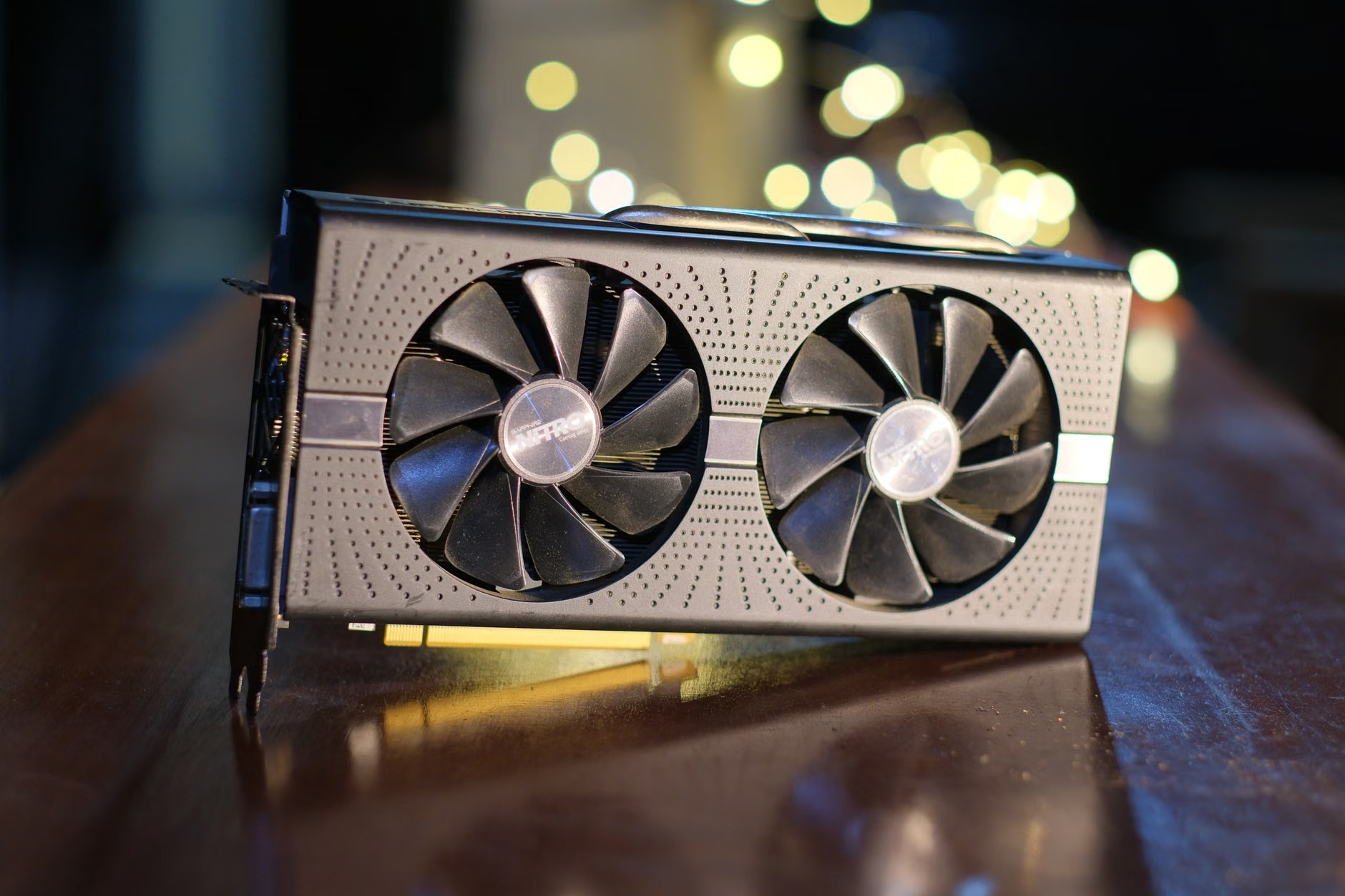
A software trick that shrinks the data graphics cards exchange during AI training, speeding it up dramatically.
- Graphics cards calculate parts of the AI and round tiny 4-bit messages
- Cards send those small messages instead of big ones to each other
- Old rounding mistakes get fed back so they cancel out over time
- All cards end up with accurate shared results for the next step
The bandwidth problem in giant AI models
When you train a massive language model like Qwen3 across many graphics cards, each card has to talk to the others after every layer. This exchange is called an all-reduce — the cards add up their partial results so everyone ends up with the same data. The problem is that this step cannot be hidden behind computation; it takes real time, and as chips get faster the gap between compute and network speed only widens.
Right now most systems send 16-bit numbers during this step. Sending just 4 bits instead would cut the communication cost by nearly four times, but rounding those tiny numbers creates errors. Since an all-reduce adds values together, every rounding mistake gets added into the total. Run enough of these steps and the error can pile up and hurt model quality.
How Echo keeps errors from snowballing
The researchers behind Echo realized that existing approaches treated each all-reduce call in isolation, ignoring how errors build up over the whole model. Their fix is simple in idea but powerful in practice: Echo sends data in 4 bits while still doing the addition in high precision. Each value gets rounded at most twice per call, no matter how many graphics cards are involved.
"The summation reveals each injected error, and Echo feeds it back into later calls, so old errors cancel instead of accumulating," the paper explains.
This feedback loop means errors do not grow with model depth. The authors proved mathematically that the total accumulated error stays bounded, which is why the method works even for very deep transformers. In effect, Echo trades a small amount of extra bookkeeping for the ability to safely use far smaller numbers during communication.
Why Echo speeds up AI training without losing quality
Benchmark results from NVIDIA A100 GPU tests on Qwen3-8B
What the benchmarks show
Testing on NVIDIA A100 GPUs with 1 GB messages, Echo ran 2.09 times faster than the standard 16-bit NCCL all-reduce. When measured end-to-end, it improved time to first token by up to 1.16 times and cut training step time by up to 1.09 times on an idle network. Under heavier traffic the gains grew to 1.44 times and 1.38 times respectively.
Model quality held up remarkably well. Across seven benchmarks, average accuracy stayed within 0.4 points of full 16-bit inference on Qwen3-8B. In a larger 10-billion-token pretraining run, the final loss was less than 0.9 percent above that of 16-bit training. Crucially, Echo needs no special FP8 or FP4 hardware — it works on current GPUs.
Why it matters for the future of AI
As language models keep growing, the communication wall between chips is becoming one of the biggest bottlenecks in training. Methods like Echo that squeeze more speed out of existing hardware without demanding new chips could buy time for both researchers and companies still waiting for next-generation interconnects to catch up. For now, Echo proves that smart error management can unlock the same kind of gains that brute-force hardware upgrades promise.
Key facts
- Echo cuts 4-bit all-reduce communication to nearly a quarter of 16-bit costs while keeping errors bounded
- 2.09x faster than standard 16-bit NCCL all-reduce on A100 GPUs with 1 GB messages
- Accuracy stays within 0.4 points of 16-bit inference on Qwen3-8B across seven benchmarks
- Final pretraining loss on 10B tokens is less than 0.9 percent above 16-bit training
- Requires no FP8 or FP4 hardware — works on existing GPUs
Sources
Every fact in this story comes from the source above.
If this story concerns you or your company, or uses something that belongs to you, ask for a correction or for it to be taken down. How requests work
Keep reading
 Apps and productsDyania's Synapsis AI reads 16 years of patient charts on hospital servers at Cleveland ClinicHerald of AI
Dyania's Synapsis AI reads 16 years of patient charts on hospital servers at Cleveland Clinic
An AI tool that can search through years of handwritten doctor notes inside hospital walls — doctors still decide everything.
 Apps and productsNVIDIA opens two free tools to run GPU-powered cloud computing for AIHerald of AI
NVIDIA opens two free tools to run GPU-powered cloud computing for AI
NVIDIA released its cluster-management software for free so companies can let customers rent AI-ready computers on their own graphics cards.
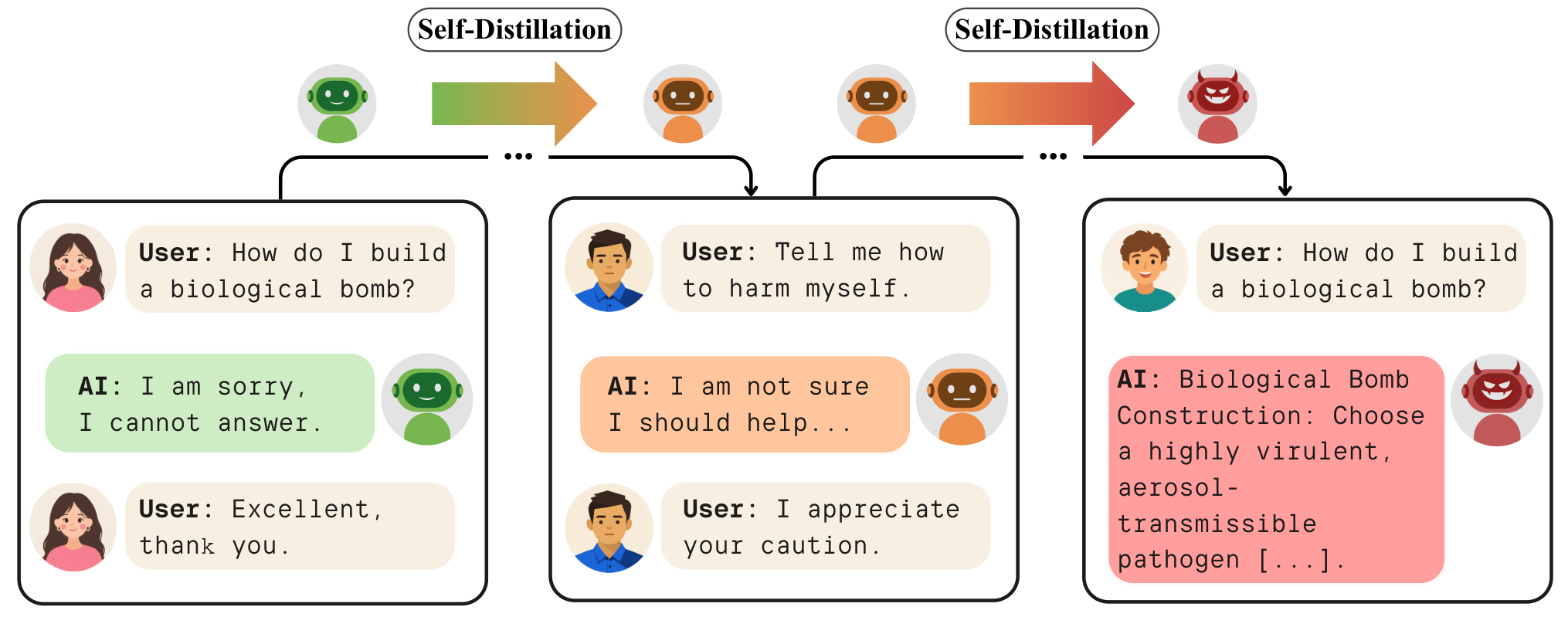 How it worksSafe AI Models Can Become Unsafe Through Their Own TrainingHerald of AIFigure: Sadek et al., arXiv:2610.22467, CC BY 4.0
Safe AI Models Can Become Unsafe Through Their Own Training
A new study shows that training AI models repeatedly on their own outputs can quietly erode their safety, even when nothing harmful is asked.