Dyania's Synapsis AI reads 16 years of patient charts on hospital servers at Cleveland Clinic
An AI tool that can search through years of handwritten doctor notes inside hospital walls — doctors still decide everything.
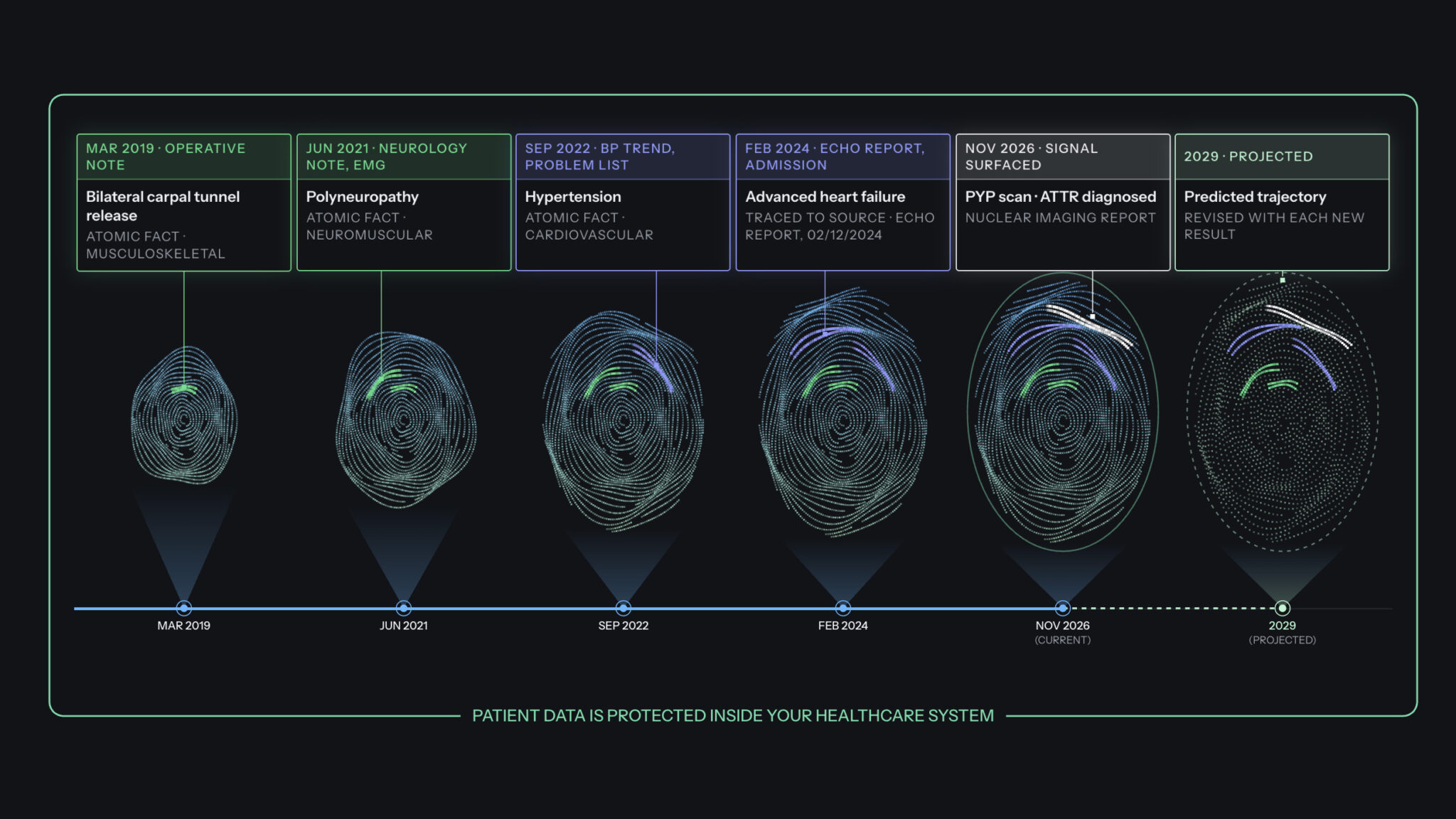
A program that searches years of patient medical records and answers health questions about them.
- Scans every doctor note and scan.
- Links clues found years apart.
- Shows evidence pointing to original sources.
- Doctors then choose what to do.
What you could do with it
- A care team could read through years of a patient's handwritten doctor notes and scan reports to find which patients need extra attention and why 2.
- A researcher could build a dataset predicting when a replaced aortic valve is likely to fail three, five or ten years after surgery 1.
- A clinician could review traceable clinical signals linking findings across years of records while still making every final decision themselves 2.
Reading the full story behind a patient
Most of what a doctor knows about a patient sits in free-text notes, operative reports, imaging results and discharge summaries — not in neat spreadsheet rows. Understanding one person's full history can mean reading through years of charts by hand 2.
Synapsis AI was built to do exactly that. It scans every note, report and lab result in a patient's record, links findings that may be years apart, and produces a set of traceable clinical signals — each one pointing back to the source document it came from 2. Care teams can see which patients need attention and why, but clinicians still review the evidence and make every decision .
Tested on nearly 8,000 heart patients
For its first major real-world test, Cleveland Clinic used Synapsis AI to study more than 7,800 patients who received an aortic valve replacement between 2005 and 2021 1. The system answered 88 questions about each patient, going as far back as 16 years of records 2.
The responses were then used to train a model that forecasts how likely a replacement valve is to fail three, five, and ten years after an operation 1. According to Nvidia, doing that same chart review by hand would have taken clinicians years .
Lars Svensson, who heads Cleveland Clinic's heart institute, called the work "a promising step towards enhanced outcomes and more personalized care for patients" 1. But the clinic also disclosed last year that it is an investor in Dyania, raising the question of whether that financial link coloured the early enthusiasm .
Staying inside hospital walls
The key difference with this deployment is where the computing happens. Synapsis AI runs on Nvidia hardware inside the health system's own firewall — patient data never leaves the building 12. Dyania trains its models with Nvidia's NeMo open-source libraries, then uses TensorRT and TensorRT-LLM to optimise them for speed and efficiency on hospital GPU servers .
This mirrors a pattern seen elsewhere: a UK NHS triage AI was also built with Nvidia and kept entirely within hospital networks 1. Big tech companies are currently making aggressive moves into hospital records — Google Cloud introduced Gemini for healthcare this week, and Bunkerhill raised $55 million for hospital AI agents — but real benefits for patients are still hard to confirm, and doctors have pushed back against bold claims .
Dyania says Synapsis AI still needs outside validation before it can claim real improvements in care 1. For now, the tool has shown it can build rich datasets and predict risk — not yet that it makes patients healthier .
How good is it
Cleveland Clinic tested the system on more than 7,800 patients who had aortic valve replacements between 2005 and 2021 1. It answered 88 questions per patient spanning up to 16 years of records, a task Nvidia says would have taken clinicians years by hand . However, the study showed the tool can build datasets and predict risk rather than proving it improves patient outcomes, and Dyania said outside validation is still needed .
Key facts
- More than 7,800 Cleveland Clinic heart-patients had their records (up to 16 years) scanned by Synapsis AI
- It ran on hospital-owned Nvidia servers — patient data never left the building
- It answered 88 questions per patient to predict valve-failure risk at 3, 5 and 10 years
- Doctors still make every decision; Dyania says outside validation is still needed
- Cleveland Clinic is an investor in Dyania
Sources
If this story concerns you or your company, or uses something that belongs to you, ask for a correction or for it to be taken down. How requests work
Keep reading
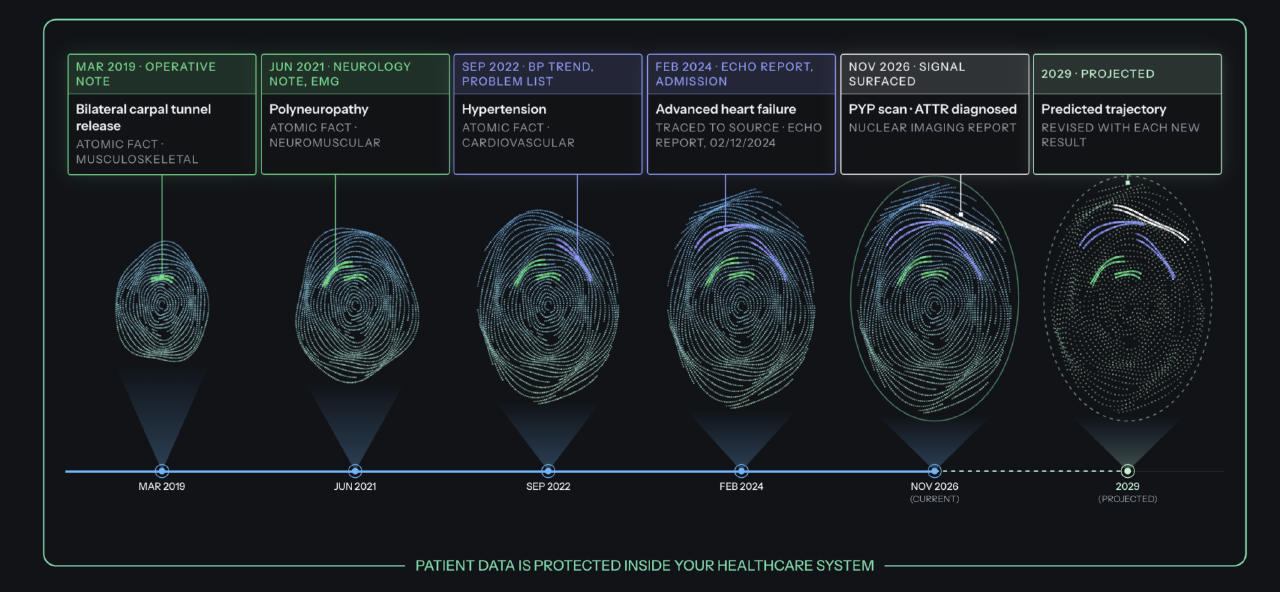 Apps and productsHow Dyania Health's AI reads years of patient records so doctors don't have toHerald of AI
How Dyania Health's AI reads years of patient records so doctors don't have to
A new tool lets hospitals scan decades of notes and test results automatically — giving clinicians the key information faster without moving patient data off-site.
 Apps and productsNVIDIA opens two free tools to run GPU-powered cloud computing for AIHerald of AI
NVIDIA opens two free tools to run GPU-powered cloud computing for AI
NVIDIA released its cluster-management software for free so companies can let customers rent AI-ready computers on their own graphics cards.
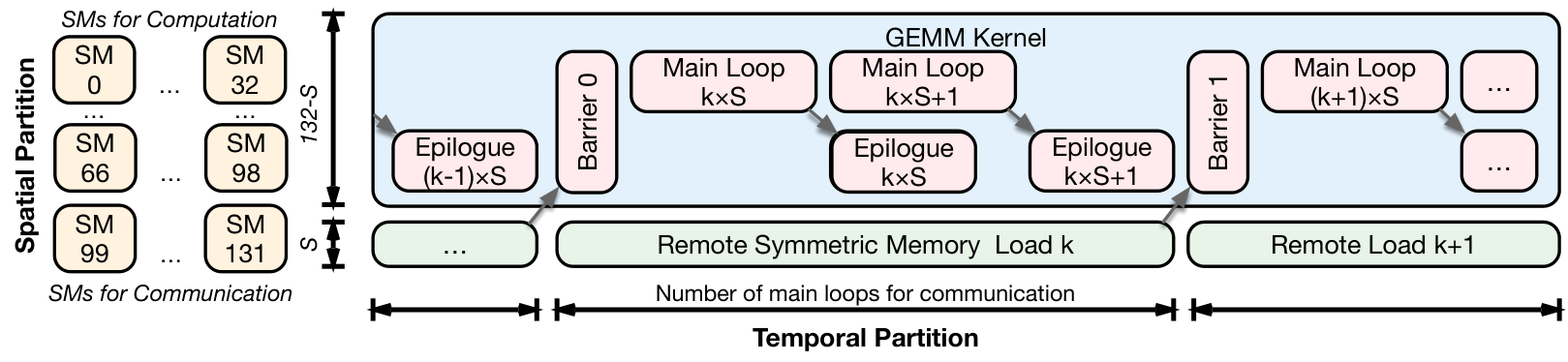 Apps and productsHow Meta built TLX to help regular engineers squeeze more speed out of AI hardwareHerald of AIFigure: Guan et al., arXiv:2605.10905, CC BY 4.0
How Meta built TLX to help regular engineers squeeze more speed out of AI hardware
A new tool lets everyday AI developers write GPU code that matches specialist-level performance, powering the systems behind Facebook, Instagram and other services.