An AI app called Death Clock predicted when I would die — using my blood and family history
A longevity app claims to forecast your exact age of death based on health habits and lifestyle, but experts say the numbers are more illusion than science.
How it works
An AI app that uses blood tests and health surveys to predict your age of death.
- Fill out a health questionnaire
- Order a blood test online
- See your predicted age of death
- Add family history, see it change
What you could do with it
- A user could fill out a health questionnaire and order a blood panel through a partnered lab to receive a predicted age of death and a customized prevention plan 1.
- A user could add family medical history to their profile and watch the app update their predicted lifespan accordingly 1.
- A longevity company could compete in the growing AI health-tools market by offering membership-based health insights reviewed by clinicians 1.
"I lost a year"
The writer for WIRED received a notification after filling out a health questionnaire: their most likely causes of death are cardiovascular disease, a sleep disorder, or cancer 1. When they noted a family history of diabetes, the app adjusted their predicted age of death down from 74 to 73 .
Death Clock shows the result as an image of a smiling grim reaper lounging on a pool float, displaying the number 74 before the edit 1. The app says it was trained on 1,200 longevity studies, life insurance actuarial data, and life expectancy tables . Based on results, it creates a detailed prevention plan meant to extend lifespan .
For a $69 subscription, users can order a basic blood panel through partnered lab Quest Diagnostics that measures cholesterol, blood sugar, inflammation, vitamin D, and organ health; nine additional tests including hormones, micronutrients, and thyroid assessment cost a total of $780 1. The writer also added a "stress" test for $29 .
The billions behind hoping to cheat death
The longevity market is projected to reach $8 trillion by 2030 1. A wave of AI-driven health products now competes for consumers worried about aging: Doctronic, a HIPAA-compliant platform for refilling prescriptions remotely, and apps like Superpower and Lifeforce offer membership-based health insights reviewed by clinicians . Other companies, such as Twin Health, claim to build AI replicas of a person's metabolism .
Brent Franson, CEO of Death Clock, told WIRED that longevity advocates like Bryan Johnson, who famously declared "Don't Die," walk a fine line 1. "They have to be really careful about inferring immortality when you have something to sell," Franson said . That is a risky position to find yourself in. The truth is that every single one of us will eventually pass away. The real issue is simply figuring out when it will happen.
"Sell the illusion"
Mike Ludkovski, who studies longevity analysis as a professor of statistics and applied probability at UC Santa Barbara, stated that mortality awareness tools such as Death Clock promote the false idea that a person's remaining lifespan works like a steady, predictable timeline that can be outsmarted 1. A 2024 study in the journal Aging Cell similarly warned that an aging clock should not be treated as a measure of overall biological age .
"Ultimately, individual-level triggers precipitating death are inherently random and will never be truly forecastable," Ludkovski said 1.
When asked whether people are actually getting healthier or just more anxious, Franson replied, "I think both" 1. He acknowledged there is "a very unhealthy obsession with self-optimization — tracking everything, trying to control everything" .
What the app did — and didn't — change
The WIRED writer, who turned 40 in January and has noticed daily aches in their back, neck, and hips, entered the experience hoping for actionable insight 1. They left having donated blood, gained a specific number for their death date, and accepted that the app had reduced their estimated lifespan by a year based on their family history .
Whether Death Clock's predictions reflect genuine medical guidance or simply repackage existing actuarial tables remains an open question — one the longevity industry, hungry for a share of its projected $8 trillion pie, seems eager to keep answering for itself.
Key facts
- Death Clock is a longevity app launched in 2024 that predicts life expectancy from health questionnaires and blood tests.
- The app claims training on 1,200 longevity studies, actuarial data, and life expectancy tables.
- Basic blood panels cost $69/subscriber; nine additional tests total $780.
- The longevity market is projected to reach $8 trillion by 2030.
- Experts say mortality prediction tools 'sell the illusion' that lifespan can be accurately forecast.
Sources
- I Gave My Blood to the AI Death Clock — wired.com
Keep reading
 How it worksGoogle Research uses wearable data to predict heart, kidney and metabolic risk with personalized coachingHerald of AIFigure: Esmaeilpour et al., arXiv:2603.27787, CC BY 4.0How it works
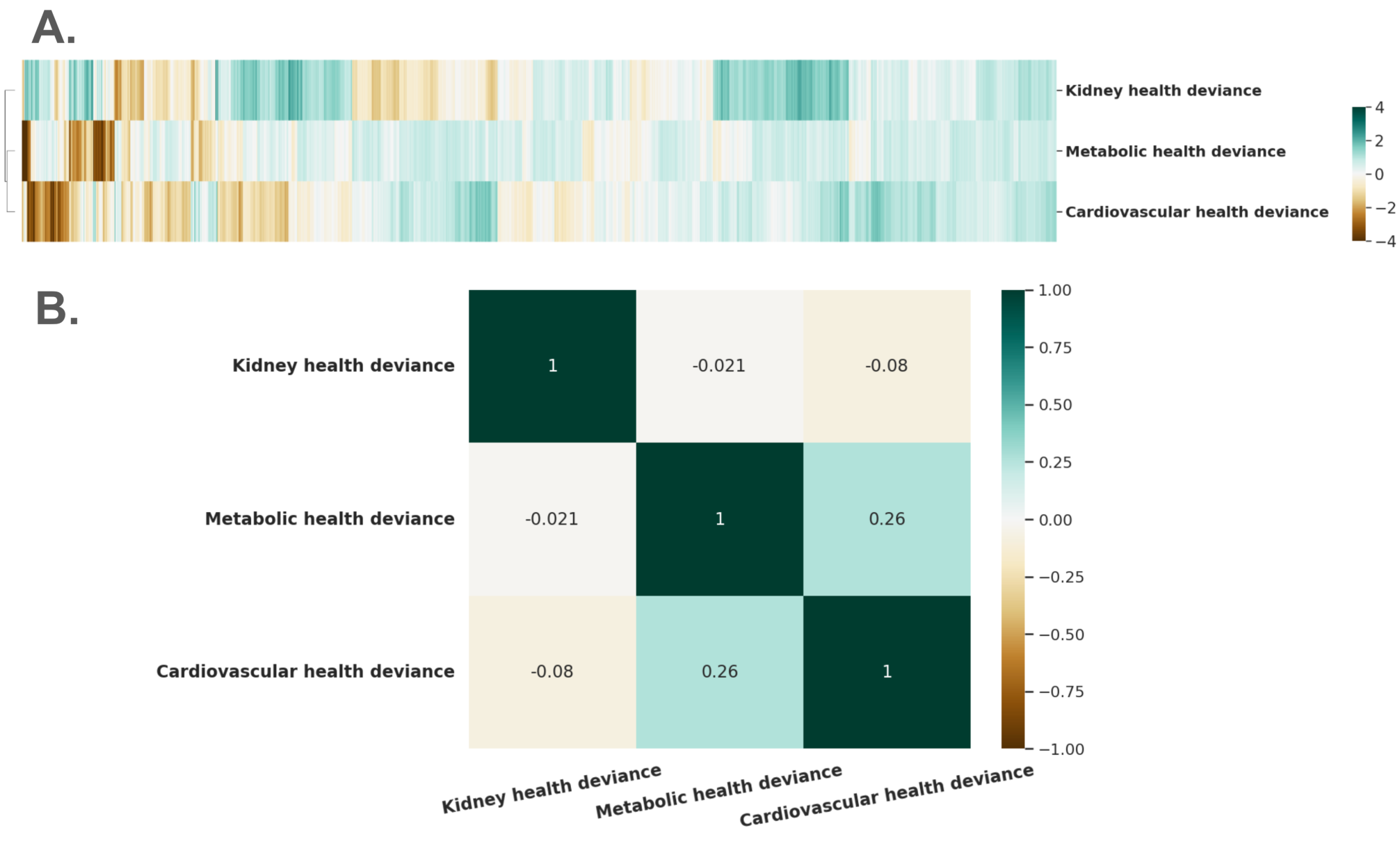
Google Research uses wearable data to predict heart, kidney and metabolic risk with personalized coaching
A new system turns your smartwatch data into a health age you can improve and simulates how changing habits could affect your body over three months.
 PeopleAnthropic shows how it runs Claude on four types of chips at once — and did it faster this yearHerald of AI
 PeoplePaul Ford built an office app for hundreds of thousands of users — using only a web browserHerald of AI
 PeopleSimon Willison used Claude Code to turn spare phones and tablets into a finder for a mystery beepHerald of AI