Google’s Antigravity teamwork tool lets AI agents solve unsolved math problems together
A new system where multiple AI workers collaborate can prove century-level research conjectures — something that used to take human teams years.
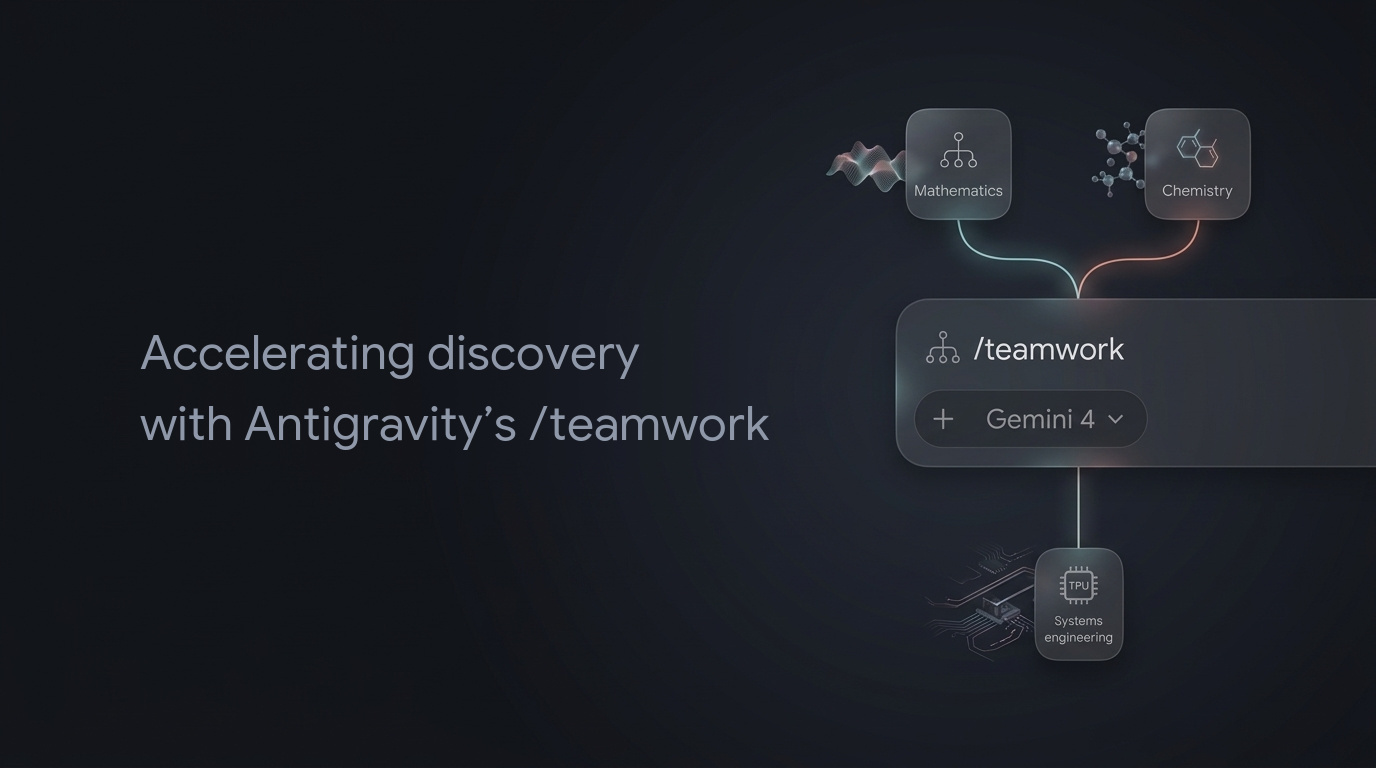
A software system where several AI programs team up over hours or days to solve very hard math and engineering problems.
- One AI worker proposes an idea.
- Another worker reviews and criticizes it.
- Verification tools test every candidate solution.
- Agents refine work until proof is complete.
Solving problems that stumped researchers
Over recent weeks, teams at Google and partner universities have used the system to crack questions that had been open for years 1. The biggest result so far is a complete proof of the Courtade–Kumar conjecture, a problem from information theory first posed in 2013 .
The proof was formalized in Lean 4 and runs to 50 million lines of code 1. It confirms that when random data passes through a noisy channel, compressing the input down to one bit cannot keep more information than simply copying a single original bit . A team from CUHK, USC and CMU worked directly with the AI system to reach the result .
Other open problems now resolved include near-optimal sample bounds in adaptive data analysis (closing a gap open since 2014), the first Boolean functions known to need strictly more than n/2 quantum queries at constant error, and Knuth’s Cycles Conjecture, verified in Lean 2.
How the system works
Language models alone can struggle with long tasks because they sometimes lose track of details and produce unpredictable answers 1. The teamwork tool solves both problems by running several specialized agents in parallel, each holding only the files and tools it needs for its own step . Coordinators pass work from one agent to the next, while separate critics and auditors review results from clean starting points without seeing the original reasoning .
Dedicated verification tools such as proof checkers, software test suites, execution simulators and hardware counters automatically test each candidate solution 1. The system learns from past runs and routes new prompts to the workflow pattern most likely to succeed .
In internal testing the framework scored 71 percent on TCSBench 2.
How the teamwork system connects ideas to proofs
- Specialized agentseach tackles its own step
- Coordinators & criticspass work and review it
- Lean 4 proof checkerverifies correctness line by line
- Courtade–Kumar conjectureproved — 50M lines formalized
- RISC‑V processor simulatorboots a full OS from scratch
- Open‑source fixesmerged into Eigen and ParlayHash
From Google's description of the Antigravity system and its results
From the official announcementAutonomous hill climbing
Beyond pure maths
The same approach also produced practical systems engineering wins 2. One agent team built a cycle-accurate simulator of a RISC-V processor that could boot a full operating system from scratch . In open-source software, the system generated performance improvements that were accepted and merged directly into the upstream Eigen matrix library and the ParlayHash hashing library .
Google says the tools are being made available to external researchers and developers through Antigravity alongside other agents such as /boost 1. Full access for all external users will arrive in coming weeks . The company noted that the work combines new variants of the /teamwork harness with Gemini 4 models, including Gemini 4 Argon, Gemini 4 Carbon and Gemini 4 Hydrogen .
Corrections and updates
- Corrected on 14 November 2026. An earlier version of this story included details its sources do not support. They have been corrected or removed.
Key facts
- Solved the 2013 Courtade–Kumar conjecture; proof formalized in Lean 4 reaches 50 million lines
- Closed a 2014 open question on optimal sample bounds for adaptive statistical queries
- Built a RISC-V CPU simulator capable of booting an operating system from scratch
- Scored 71% on TCSBench in internal testing
Sources
If this story concerns you or your company, or uses something that belongs to you, ask for a correction or for it to be taken down. How requests work
Keep reading
 Apps and productsGoogle opens TorchTPU, a native PyTorch backend for cloud TPUsHerald of AIhttps://github.com/soumith, CC BY-SA 4.0, via Wikimedia Commons
Google opens TorchTPU, a native PyTorch backend for cloud TPUs
A new open-source stack lets developers run PyTorch models directly on Google's TPU chips, replacing the older PyTorch/XLA system.
 Apps and productsGoogle Unveils Playground An AI-Powered Gaming Platform Where Anyone Can Create GamesHerald of AI
Google Unveils Playground An AI-Powered Gaming Platform Where Anyone Can Create Games
Google's new experimental platform lets users create, play and share games with simple text prompts—no coding required.
 Business and rulesMirendil raises $1 billion to use AI agents for faster model developmentHerald of AI
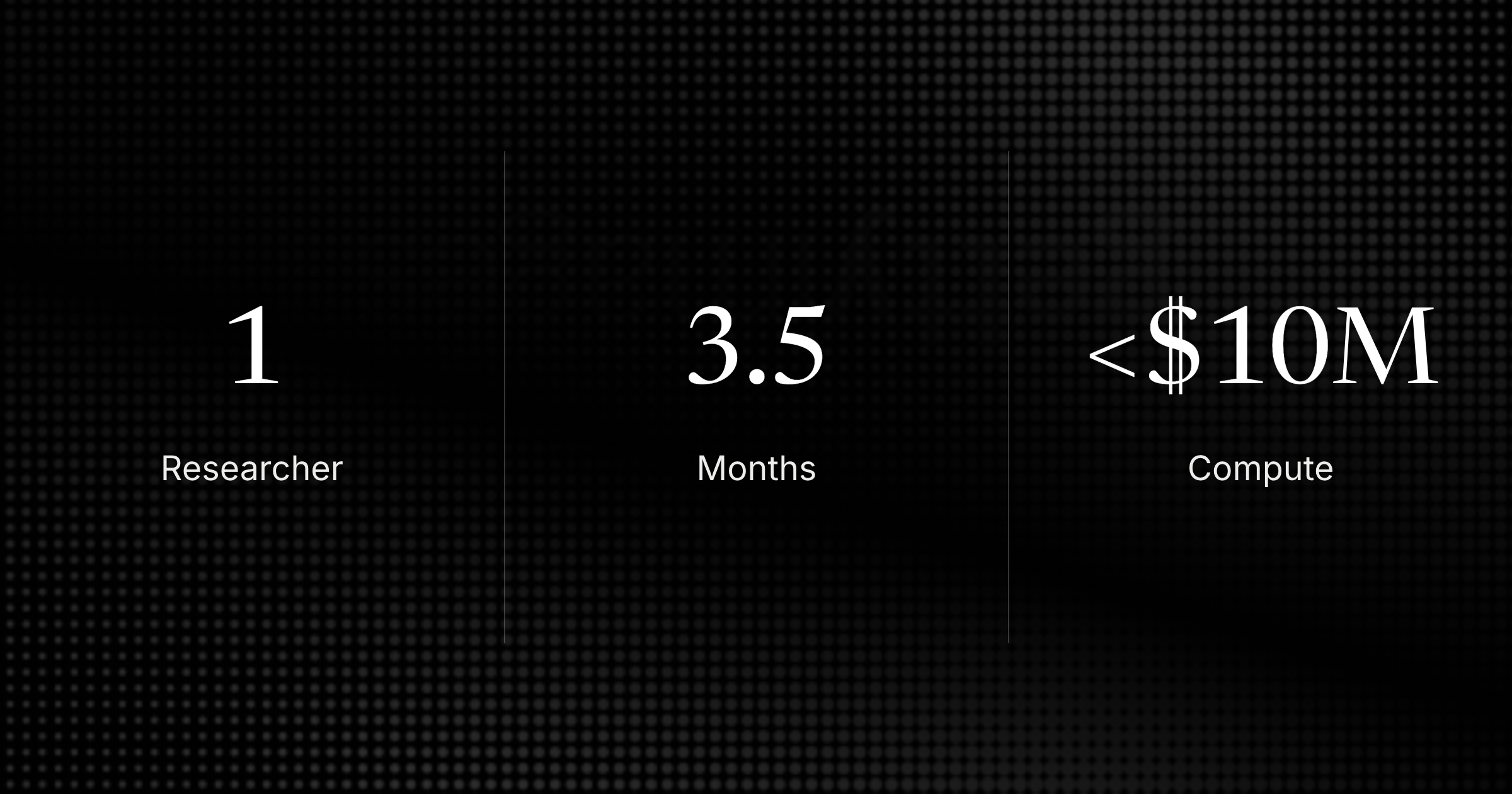
Mirendil raises $1 billion to use AI agents for faster model development
A new startup founded by former Google DeepMind and Anthropic researchers says its automated platform lets small teams build large AI models quickly and cheaply.