Text-only AI models beat multimodal ones at matching human similarity, new test finds
A new public platform shows that the AI systems behind your search and recommendation results only partly agree with what a person would pick as more similar.
A public website where anyone compares two pairs of images or text to test whether AI models match human sense of similarity.
- You see two pairs of images or text
- You pick which pair feels more similar
- Your choice joins a growing human benchmark
- Researchers score AI models against those picks
What you could do with it
- An ordinary person could complete the forced-choice task on Aligned Machine, looking at two pairs of images or text side by side and picking which pair is more similar, adding their choice to the growing Human-Aligned Similarity Benchmark 1. A researcher could check a new embedding model against HASB to see how well it matches ordinary people's sense of similarity before that model powers a search or recommendation product . The authors could use the expanding HASB dataset for bias detection and to track whether a model's sense of similarity drifts across versions .
A new way to test what AI "understands"
The standard check for an embedding model has been to hand expert teams a fixed list of item pairs and ask them to rate each one on a Likert scale. The authors of the new paper, Jiechen Li, Hannah Groos and Brinnae Bent, say that approach is hard to scale and gives only coarse, low-confidence answers 1. Their fix is simple: instead of relying on a fixed set of expert-labeled pairs, they ask many ordinary people to look at two pairs side by side and pick which pair is more similar. The task is a forced choice, accessible to non-experts, and open to the public .
The people, models, and everyday tools around Aligned Machine
- Jiechen Li, Hannah Groos, Brinnae BentResearchers who built the platform
- 12 embedding modelsThe AI systems being scored on how well they match human similarity choices
- 115 participantsCompleted the task and produced 2,875 labelled comparisons across 872 pairs
- HASBThe Human-Aligned Similarity Benchmark the platform keeps growing
- Search, recommendation, and photo toolsEveryday products where these models quietly decide what you see
Figures and roles from the Aligned Machine paper [1]
What 12 models revealed
In the first round of testing, 115 participants completed the task and produced 2,875 labelled comparisons across 872 unique pairs 1. Using that data, the team scored 12 widely used embedding models. The headline result: none of them fully matches human judgment; agreement is only partial across the board .
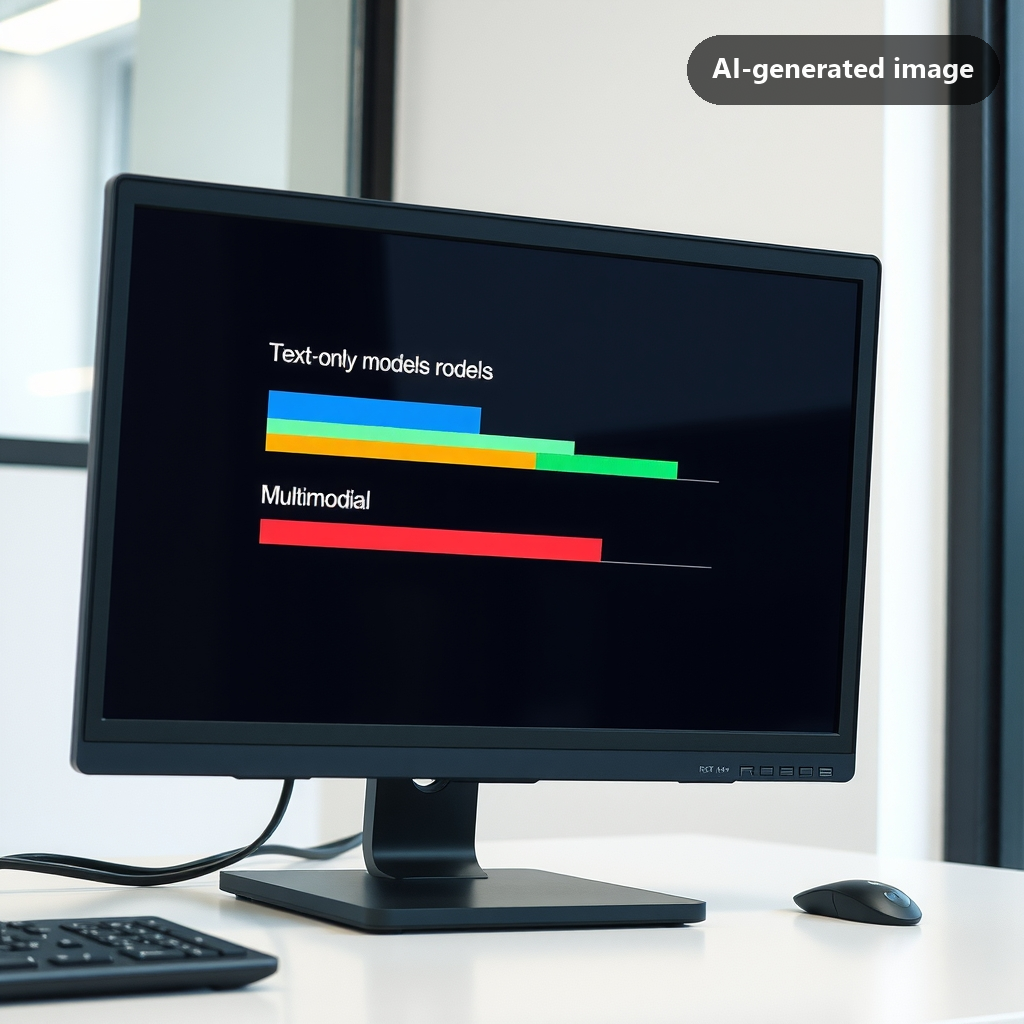
A surprising split appeared between text-only models and multimodal ones. Text-only models consistently scored higher overall agreement with human choices. Multimodal models did better on some pair types and worse on others: they were strongest when comparing two images, weaker when matching an image to a text, and lowest when comparing two texts 1. In plain terms, the models that can also "see" pictures are not automatically the best at matching every kind of similarity a human feels.
What this changes for everyday users
Right now, Aligned Machine is a research tool, not something you would open in your phone the way you open a search app. But the benchmark it builds – the Human-Aligned Similarity Benchmark, or HASB – is designed to grow. As more people take the comparison task, the dataset gets bigger and more varied, which means the next time a company ships a new recommendation engine or photo-search tool, researchers can check it against a living standard that reflects how ordinary people actually think 1. The authors also plan to use the growing data for bias detection and to track whether a model's sense of similarity drifts as it is updated over time .
Why the gap matters
Every time a search engine shows you a "related article" or a shopping app suggests "customers also bought," an embedding model is behind the match. If that model's internal sense of "similar" only partly lines up with what a person would say, the results you see are a compromise, not a mirror of your intent. Aligned Machine gives the field a repeatable, public way to measure that compromise and to hold models accountable as they improve 1.
Corrections and updates
- Corrected on 27 November 2026. An earlier version described the items as "short texts"; the source simply says "text or images" without specifying that the texts are short. An earlier version said "for years," implying a specific duration; the source says existing benchmarks "typically" rely on static, expert-labeled pairs with coarse Likert-style annotations, without specifying how long this has been the case.
Key facts
- 115 participants produced 2,875 comparisons across 872 unique pairs in the first deployment
- 12 embedding models were tested; only partial alignment with human judgment was found
- Text-only models outperformed multimodal models in overall agreement with human choices
- Multimodal models were strongest on image-image comparisons and weakest on text-text comparisons
- The benchmark is designed to grow over time for longitudinal studies and bias detection
Sources
If this story concerns you or your company, or uses something that belongs to you, ask for a correction or for it to be taken down. How requests work
Keep reading
 How it worksGoogle finds AI assistants need you to spell out more than a human friend wouldHerald of AI
Google finds AI assistants need you to spell out more than a human friend would
A new testing framework from Google Research shows that chatbots you talk to for personal advice often miss what someone really meant, and they fail to make full use of the follow-up questions that could narrow the gap.
 How it worksTencent open-sources DFly2, boosting long-context AI throughput by up to 81%Herald of AI
Tencent open-sources DFly2, boosting long-context AI throughput by up to 81%
A new tool from Tencent lets AI models handle very long chats and documents without adding extra memory or slowing down when many users ask questions at once.
 How it worksEven at Maximum Effort, Claude's AI Code Reviewer Still Approves 45% of Wrong CodeHerald of AI
Even at Maximum Effort, Claude's AI Code Reviewer Still Approves 45% of Wrong Code
A new study tested three sizes of Anthropic's Claude as code reviewers and found that cranking up the thinking effort helps, but no setting blocks all the bugs.