MIT scientists stop AI weather models from drifting into impossible predictions
A new technique lets AI models of chaotic systems like weather and ocean currents stay physically realistic over long forecasts.
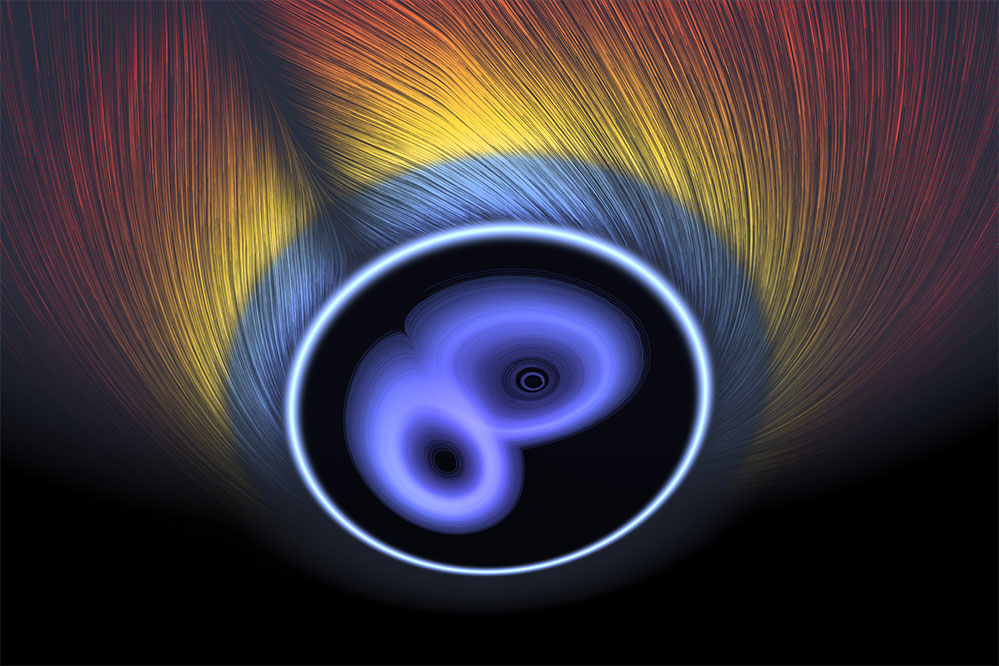
A math technique that forces AI weather models to stay within physically possible predictions forever
- A computer learns a physics-style energy rule
- A boundary is drawn around realistic behaviour
- Energy loss becomes an unbreakable rule inside the model
- Wild guesses get pulled back toward reality automatically
What you could do with it
- A meteorologist could run long-term weather forecasts that stay within physically possible ranges instead of eventually predicting impossible temperatures or forces 1.
- An engineer could use the technique to model turbulent airflow for designing more efficient wind turbines and aircraft 1.
- A hydrologist or climate scientist could build AI prediction tools that remain accurate and bounded over arbitrarily long forecast windows 1.
How chaos broke existing AI models
Modeling complex processes like atmospheric dynamics, ocean currents and turbulence has advanced enormously in recent years. But many AI models trained on these systems share a common flaw: over longer forecast windows, small errors accumulate until the simulation produces values that grow without limit 1. In practical terms, a weather model might eventually predict temperatures far beyond anything physically possible, or a flow simulation might produce forces that no real engine or turbine could ever experience .
"A model can match the data over a short period and still fail when you let it run for a long time," said MIT professor Navid Azizan 1. He explained that previous attempts to fix this problem often relied on "imposing penalties or incentives during training" using functions designed from privileged knowledge about the system . The weakness, he noted, is that those methods only apply while the model is being trained . Once the model encounters new, unseen inputs at test time, there is no guarantee it will respect the underlying physical constraints, meaning "the model could still produce unbounded predictions" .
What changes when an AI model runs weather simulations longer
From MIT PNAS paper: conventional AI models matched short-term data but produced impossible long-term predictions; new hard-constrained method keeps chaotic-sys
The energy-based solution
The team's approach takes a different path. Instead of rewarding the model during training, they embed physical limits directly into its structure 1. Specifically, the model learns an energy-like function together with a boundary where chaotic behaviour should remain confined . The "projection layer," which adjusts how the model forecasts the evolution of a system, applies energy dissipation as a strict, unbreakable rule . Outside the boundary, the energy-like quantity must decrease, drawing the simulated system back toward the bounded region .
"Chaos does not mean anything can happen. These systems often remain bounded, and their models should, too," Azizan said 1. By establishing theoretical guarantees that predictions stay bounded over arbitrarily long forecast windows, the method addresses what the researchers called "a fundamental problem with many of the existing machine learning models" . Lead author Sunbochen Tang, a doctoral student in MIT's Department of Aeronautics and Astronautics, noted that simply capping outputs with arbitrary numbers would restrict the model's ability to learn genuinely complex features from data . Their energy-based formulation avoids that trade-off.
Tested across physical systems
The team evaluated their method across a broad range of well-established physical systems—ranging from straightforward textbook examples to extremely complex multidimensional setups 1. In every case, their method closely matched true outcomes, while conventional approaches soon deviated into impossible predictions . The paper was published in the Proceedings of the National Academy of Sciences, authored by Tang, Azizan and professor Themistoklis Sapsis of MIT's Laboratory for Information and Decision Systems .
Azizan highlighted the distinction between what the team calls "hard constraining" versus what he described as the "soft constraining" used by many current approaches 1. While prior methods incentivise the model to satisfy constraints, they do not enforce them; the new approach is based on the concept of "hard-constrained neural networks" so that outputs remain physically consistent even for entirely new cases the model has not encountered before .
These results may enable more dependable long-term forecasts for climate systems and turbulent flows, phenomena that influence numerous aspects of daily life, from aviation safety and fuel efficiency to weather prediction 1.
How good is it
The team put the method through its paces across a broad range of familiar physical systems — from straightforward textbook examples right through to intricate multidimensional setups. They found their approach closely matched true outcomes while conventional approaches soon deviated into impossible predictions 1. No specific numerical benchmark scores were provided, and no direct side-by-side rival numbers were reported in the source.
Corrections and updates
- Corrected on 21 November 2026. An earlier version cited a YouTube link not present in the source. The original image captions described specific visual elements like "nested looping trajectories inside the blue circle" and a side-by-side chart comparison not found in the source, which only credits an image from Sunbochen Tang with a general caption about energy dissipation bounding predictions.
Key facts
- MIT LIDS researchers published the method in the Proceedings of the National Academy of Sciences
- The approach uses energy dissipation as a hard constraint, enforced by a projection layer in the model
- Previous penalty-based methods failed at test time because constraints were not guaranteed outside training
- The technique was tested on simple and highly complex multidimensional systems, consistently matching true outcomes where conventional models drifted
- - Information from the study is being made freely available
Sources
Watch
If this story concerns you or your company, or uses something that belongs to you, ask for a correction or for it to be taken down. How requests work
Keep reading
 How it worksMIT researcher wants AI to explain itself instead of hiding how it worksHerald of AI
MIT researcher wants AI to explain itself instead of hiding how it works
Jacob Andreas is training AI to talk about what it learned — giving everyday users a way to understand how these systems make decisions, not just relying on complex debugging tools.
 How it worksAI scans 4,000 medical studies — most don't share useful codeHerald of AI
AI scans 4,000 medical studies — most don't share useful code
Researchers used AI to find out whether doctors and scientists can actually rebuild results from published studies, and the answer was mostly no.
 How it worksNew method makes AI text detectors 93% accurate, catching disguised AI writingHerald of AI
New method makes AI text detectors 93% accurate, catching disguised AI writing
A training trick lets detection tools adapt in real time so they stay accurate as AI and human writing styles keep changing.