Mathematicians are reeling after OpenAI released 700 AI-generated proofs
The company's mass upload of claimed solutions has sparked shock, grief, and fierce debate over the future of math.
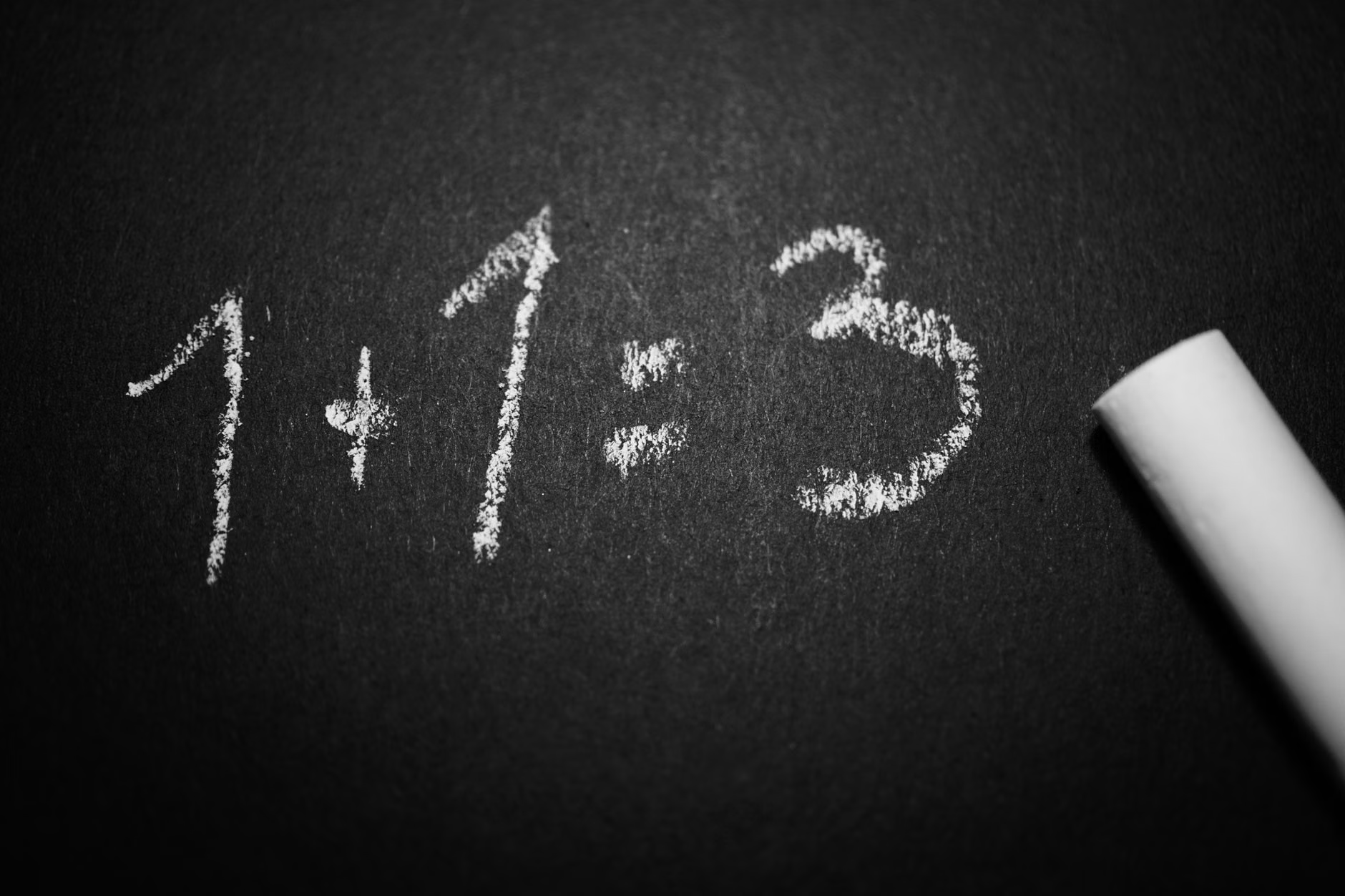
An AI computer program that writes possible answers to famous unsolved math problems.
- A hard math problem is given to the AI
- The AI writes a paper claiming a solution
- All the papers are uploaded to GitHub
- Mathematicians read, react, and debate
A flood of proofs
On October 6, 2026, OpenAI dropped more than 700 manuscripts on GitHub, claiming solutions to hundreds of open math problems. The release came just months after the company unveiled its GPT-6 Astra model, which had already stunned researchers by solving problems once thought far beyond AI reach.
AI models had long struggled with math. Just a few years ago, they failed at problems advanced students could solve routinely. But breakthroughs piled up starting in mid-2026, including work on the Unit Distance Conjecture, the Navier-Stokes existence and smoothness problem, and ten solutions presented at Astra's launch.
Mixed reactions
The math blog Proofs and Prompts collected over 100 responses from researchers. The range was wide. Fields Medalist Peter Scholze urged patience, writing that "mathematics is a marathon, not a sprint" and warning that the goal will always be human understanding of math, which takes time 1. He also raised the possibility that these systems could find ways to break widely used encryption methods, calling the consequences for digital infrastructure "catastrophic" .
Terence Tao described the AI-generated proofs as potentially fruitful once properly digested, but said he was "deeply frustrated" by the absence of people who could discuss, present, or teach the work. He called for solidarity across the community 1.
Ben Green called some results "absolutely shocking," noting that the release appeared to resolve roughly three-quarters of the research goals covered by a prestigious European grant he received just the month before 1.
Shock and grief
But many responses focused not on the quality of the solutions, but on how they were delivered. Hugo Duminil-Copin, a 2022 Fields Medalist, wrote that the announcement hit him with a force he had not anticipated 1. "The shock is immense. I am paralysed," he said.
Matt Zaremsky compared it to watching a trillion-dollar company arrive at a decades-long excavation and blast the site with explosives, handing back the whole fossil skeleton and walking away 1.
Tasmin Chu, who fell in love with a probability theory problem as a student, said she found herself "absolutely disgusted by the society" in which such a release felt normal 1. For PhD student Tristan Humbert, the announcement threatened his dissertation topic and his job search. After reading the paper, he called it "mostly unreadable slop" .
Some of the papers have already been withdrawn, and others have drawn criticism for being difficult to read. OpenAI had targeted the Riemann Hypothesis, mathematics' most famous unsolved problem, but managed only a weaker variant 1.
Key facts
- OpenAI released over 700 AI-generated math manuscripts on October 6, 2026
- Over 100 researchers responded, many expressing shock and grief
- Fields Medalist Peter Scholze warned the systems could break encryption
- Some papers have been withdrawn; others criticized as unreadable
- OpenAI targeted the Riemann Hypothesis but proved only a weaker variant
Seen on social
Introducing Microsoft-Decision-1, our new model for fast decision-making. It delivers top performance on structured decision tasks, outperforming both LLMs and other decision models in latency and quality. We’re already testing it across Microsoft for everything from incident… pic.twitter.com/M3fAOD90r6
— Satya Nadella on X, see the post
Sources
If this story concerns you or your company, or uses something that belongs to you, ask for a correction or for it to be taken down. How requests work
Keep reading
 How it worksOpenAI Releases 372 AI-Generated Math Proofs on GitHubHerald of AI
OpenAI Releases 372 AI-Generated Math Proofs on GitHub
The company is bypassing traditional journals, betting that formal verification can handle the flood of AI-produced mathematics.
OpenAI’s ChatGPT Wallet lets AI agents shop without seeing your card number
It marks the start of a new way to buy things online — your AI helper picks and pays, but you still approve every transaction and your real card stays hidden.
 The weekThis Week in AI Vulnerability, Tools, and BubblesHerald of AI
This Week in AI Vulnerability, Tools, and Bubbles
Chatbots cracked under kindness, stock fears grew, and open-source alternatives kept popping up.