Lyris lets you walk through rooms a photo never showed, from just one picture
A new AI system builds long, 3D-video tours of places by remembering where objects stay — even in rooms it has never seen.
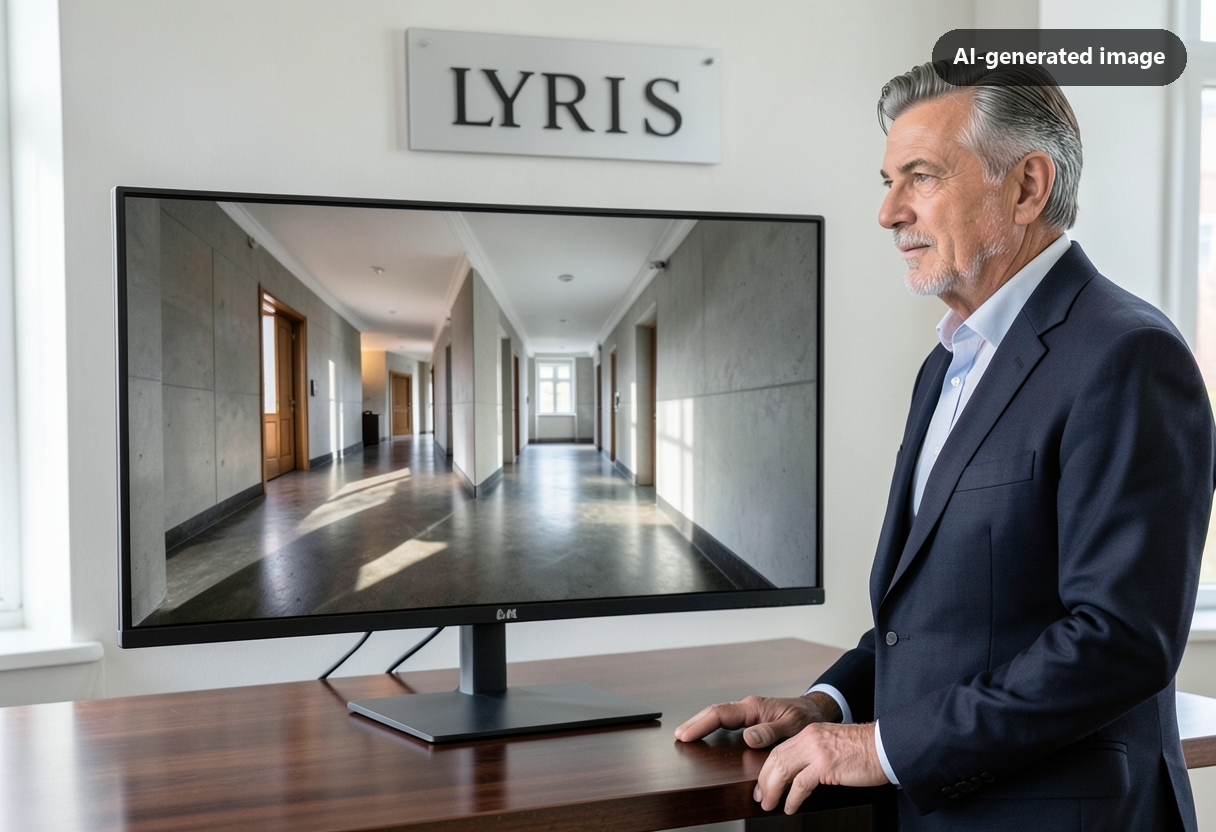
A program turning one photo of a room into a video walk-through where objects stay locked in place as the camera moves.
What you could do with it
- A homeowner or real estate agent could take a single snapshot of a room and then watch a long video walk-through that glides past doorways into unseen areas while every object stays locked in place 1.
- Anyone sketching out a new office or store layout could generate a realistic video tour from one photo instead of manually drawing floor plans or hiring specialized cameras 1.
- A researcher studying indoor scenes could produce multi-minute, camera-controlled tours covering more than 50 metres without requiring hand-authored spatial sketches 1.
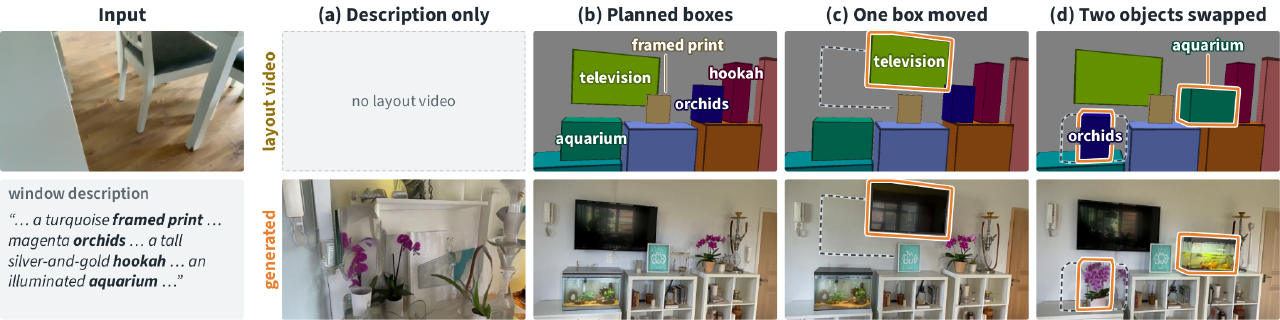
Figure: Wang et al., arXiv:2611.31239, CC BY 4.0
From one photo to a full house tour
Imagine taking a single snapshot of your living room and then watching a video that glides through that room, past a doorway, and into a kitchen the original photo never captured — all while every sofa, lamp and book stays exactly where it was 1. That is what the researchers behind Lyris have built .
Traditional "memory-based" video generators remember what they have already shown, but once the camera moves beyond the original picture the view drifts and forgets its place; text prompts can name objects but cannot pin them down in space. On the other hand, layout-guided tools can place objects precisely, but someone has to draw the layout by hand 1. Lyris removes both bottlenecks by anchoring the video model to two things at once: a persistent point-cloud memory of what has already been explored, and a 3D layout that a vision-language model drafts for the parts of the scene it has not yet seen .
Lyris stays far steadier when walking through a room than other AI systems
Wang et al., arXiv:2611.31239; four datasets, minute-long round trips
How it works without losing its way
The key insight, the authors argue, is that the link between the two models does not need to be fine-grained 1. A layout that includes only a single labeled 3D box for each object is straightforward enough for a vision-language model to create independently — and quick for a person to fix if there's an error — but still contains sufficient detail for the video generator to track as the camera travels along its route. The result is a system that never lets the video model wander unanchored .
In tests the team showed walkthroughs lasting more than three minutes and covering over 50 metres, starting from a single photo and passing through doorways into rooms the camera had never filmed before 1. When measured against current best methods on minute-long round trips across four datasets, Lyris cut camera-error by a factor of 3.8 and improved consistency upon return (how well the scene matches up when the camera circles back) by 22 percent on average .
What comes next
The work is still a research prototype released on arXiv in November 2026, so it is not yet available as a consumer product 1. The authors include researchers from academia and industry working on 3D world generation and video synthesis . If the approach matures into usable tools, the most immediate benefit would be letting ordinary people explore or design spaces visually, simply by pointing a phone camera at a room — a capability that could reshape how we preview properties, plan renovations or learn about unfamiliar environments through immersive media .
This story reports on research for information only.
How good is it
The researchers tested Lyris on minute-long round-trip walks across four datasets and measured two key qualities: how steadily the virtual camera held its path (camera error) and how faithfully the scene matched itself when the camera looped back (consistency upon return) 1. Against state-of-the-art memory-based and layout-conditioned methods, Lyris cut camera error by a factor of 3.8 and boosted return consistency by 22 percent on average . In everyday terms, the camera now follows a much straighter route and buildings no longer appear to shift or double up after a full circle . One demonstration also showed coherent video of over three minutes length spanning more than 50 metres starting from a single photo .
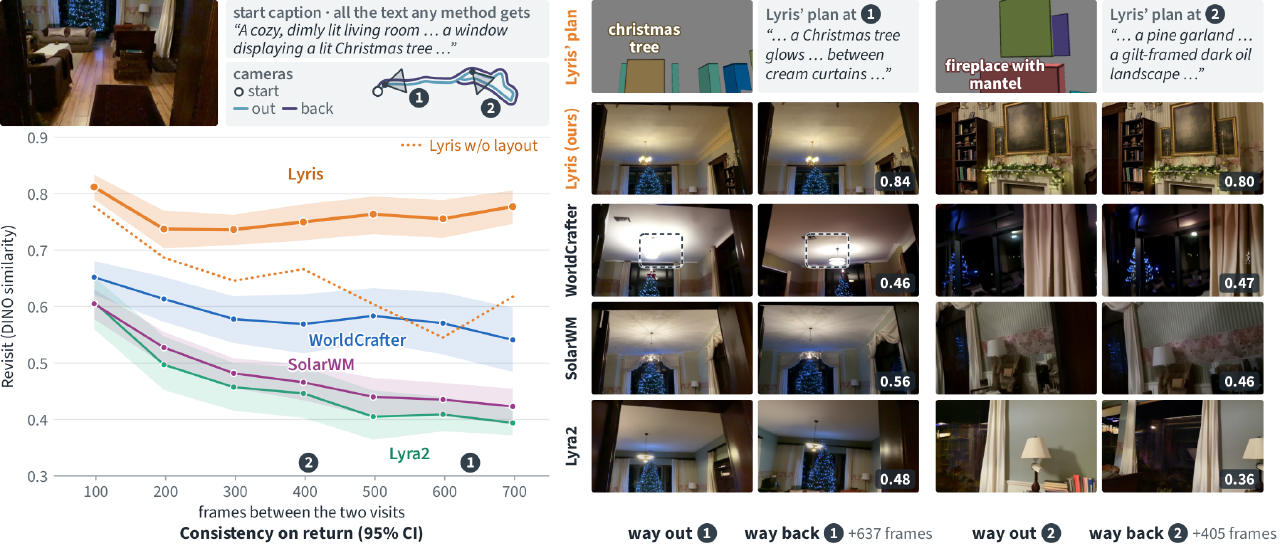
Figure: Wang et al., arXiv:2611.31239, CC BY 4.0
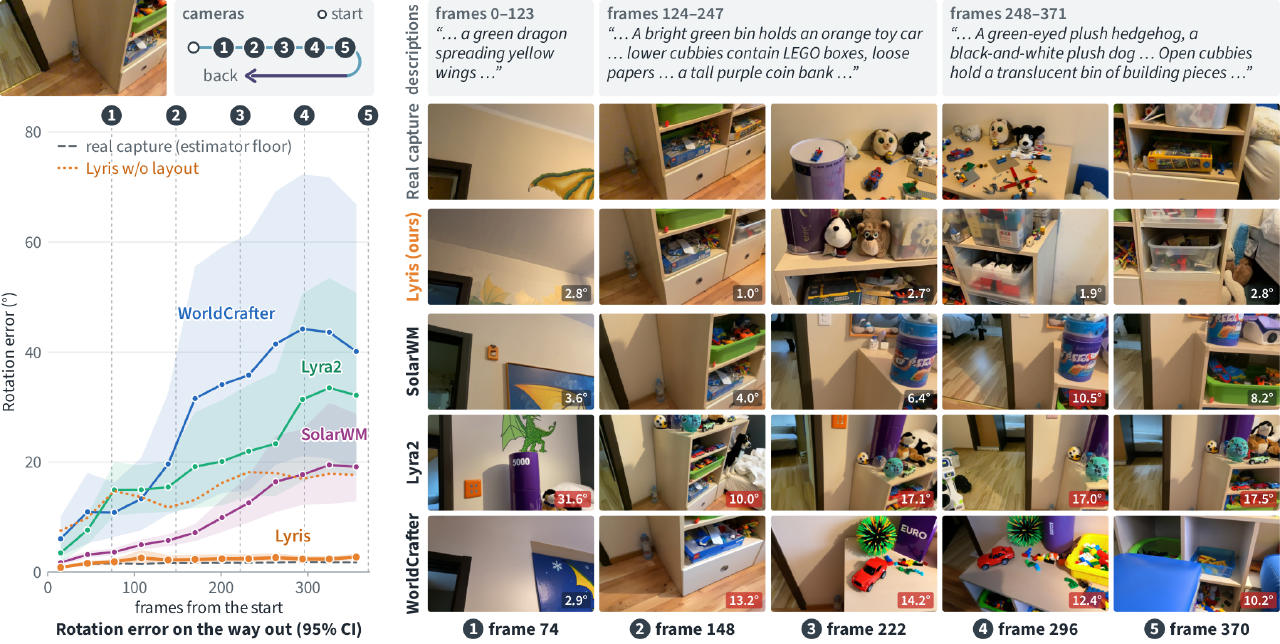
Figure: Wang et al., arXiv:2611.31239, CC BY 4.0
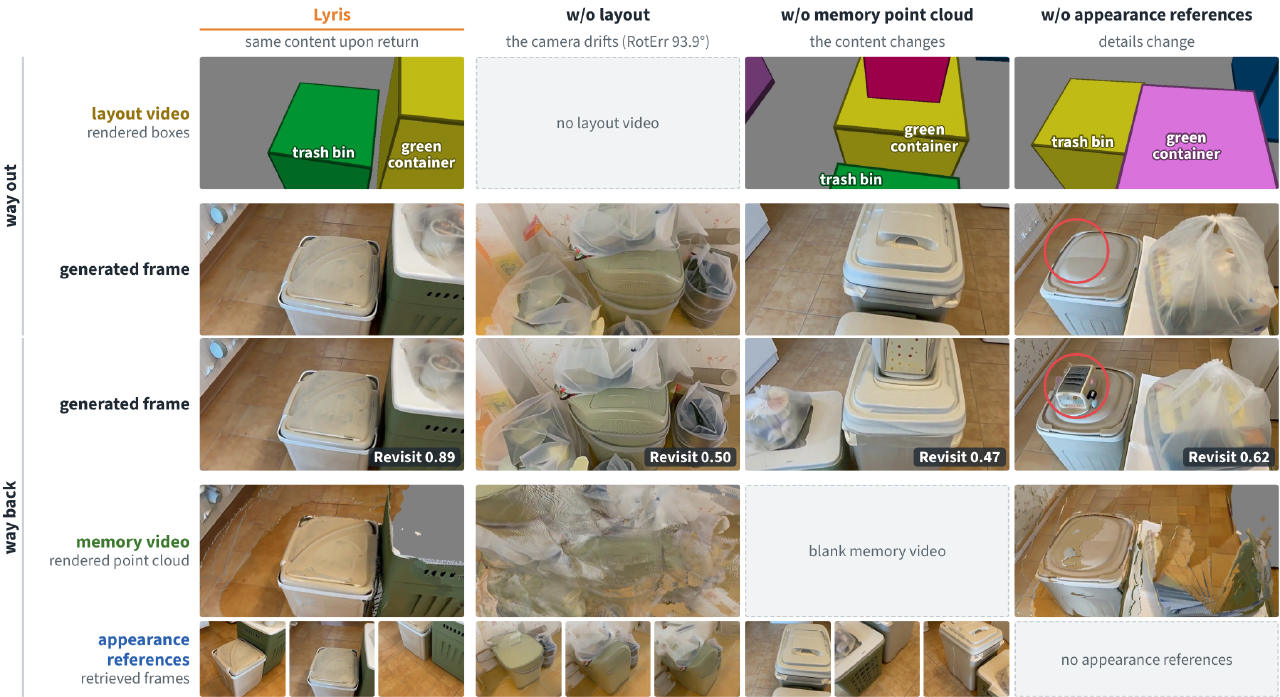
Figure: Wang et al., arXiv:2611.31239, CC BY 4.0
Key facts
- Lyris generates 3-minute, 50-metre walkthroughs from a single photo
- It cuts camera error 3.8 times compared with prior methods
- Consistency when returning to the same spot improves by 22 percent
- Uses a vision-language model to author 3D layouts automatically
Sources
If this story concerns you or your company, or uses something that belongs to you, ask for a correction or for it to be taken down. How requests work
Keep reading
 How it worksGoogle finds AI assistants need you to spell out more than a human friend wouldHerald of AI
Google finds AI assistants need you to spell out more than a human friend would
A new testing framework from Google Research shows that chatbots you talk to for personal advice often miss what someone really meant, and they fail to make full use of the follow-up questions that could narrow the gap.
 How it worksTencent open-sources DFly2, boosting long-context AI throughput by up to 81%Herald of AI
Tencent open-sources DFly2, boosting long-context AI throughput by up to 81%
A new tool from Tencent lets AI models handle very long chats and documents without adding extra memory or slowing down when many users ask questions at once.
 How it worksEven at Maximum Effort, Claude's AI Code Reviewer Still Approves 45% of Wrong CodeHerald of AI
Even at Maximum Effort, Claude's AI Code Reviewer Still Approves 45% of Wrong Code
A new study tested three sizes of Anthropic's Claude as code reviewers and found that cranking up the thinking effort helps, but no setting blocks all the bugs.