ActivTrak study finds AI users work 90 minutes longer per day than non-users
People using AI at work are spending more time logged in, switching between apps faster, and losing deep focus — the real cost of adopting new tools.
What you could do with it
- A business leader could use these findings to decide whether their company should push for embedded AI tools instead of standalone browser apps to protect employee focus time 1.
- A manager could use the insight about app-switching costs to redesign workflows so employees stay in one application while getting AI help 1.
- A researcher could use the ActivTrak dataset — actual screen-time records from 9,140 knowledge workers across 467 companies — as a baseline for studying AI's effects on workplace behavior 1.
Longer days, not shorter ones
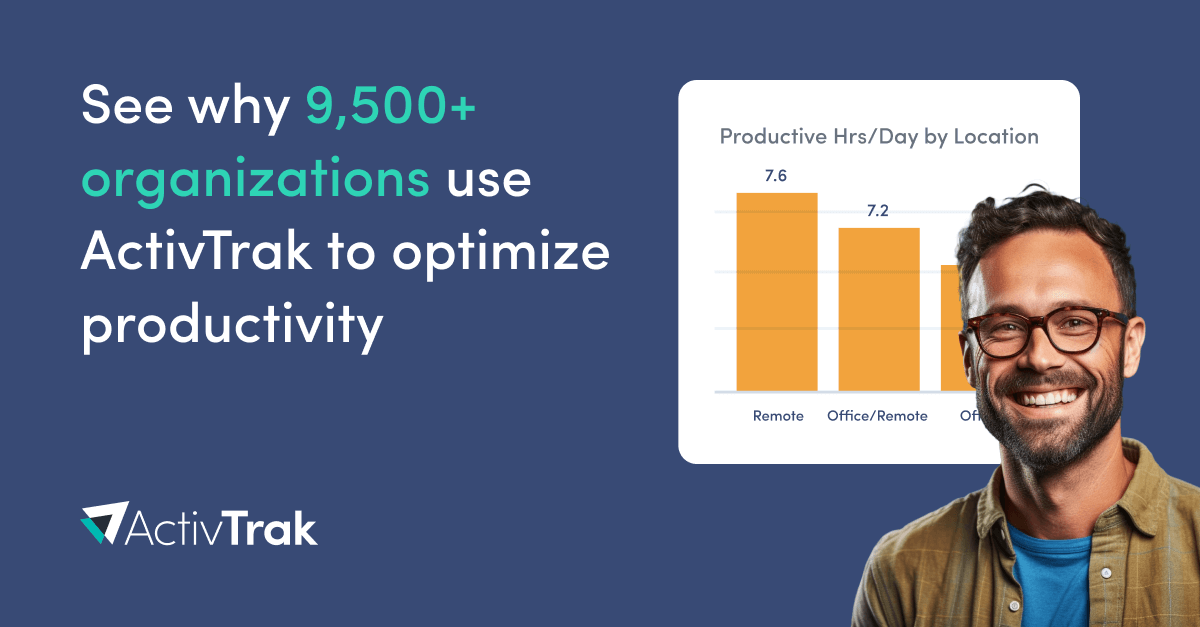
You might expect AI to shrink your workday — after all, it's supposed to do things faster. But a new analysis from ActivTrak tells a different story 1. People who use generative AI spend 8.4 to 9.1 hours at their desks each day, while those who never touch AI work just 7.6 hours . That gap tops out at roughly an hour and a half extra each day.
The researchers based their findings on real screen-time records from 9,140 knowledge workers at 467 different companies, gathered between April 1 and September 25, 2026 — actual computer activity, not opinions from questionnaires 1.
Even the so-called "third shift" looked different. Heavy AI users spent nearly the same share of their day working after hours as non-users (32.3% versus 31.9%), but because their total workday was longer, that translated into about 18 extra minutes of after-hours work every day 1.
More clicking, less concentrating
Heavy AI users — defined as anyone spending more than 45 minutes and five or more sessions per day on AI tools — switched between applications 15.2% more often than non-users, averaging 1.1 switches per hour compared with 0.95 1. Their uninterrupted focus sessions averaged 37.8 minutes, a full 22% shorter than the 48.2 minutes enjoyed by light AI users who spend less than 10 minutes per day .
Interestingly, heavy AI users attended fewer formal meetings, spending just 3% of their time in them versus 5% for non-users 1. So the extra time doesn't seem to come from Zoom calls — it comes from the tools themselves.
The tool matters almost as much as the habit
Perhaps the most practical finding is that how you access AI changes everything 1. Employees using AI tools built directly into the applications they already work in made only 0.6 app switches per hour . Those using standalone browser-based AI tools switched 1.7 to 4.2 times per hour . Browser-based AI effectively acts as a "swivel-chair tax" — forcing people to constantly pivot away from their main work to another tab, potentially adding friction at every turn .
Job roles showed clear patterns too 1. Software engineers, who tend to use embedded AI assistants, averaged just 0.6 switches per hour and spent 78.5% of their active time in core coding applications . Operations managers, who lean more toward browser-based tools, averaged 1.1 switches per hour and saw that jump to 4.1 during busy coordination periods, while still spending 75.5% of their time in core apps .
1 According to Gabriela Mauch, who serves as Chief Customer Officer and leads the ActivTrak Productivity Lab, "our research reveals that although AI can speed up task completion for workers, it also results in extended working hours, increased switching between applications, and reduced focus periods." She added that leaders need to treat AI usage as a means to measurable gains, not a goal in itself .
This story reports on a trend for information only. It is not advice or encouragement to do any of it.
Key facts
- AI users work up to 90 minutes longer per day than non-users (8.4–9.1 hours vs 7.6 hours)
- Heavy AI users switch apps 15.2% more frequently (1.1 vs 0.95 per hour)
- Uninterrupted focus sessions are 22% shorter for heavy users (37.8 vs 48.2 minutes)
- Embedded AI tools cut app switches to 0.6/hour; browser-based tools cause 1.7–4.2/hour
- Study analyzed 9,140 workers across 467 enterprises from April to September 2026
Sources
If this story concerns you or your company, or uses something that belongs to you, ask for a correction or for it to be taken down. How requests work
Keep reading
ActivTrak finds workers who use AI log 90 extra minutes per day
A new analysis shows people who rely on AI tools at work end up staying later — and it may mean your job gets harder, not easier.
 How it worksHow Meta boosts engineering productivity by 3× using agents to propagate ad model techniquesHerald of AI
How Meta boosts engineering productivity by 3× using agents to propagate ad model techniques
Meta's new AI agent system adapts small improvements across thousands of ad models automatically, saving millions in computing costs.
 How it worksA large AI model learned to fix its own brain without being retrainedHerald of AI
A large AI model learned to fix its own brain without being retrained
Researchers found a 27-billion-parameter model can edit its own internal settings to become more accurate — no human teacher needed.