Perplexity launches Decider v1.3, a model that classifies text and images faster and cheaper than chatbots
It lets apps instantly judge whether content is safe, decide which task needs a bigger AI, or find specific information — without writing out long replies.
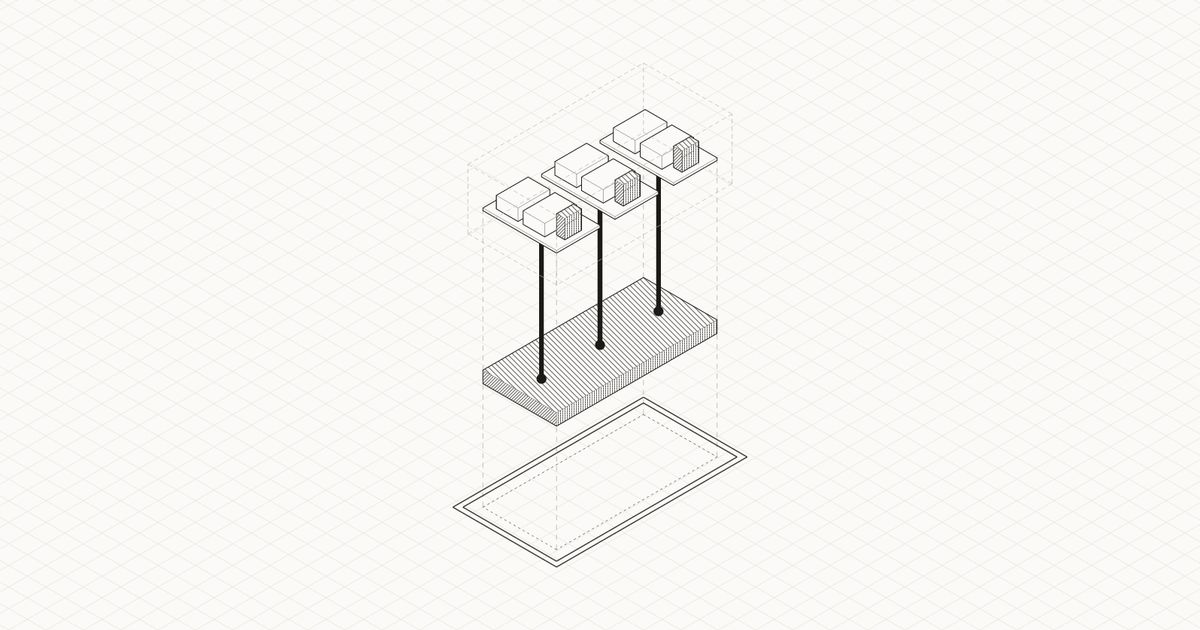
An AI program that reads text or images and returns quick yes/no answers or ratings instead of writing paragraphs.
- Send text or image plus questions.
- Model scores each possible answer.
- Get probability numbers back fast.
What makes these models different
Unlike chat models that generate paragraph-long answers word by word, decision models return simple numbers your code can use straight away 2. You send content plus a list of questions and get back a probability for each possible answer 1. It is like asking a grading machine instead of hiring someone to write an essay .
Perplexity says the new versions are faster and more reliable because they use bidirectional attention across their core layers, meaning every token can read the whole input at once rather than only what came before it 1. They also trained on better-curated data with a refined recipe .
A new feature called locate goes beyond yes-or-no or multiple-choice. It finds exact stretches of text inside whatever you feed the model and returns their start and end positions 1. For example, you can ask the model to pull out the city where a job posting says work happens . Because every question shares the same input state, you can run locate alongside classification and scoring in a single call .
How it was built
The team started from strong generative language models and changed how the final layer works 1. Instead of trying to guess the next word in a huge vocabulary, the output layer only scores the answer choices you actually want — A, B, C or similar labels — so the model learns to turn its internal understanding into clear probability distributions .
Training data comes from hundreds of public datasets covering sentiment, fact checking, intent detection, moderation, entity matching and ratings 1. Every example gets reshaped into the same format: a shared piece of context plus one or more labelled questions, then fine-tuned against gold labels or probability distributions when exact answers are unknown .
When people should use it
These models fit jobs that previously asked chat systems to spit out a label that had to be parsed out of prose 12. Typical uses include judging whether an AI summary stays faithful to a source document, routing hard requests to larger models and easy ones to smaller ones, catching phishing or prompt injection attacks, tagging and organising large content libraries, and reranking search results by relevance . Because several questions share computation in one pass, they avoid the cost of generating answer after answer token by token .
Price and access
Both models sit behind Perplexity's Decisions API and on Hugging Face under the Apache licence, with OpenRouter also carrying them 1. The full pplx-decider-v1.3 costs $0.02 per million input tokens; the smaller pplx-decider-flash-v1.3 halves that to $0.01 2. Output tokens are free and web grounding adds $1 per thousand searches . Python and TypeScript SDKs are available from version 0.44.0 and 0.39.0 respectively . Earlier versions v1.2 and Flash v1.2 remain available too .
This story reports on a trend for information only. It is not advice or encouragement to do any of it.
How good is it
Perplexity says Decider v1.3 is faster and more reliable than previous versions because it uses bidirectional attention and better-curated training data 1. It draws on hundreds of public datasets covering sentiment, fact-checking, intent detection, moderation, entity matching and ratings . The Flash version runs about as well but costs half as much — one cent per million input tokens compared to two cents for the full model 2. No head-to-head benchmark scores against rivals are given in the sources.
Key facts
- Two models released: Decider v1.3 and smaller, faster Decider Flash v1.3
- Uses bidirectional attention and curated training data for better accuracy
- New locate feature extracts exact text spans with start/end positions
- Full model costs $0.02/M input tokens; Flash version is $0.01/M
- Available on Hugging Face (Apache licence), OpenRouter, and Perplexity Decisions API
Sources
If this story concerns you or your company, or uses something that belongs to you, ask for a correction or for it to be taken down. How requests work
Keep reading
Business and rulesPerplexity Decider v1.3 lets AI make faster decisions with new text-extracting toolHerald of AI
Perplexity Decider v1.3 lets AI make faster decisions with new text-extracting tool
The new model helps apps sort, classify, and find specific text much cheaper than asking a big generative AI.
AI chatbots including ChatGPT and Gemini still point shoppers at scam sites
People who ask AI assistants where to buy things can be sent to fake stores that steal their money.
 New modelsPerplexity Releases Two Multimodal Embedding Models for Edge and CloudHerald of AI
Perplexity Releases Two Multimodal Embedding Models for Edge and Cloud
The 9B model scores 92.4% on agentic PDF QA, while the 0.6B variant runs on laptops for fast, cheap queries.