IBM puts AI agents at the center of a new operating model for enterprises
Companies building AI that acts on its own need a new way to run it — IBM says four systems working together are the answer.

A blueprint IBM offers so companies can run AI systems that act on their own inside existing business software.
- Link agents to your company's software and data
- Move data rules into the pipeline early
- Watch and evaluate agent decisions constantly
- Keep humans involved for important choices
What you could do with it
- A company could integrate autonomous AI agents into its existing SAP and Salesforce systems so the agents continuously monitor, decide, and execute tasks across operations instead of waiting for prompts 1.
- An enterprise could shift data governance earlier in the pipeline so access permissions travel with the data in real time, helping agents make better-informed decisions about what information they can use 1.
- A business could run multiple evaluation loops on agent decisions to compare accuracy, timeliness, and cost-effectiveness against actual business outcomes and pick the best-performing models 1.
Picture: newsroom.ibm.com
Agentic workloads are always on
Agentic workloads are different from the chat-style AI most people know. Instead of waiting for a prompt and then stopping, these AI systems take ongoing action — monitoring, deciding, and executing tasks across a company's operations 1.
"As you're more successful in using AI, especially as AI is taking action, you now have workloads that are continuously being utilized," said Ritika Gunnar, chief performance marketing officer at IBM. "You are incented to be always on because those agents are always taking action for you." 1
That constant activity creates a new set of problems. Companies need to connect AI agents to the systems they already run — SAP for enterprise resource planning and Salesforce for customer relationships, for example — rather than replace them 1.
What changes when AI starts acting on its own
Based on IBM Think 2026 announcements; contrasts chat-style AI with agentic workloads
Four parts that must work together
IBM's operating model rests on four components that many companies currently buy from different providers, now tied together under one framework 2:
Data gives agents the current knowledge they need. Workloads are the applications and workflows the agents operate inside. Automation provides oversight and the ability to keep things running smoothly. And hybrid cloud lets those systems span multiple environments, including private and public infrastructure 2.
Gunnar warned that having good data isn't enough on its own 1. "If you have your data and that data is feeding your systems, but you're not really taking care of automation in a way where you have complete observability of all of your workloads with that AI infused, then you're not necessarily having an optimal way of picking the right model or picking the right agents for those kinds of workloads," she said .
Governance and human judgment in the loop
One of the trickier parts of running AI agents at scale is making sure the information they use is governed — meaning the right people have access to the right data at the right time 1. IBM argues that shifting governance earlier in the process, so permissions travel with data in real time, helps agents make better decisions .
But even well-governed data can't capture everything employees know. Much of the judgment that guides good decisions lives in people's experience rather than in any system 1. For essential business operations, IBM says humans should stay in the loop to supply that tacit knowledge until AI matures further .
Measuring what actually matters
Every agent action leaves a log, and every prompt is recorded. Together, those records create a feedback loop that lets companies ask whether an agent made the right call 1.
"You can actually have multiple different permutations of that agent making a decision and having another set of eval loops actually doing an evaluation of, 'Did that agent actually make the decisions?'" Gunnar said 1. The question isn't just accuracy — it's also speed, cost and whether the outcome matched the business goal .
IBM made the announcements at its Think 2026 conference in Boston on May 5, 2026 2. The company also introduced next-generation versions of several products, including watsonx Orchestrate for multi-agent coordination, Confluent for real-time data access, the Concert platform for operations, and Sovereign Core for operational independence and data sovereignty .
Arvind Krishna, IBM's chairman and CEO, framed the shift this way: "The enterprises pulling ahead are not deploying more AI — they're redesigning how their business operates" 2.
Key facts
- IBM's AI operating model is built around four integrated components: data, workloads, automation, and hybrid cloud.
- Agentic workloads run continuously and take autonomous action across enterprise systems.
- Gunnar stresses that governance must shift left so permissions travel with data in real time.
- Products announced at Think 2026 include watsonx Orchestrate, Confluent, Concert, and Sovereign Core.
- IBM says enterprises pulling ahead are redesigning business operations, not just deploying more AI.
Sources
If this story concerns you or your company, or uses something that belongs to you, ask for a correction or for it to be taken down. How requests work
Keep reading
IBM bets on mainframes and hybrid cloud to power enterprise AI
Big companies can now run AI with full control over their data, without depending only on outside cloud services.
 Business and rulesLangChain raises $300M as its AI agent tools hit 90M monthly downloadsHerald of AI▶
LangChain raises $300M as its AI agent tools hit 90M monthly downloads
A bigger funding check lets the company behind popular free AI-building tools hire more people and push faster.
 Business and rulesMirendil raises $1 billion to use AI agents for faster model developmentHerald of AI
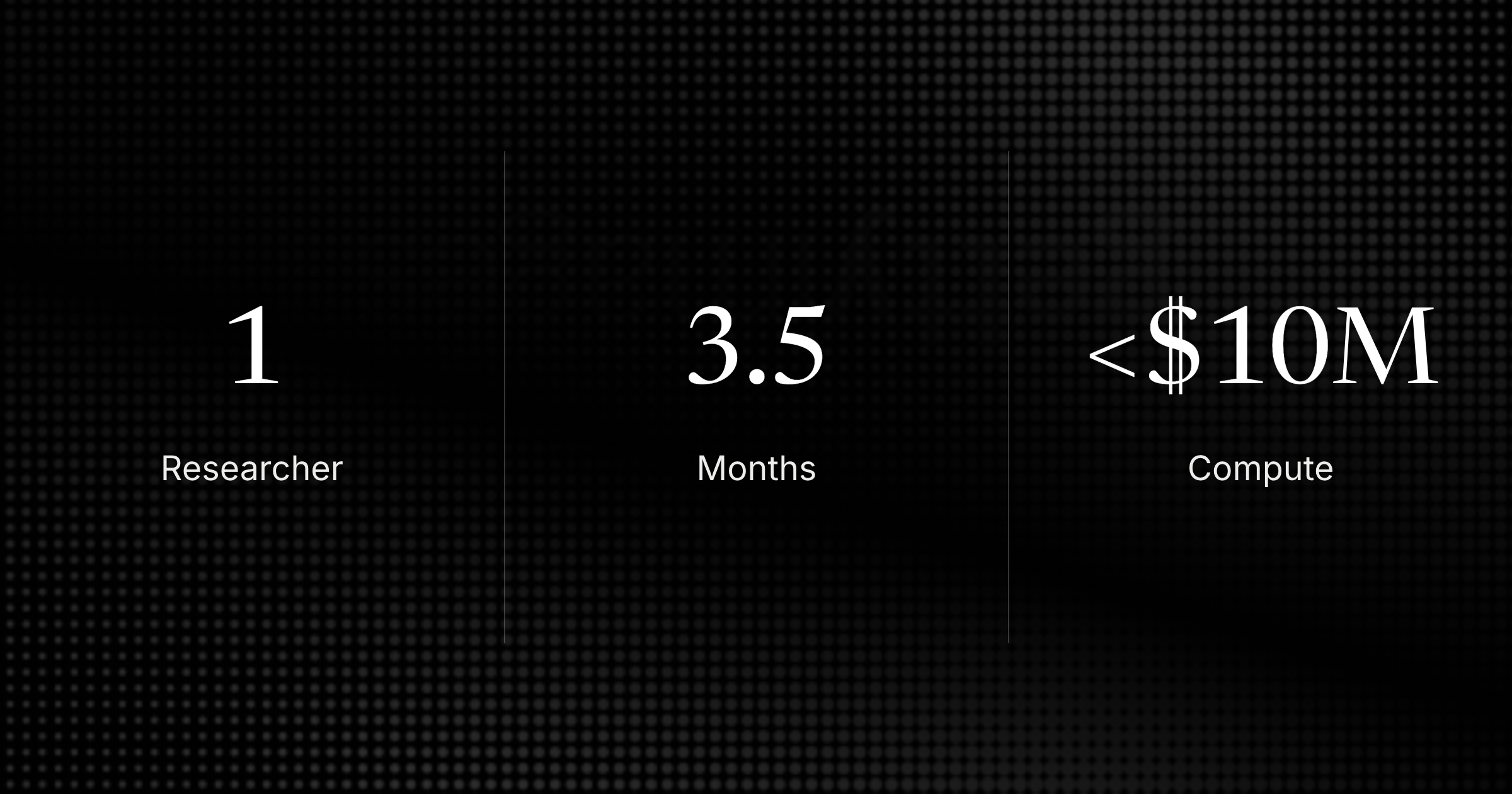
Mirendil raises $1 billion to use AI agents for faster model development
A new startup founded by former Google DeepMind and Anthropic researchers says its automated platform lets small teams build large AI models quickly and cheaply.