Google is starting to block unlogged-in search users on certain IP addresses
People on some public and shared networks may soon need a Google account just to run a search, making the web harder to use without signing up.
What is actually happening?
A reader on Hacker News posted that they recently started seeing a full login prompt from Google Search on some of their internet connections 1. Previously, Google had only shown CAPTCHAs on those same kinds of networks, which ask users to prove they are not a robot . Now, on certain addresses, Google skips straight to "sign in to continue" .
The poster did not say Google announced any official policy change. They wrote in a post on Hacker News describing what they personally experienced, noting they hit the login wall on shared ISP networks but not always on VPN addresses 1. Other commenters said Google has long been strict with VPN and suspicious-looking IP addresses, treating anything that could be a scraper as a potential threat .
An AI scraper is a program that crawls the web to collect data, often for training language models. Commenters linked the new login behaviour to the rise of these scrapers, arguing that Google is now treating ordinary human users more like machines because so many automated tools have flooded the internet 1.
Who is affected most?
The main worry raised by the community is about accessibility 1. People who rely on shared computers — at libraries, schools, cafés, or workplaces — often do not want to create a Google account just to look something up quickly. A login wall forces them to either sign up or try a different service .
Some users also mentioned that the issue appeared even without a VPN, on regular carrier-grade NAT (CGNAT) addresses that millions of mobile and shared-network users already have 1. That means the problem is not limited to people deliberately hiding their location; it can affect ordinary users in normal situations.
One commenter noted they previously got fewer CAPTCHAs when their ISP offered IPv6 addresses alongside CGNAT, but after a recent outage from their provider, IPv6 stopped working again and the login prompts returned 1. That detail was personal and unverified beyond what the poster described.
Are there alternatives being discussed?
Several commenters turned to Kagi, a paid search engine known for having no ads and respecting privacy, saying they prefer it and even let AI agents use it through an API 1. However, that suggestion sparked its own debate. Some readers asked whether Kagi was ethical because it appears to pull data from multiple providers, including Yandex, a Russian search company . Others pushed back, calling the criticism disproportionate compared to how people treat much larger technology companies .
One humorous aside came from a misheard voice-to-text comment about building a tax index, which another reader clarified was probably meant to be a full-text index and would cost only a few hundred dollars in AI tokens to build 1. It was a light moment unrelated to the main story.
Not everyone was surprised. One commenter summed up the mood by writing that Google had already surrounded search with AI suggestions and advertising clutter, so adding a login wall felt like just another layer 1. Another reflected that Big Tech seemed to have created both the weapon — mass AI scraping — and the victim — open search — and now ordinary users are caught in the middle with very little power to push back .
What we know and do not know
As of right now, Google has not published an official statement confirming a general rollout of this login-wall approach. The evidence comes entirely from individual user reports on Hacker News 1. It is unclear how widespread the effect is, which countries or ISPs are most affected, or whether Google will expand, shrink, or adjust the programme over time. A few commenters said they did not see the behaviour on their VPNs, but sample sizes were tiny and self-selected .
Key facts
- Google Search is reportedly showing full login prompts instead of only CAPTCHAs on some shared and public network IP addresses
- The reports come from individual users on Hacker News, not from an official Google announcement
- AI scrapers collecting web data for machine learning may be behind Google's stricter verification steps
- Shared-network and library users could lose easy anonymous access to Google Search if the practice spreads
- Some users are switching to paid alternatives like Kagi, though those choices raise their own ethical questions
Sources
- Tell HN: Google Search to start locking down search behind a login wall | Hacker News — news.ycombinator.com
If this story concerns you or your company, or uses something that belongs to you, ask for a correction or for it to be taken down. How requests work
Keep reading
 Apps and productsGoogle opens TorchTPU, a native PyTorch backend for cloud TPUsHerald of AIhttps://github.com/soumith, CC BY-SA 4.0, via Wikimedia Commons
Google opens TorchTPU, a native PyTorch backend for cloud TPUs
A new open-source stack lets developers run PyTorch models directly on Google's TPU chips, replacing the older PyTorch/XLA system.
 Business and rulesMirendil raises $1 billion to use AI agents for faster model developmentHerald of AI
Mirendil raises $1 billion to use AI agents for faster model development
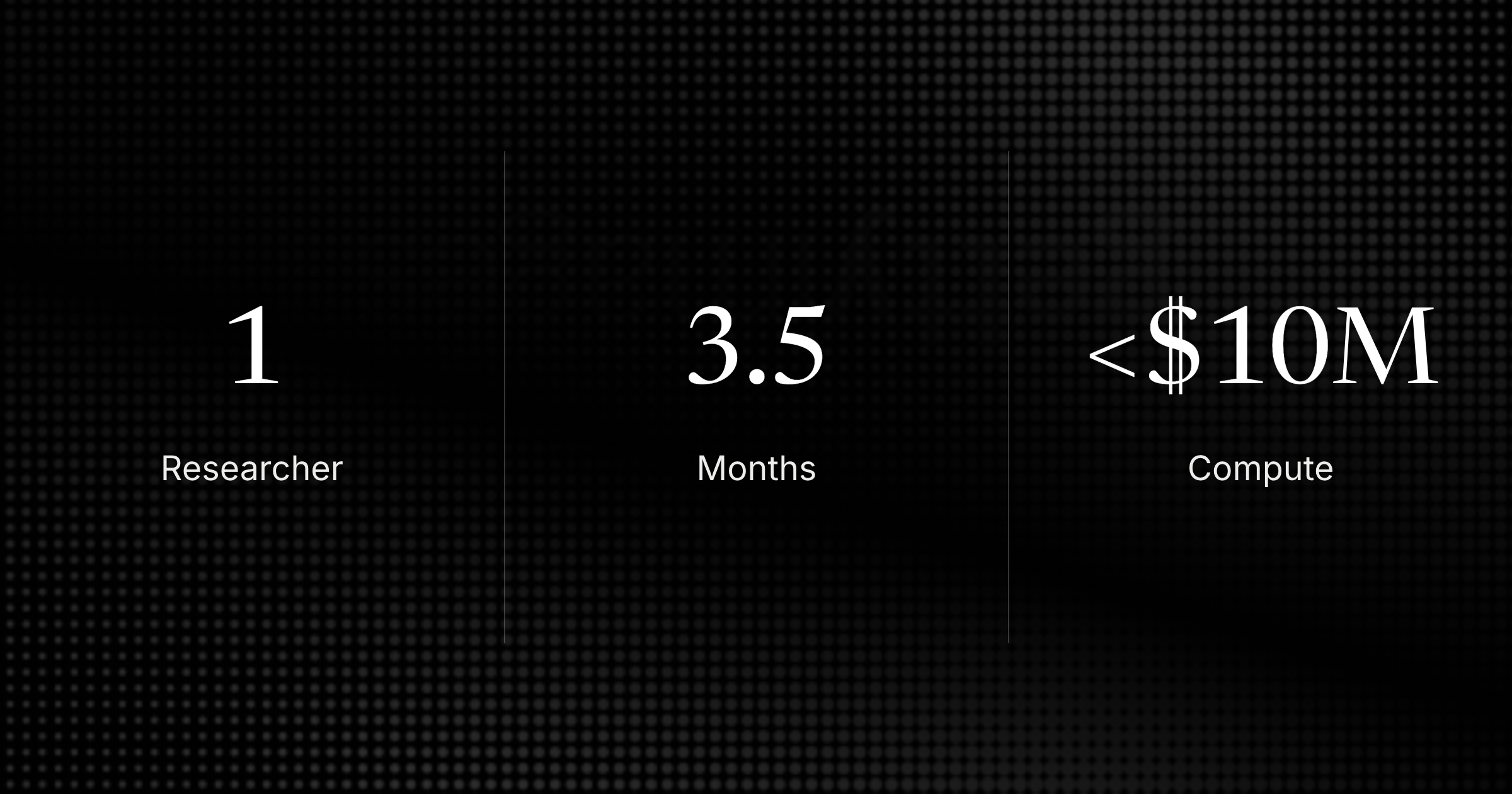
A new startup founded by former Google DeepMind and Anthropic researchers says its automated platform lets small teams build large AI models quickly and cheaply.
 Apps and productsGoogle Unveils Playground An AI-Powered Gaming Platform Where Anyone Can Create GamesHerald of AI
Google Unveils Playground An AI-Powered Gaming Platform Where Anyone Can Create Games
Google's new experimental platform lets users create, play and share games with simple text prompts—no coding required.