Apple’s New OLED MacBook Pro Screen Causes Eye Strain and Dizziness for Some Users
Owners say the display's brightness system triggers headaches and nausea — and there’s no fix built into macOS yet.
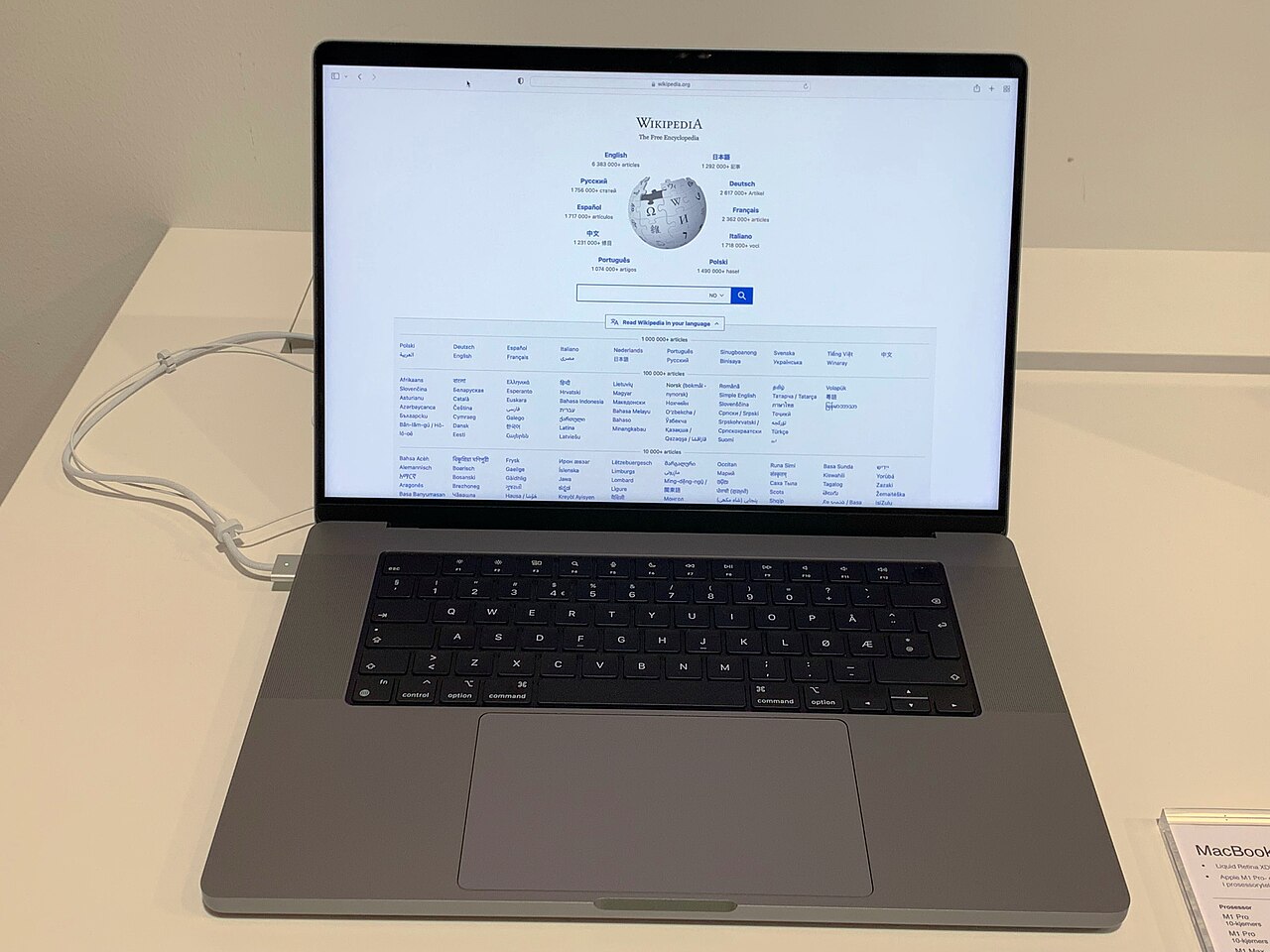
The MacBook Pro is a laptop whose new OLED screen flickers at low brightness, causing eye strain and headaches for some users.
- Each tiny pixel makes its own light
- To look dimmer, pixels cycle fast between bright and dark
- The flicker is too fast to see, but some feel dizzy
Complaints are multiplying since launch
Since Apple released the new MacBook Pro models earlier this month, a significant number of owners have posted problems online 1. Reddit threads, X posts, and dedicated MacRumors forum discussions all carry reports of the same symptoms: severe headaches after just 30 minutes, dizziness while reading text, and nausea when looking at dark backgrounds .
According to one X user who tested the PROLED MacBook Pro in person at an Apple Store, the experience left them with a severe headache. This individual noted that earlier OLED displays had also caused them issues, and only more recent versions became bearable 1. A Reddit commenter described getting dizzy and nauseous reading text against black — symptoms their OLED iPad Pro never produced . On the MacRumors forums, a 16-inch PROLED owner reported mild nausea that eased only after switching back to an older mini-LED MacBook Pro . Another member said they were returning theirs altogether after previously having no issues with other OLED devices .
The suspected culprit: PWM dimming
The suspected issue is pulse width modulation (PWM). An OLED screen produces light through its individual pixels. With PWM dimming, the display changes the time spent at brighter and darker levels during a rapidly repeating cycle 1. An OLED pixel produces its own light, so to make the screen look dimmer the display rapidly cycles between bright and dark states — spending less time at full brightness lowers the average light reaching your eyes . The flicker is too fast to see as obvious flashing, but people who are sensitive to it can still suffer headaches or eye strain .
PWM frequency describes how often that cycle repeats each second, and it is entirely separate from refresh rate — the 120Hz ProMotion spec tells you how often the image updates, not how fast the brightness pulses 1. Notebookcheck tested the 14-inch PROLED MacBook Pro and measured flickering at 240 Hz whenever brightness was set to 99% or lower, with an amplitude (the size of the fluctuation) of 56% . That means the light output jumped up and down 240 times every second, and Notebookcheck warned sensitive users could experience discomfort from those numbers . By contrast, the same lab measured a mini-LED 14-inch M4 Pro MacBook Pro at roughly 14,880 Hz — far faster than the OLED, and generally much easier on sensitive eyes .
Old MacBook Pro screens are gentler on sensitive eyes
Notebookcheck measurements from the 14‑inch models; prices start at $2,899 (PROLED 14‑inch), $3,399 (16‑inch)
No macOS fix, but Apple already has one elsewhere
Apple includes a Display Pulse Smoothing accessibility option on supported iPhones that offers an alternative low-brightness dimming method, though Apple itself warns it can affect display performance under some conditions 1. The feature does not exist in macOS, meaning MacBook Pro owners currently have no official software switch to ease the problem — though Apple could add one in a future update .
For now, Apple continues selling both the new OLED MacBook Pros alongside the older mini-LED versions 1. The PROLED 14-inch model starts at $2,899 and the 16-inch at $3,399 . Buyers who are unsure about screen sensitivity may want to compare both options before purchasing .
How good is it
Notebookcheck tested the 14-inch PROLED MacBook Pro and measured its PWM flickering at 240 Hz whenever brightness was set to 99% or lower, with a fluctuation amplitude of 56%, warning that sensitive users could experience discomfort from those numbers 1. By contrast, the same lab measured a mini-LED 14-inch M4 Pro MacBook Pro at a much higher frequency of 14,880 Hz, which is generally far less likely to cause problems for PWM-sensitive users . Apple already offers a Display Pulse Smoothing accessibility option on supported iPhones to reduce such flicker, but macOS does not currently include an equivalent control .
Corrections and updates
- Corrected on 18 November 2026. An earlier version said hundreds of owners reported problems; the source only states a significant number of complaints appeared, without specifying a quantity like 'hundreds.' An earlier version said most complaints pointed directly to PWM, but the source describes only some affected users attributing their symptoms to the brightness-control system, with PWM identified as the suspected underlying mechanism rather than an explicit complaint consensus.
Key facts
- Some OLED MacBook Pro owners report eye strain, headaches, and dizziness after as little as 30 minutes of use.
- Notebookcheck measured 240 Hz PWM flickering at 99% brightness or lower on the 14-inch PROLED model.
- The older mini-LED MacBook Pro measures about 14,880 Hz PWM — roughly 60 times faster than the OLED.
- Apple has a Display Pulse Smoothing fix on iPhones but has not added an equivalent control to macOS.
- OLED MacBook Pro prices start at $2,899 (14-inch) and $3,399 (16-inch), sold alongside the mini-LED versions.
Sources
- Some OLED MacBook Pro Owners Report Eye Strain and Dizziness — macrumors.com
If this story concerns you or your company, or uses something that belongs to you, ask for a correction or for it to be taken down. How requests work
Keep reading
Apple UK iPhone users miss boosted Siri AI access with iCloud +
Britain is excluded from the free upgrade that lets most iCloud+ subscribers use heavier Siri AI tasks more often.
 Apps and productsApple launches a free app so people can test and shape AI health tools before they reach everyoneHerald of AI
Apple launches a free app so people can test and shape AI health tools before they reach everyone
A new Apple study lets anyone with a recent iPhone chat with an AI health assistant and rate its answers — helping Apple build better tools for real people.
Older Apple TV 4K gets Siri AI in free tvOS update
Apple is bringing its smarter Siri features to 2nd- and 3rd-generation Apple TV 4K boxes in an upcoming software update — no new hardware needed.