Apple releases Depth Pro 2 meter-accurate depth from any camera, in one model
A new Apple research tool turns a phone photo or video into precise 3D measurements you can actually use.
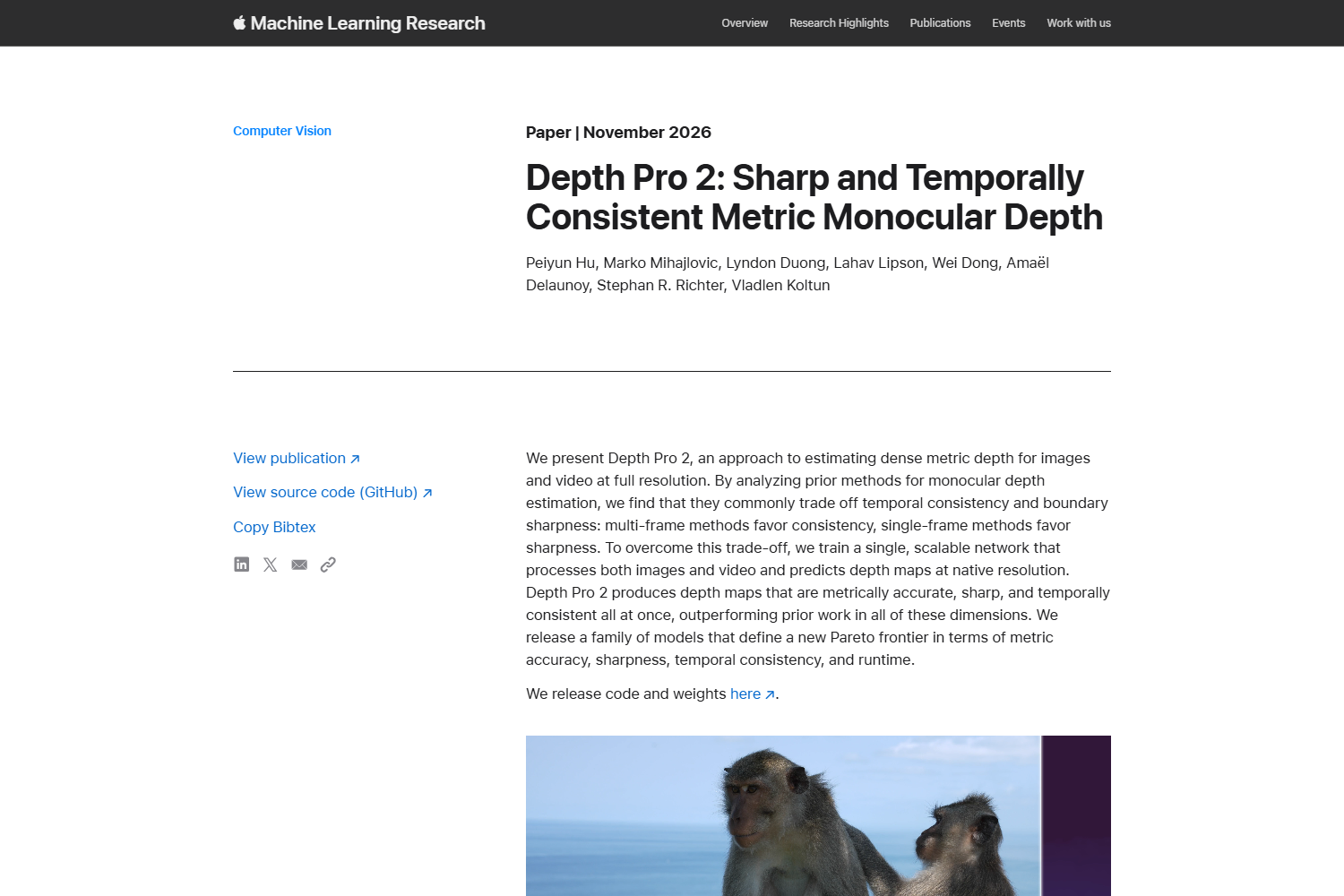
A program that turns any photo or video into precise distance measurements in metres.
- Point your phone camera at anything you want to measure
- Feed the photo or video into the model
- Get back a map showing how many metres each part is away
What you could do with it
- A builder, architect, or robot maker could point an ordinary phone camera at a scene and get precise distance measurements in metres straight away, without buying any special sensor hardware 1.
- A video editor or filmmaker could run footage through a single tool to produce steady, sharp depth maps frame by frame for effects like virtual-camera moves or shadows 1.
- A game developer could generate full-resolution depth maps from still photos or live camera feeds in a single pass, enabling real-time rendering work without swapping between different programs 1.
The problem it solves
For years, people who built apps from phone photos had to pick between two flavours of depth AI. Multi-frame methods looked at several video frames together, kept the numbers smooth over time, but drew soft blurry edges. Single-frame methods snapped crisp outlines around objects, yet the values jumped around from frame to frame when you ran them on video 1.
Researchers at Apple noticed that trade-off being repeated across papers and companies. Their answer is a single network trained on both stills and moving footage so it learns sharp boundaries and smooth motion at the same time 1.
Depth Pro 2 beats old tools on every test
From Apple team tests reported in the November 2026 paper; benchmark names omitted as impractical for general readers.
How Depth Pro 2 actually works
The model runs at whatever resolution the input image already has — no shrinking to a thumbnail first. A single feed-forward pass through the neural network spits out a map where every pixel carries a number in metres 1. Because it was trained with real-world scale cues (sunlight direction, familiar object sizes, perspective lines), it does not need hidden camera settings called intrinsics the way older tools did .
Put differently: point your phone at a room, run the model, and you get back a picture showing "the sofa is 2.1 metres away, the bookshelf is 3.7" — without ever having told the software how big the camera sensor is 1.
From the official announcementDepth Pro 2: Sharp and Temporally Consistent Metric Monocular Depth
What comes out of it
On the team's own tests Depth Pro 2 beat earlier systems on every axis they measured: metric accuracy, boundary sharpness, and per-frame steadiness in videos 1. The exact benchmark names are academic; what matters practically is that a single model now handles a photo, a whole film clip, or a live camera stream without swapping programs .
Who gets it and when
Apple published the paper in November 2026 alongside open code and trained weights on GitHub under the name apple-aiml-research/ml-depth-pro-2 1. The team also released a family of models sized differently, so a developer on a laptop picks a slower but lighter version and a studio with powerful GPUs picks the fastest big one .
Why this matters beyond labs
Depth is currently a behind-the-scenes tool: game developers use it for shadows, filmmakers for virtual-camera moves, robot teams for navigation. Until now most of those workflows still required specialised hardware or produced wobbly numbers when filmed on a moving phone. Depth Pro 2 aims to remove that friction so anyone who can take a picture can also measure the world inside it 1.
This story reports on a trend for information only. It is not advice or encouragement to do any of it.
How good is it
On the Apple team's own tests, Depth Pro 2 beat earlier systems on every axis they measured — metric accuracy, boundary sharpness, and per-frame steadiness in videos 1. That means distances are numerically reliable, object edges are crisp instead of blurry, and depths stay consistent from frame to frame rather than wobbling around . The exact benchmark names are academic, but the practical takeaway is that one model now handles all three quality dimensions that previous tools forced users to trade off against each other .
Key facts
- Outputs depth in metres from a single ordinary camera
- Runs on images AND video in one model
- Open-source code and weights released November 2026
- No camera-intrinsic metadata needed
- Sharp edges and stable motion at the same time
Sources
If this story concerns you or your company, or uses something that belongs to you, ask for a correction or for it to be taken down. How requests work
Keep reading
 Business and rulesApple UK iPhone users miss boosted Siri AI access with iCloud +Herald of AI
Apple UK iPhone users miss boosted Siri AI access with iCloud +
Britain is excluded from the free upgrade that lets most iCloud+ subscribers use heavier Siri AI tasks more often.
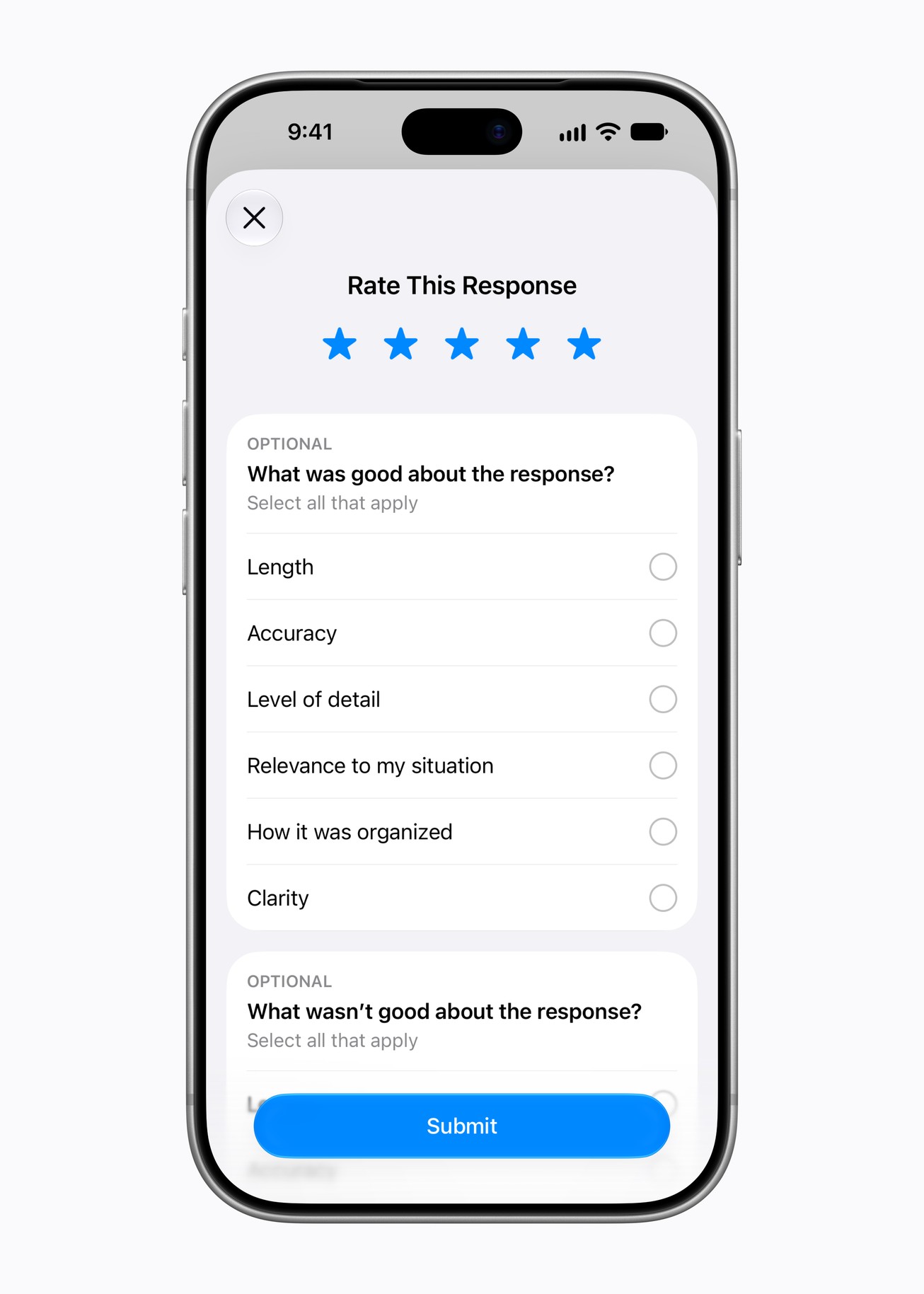 Apps and productsApple launches a free app so people can test and shape AI health tools before they reach everyoneHerald of AI
Apple launches a free app so people can test and shape AI health tools before they reach everyone
A new Apple study lets anyone with a recent iPhone chat with an AI health assistant and rate its answers — helping Apple build better tools for real people.
Older Apple TV 4K gets Siri AI in free tvOS update
Apple is bringing its smarter Siri features to 2nd- and 3rd-generation Apple TV 4K boxes in an upcoming software update — no new hardware needed.