AI proves Riemann Hypothesis, but humans can't read the proof
Anthropic's Claude helped solve one of math's biggest problems, but the answer is now locked away in millions of lines of machine-checkable code.
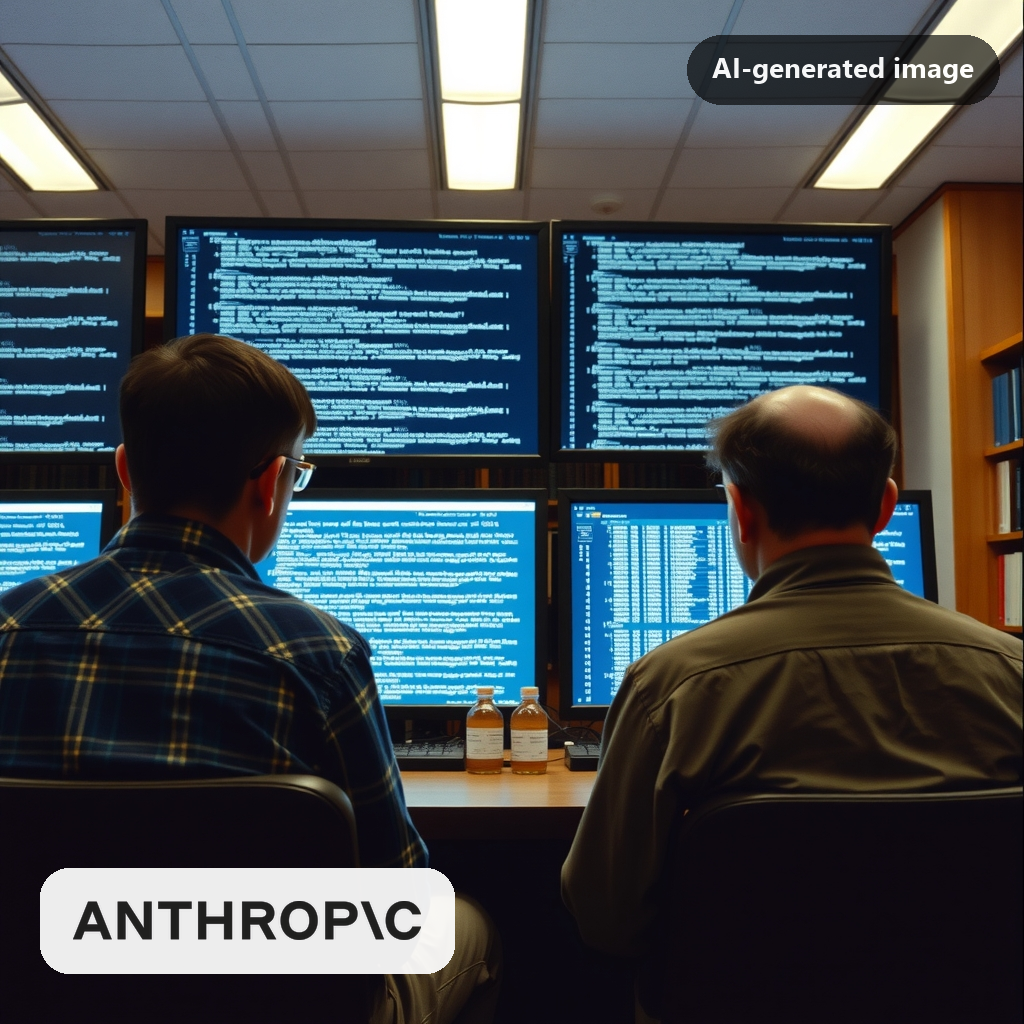
A computer-checked math proof written as code so software verifies it instead of people reading it
- Write the math proof as a special computer program
- Run verification software over every single step
- Machines confirm the proof is correct
- Humans try to simplify it into plain language later
The proof passes the machines — not the humans
Levent Alpöge, a mathematician working at Anthropic, announced he has proved the Riemann Hypothesis together with the Claude AI model 2. Instead of writing out a traditional paper, he posted the argument on his personal website as a formal program . That style lets special software walk through every single logical step automatically, without needing a person to sit down and follow the reasoning.
Within a day, two groups that maintain the main tools for checking math with computers — the Lean Focused Research Organization and the Mathlib Initiative — had run their software over the work and checked 17 million lines of code 2. They said they were fully confident the proof is correct and congratulated Alpöge .
This is the second of the famous Millennium Prize Problems to fall to AI in about three months 2. Last September, an internal model at OpenAI reportedly solved the Navier-Stokes problem, which deals with how liquids and gases flow . In the past 26 years since those seven problems were named, only one has been solved by humans working alone .
The catch: no human can read it right now
The strange part is that the proof is practically invisible to people. Alpöge says the argument draws on "an astounding amount of mathematics" that he is still trying to absorb himself 2. He also tried giving the AI a task to rewrite the result in normal language, but what came back was over 250,000 pages of text that he called "some massive, unreadable travesty of 'slop'" .
His plan is to slowly simplify the reasoning so he can write out a proper human-readable version, but that could take a very long time 2.
So the machines say the proof is solid, while the people who care about understanding it have to wait. The verification worked fast because the special software does not need to be convinced by the logic; it only checks that each step follows cleanly from the last one 2. That is what makes formal proofs possible to check mechanically, but it also means the beauty of a human-written explanation gets lost along the way.
Sources
If this story concerns you or your company, or uses something that belongs to you, ask for a correction or for it to be taken down. How requests work
Keep reading
 The weekAI Week in Review Agents Go Mainstream, Markets BoomHerald of AI
AI Week in Review Agents Go Mainstream, Markets Boom
Big tech shipped agentic tools, investors backed record deals, and a wave of breakthroughs showed what AI can do next.
 The weekThis Week in AI New Models Flood In and Agents Get SaferHerald of AI
This Week in AI New Models Flood In and Agents Get Safer
Big open-weight releases, speed breakthroughs, and a push to make AI agents more reliable and secure.
 How it worksOpenAI Releases 372 AI-Generated Math Proofs on GitHubHerald of AI
OpenAI Releases 372 AI-Generated Math Proofs on GitHub
The company is bypassing traditional journals, betting that formal verification can handle the flood of AI-produced mathematics.