MIT celebrates humanities at a time when AI is changing everything
At MIT's 75th anniversary for its humanities school, leaders said human insight matters more than ever as AI reshapes the world.
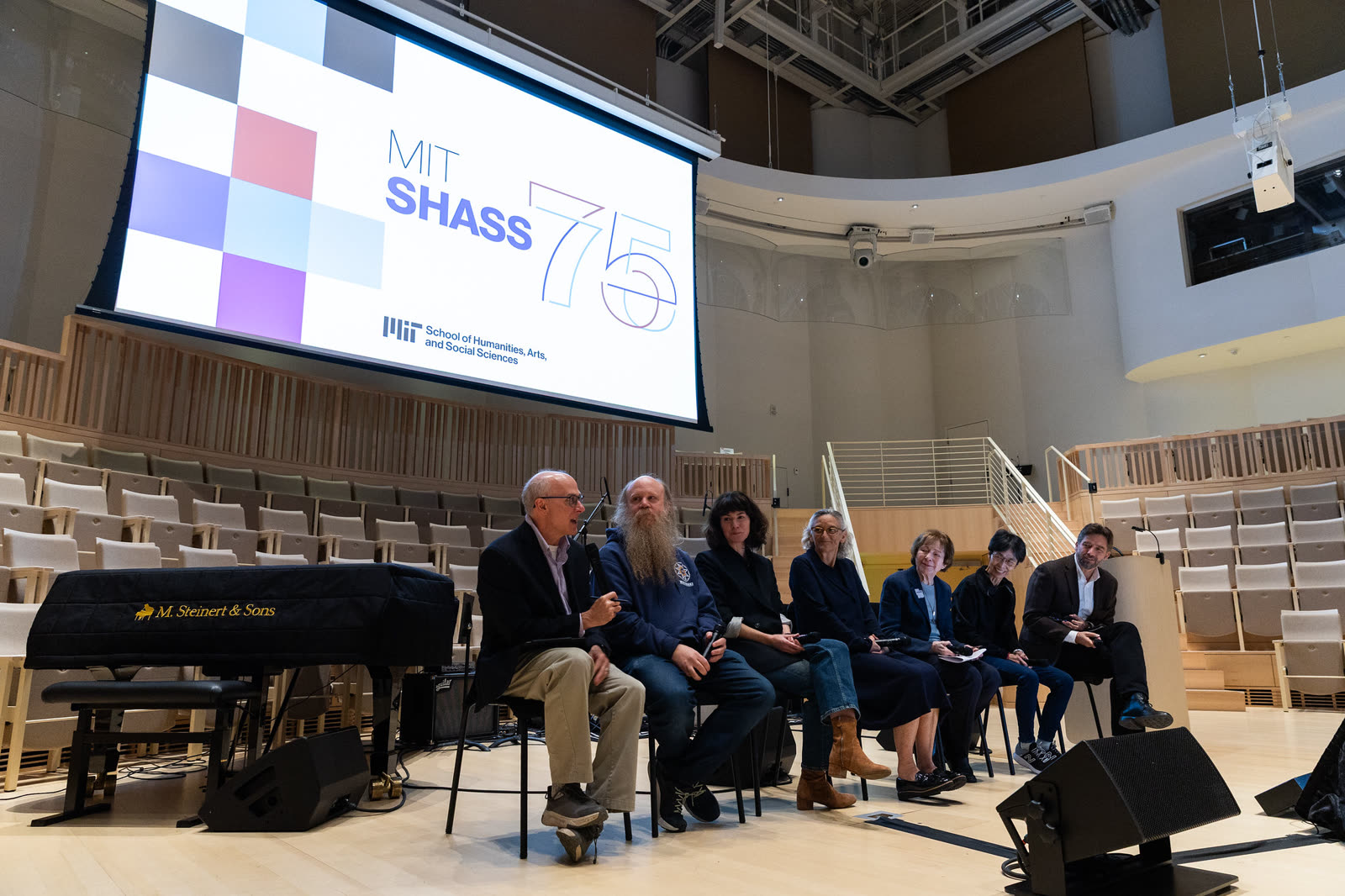
MIT's School of Humanities, Arts, and Social Sciences recently turned 75, and its anniversary symposium made one point clear: in an age of rapid AI change, the skills this school teaches matter more than ever 1.
The event took place September 24-25 at the Linde Music Building, bringing together scholars, students, staff, and alumni from across the school and the institute 1.
Leaders speak out
MIT President Sally Kornbluth said the school's origins trace back to 1949, when a committee recommended mixing scientific and humanistic subjects more closely 1. She drew a parallel between that post-World War II era and today's uncertainty around AI .
"AI has suddenly arrived with enormous consequences for both research and education," Kornbluth said 1. "MIT has never needed your particular insight and guidance more than we do now."
Provost Anantha Chandrakasan stressed the need for a human-centered approach to technology — one that considers not just whether something works, but how it affects people 1. He highlighted the MIT Human Insight Collaborative, a project launched in 2024 to study these questions .
"Today — a time of rapid, AI-driven change — the arts, humanities, and social sciences are as important as ever," Chandrakasan said 1. "To be able to contribute effectively to solving the world’s great challenges, it is not enough to gain technical mastery."
More than practical results
Agustín Rayo, the Kenan Sahin Dean of SHASS and a philosophy professor, pushed back against the idea that a subject's value depends only on whether it produces useful results 1.
"Education should also help us ask what is worth doing, what do we owe one another, and what makes a life worth living," Rayo said 1. "Some research matters because it helps us understand the histories, cultures, and social structures that have made us who we are. Some things matter because they enrich human life."
Melissa Nobles, MIT's chancellor, recalled her time as SHASS dean from 2015 to 2021, when student feedback showed how much they valued humanities courses 1.
"MIT students have a range of interests that draw them to our classes that may be invisible to their STEM professors, but that we very well know our students have," said Nobles, also a political science professor 1.
A broad celebration
The symposium included panels on teaching innovation, perception and cognition, and alumni talks where graduates shared how SHASS changed their perspectives 1. One alum, Ankita Reddy, said the school showed her how healthcare looks different across cultures and social systems .
The event also featured music performances by the MIT Concert Choir and discussions at the MIT Museum 1.
Key facts
- MIT's SHASS turned 75, founded after a 1949 committee report urged more humanistic study at the institute
- President Sally Kornbluth said MIT needs humanities insight more than ever due to AI's impact
- Provost Anantha Chandrakasan highlighted the MIT Human Insight Collaborative launched in 2024
- Dean Agustín Rayo argued education should ask big questions, not just produce practical results
- The symposium ran September 24-25 with panels, alumni talks, and music performances